



Building a brand is like building a reputation in public; every move you make teaches people what to expect from you. A strong marketing strategy isn’t separate from that; it’s the set of choices that make your brand visible, understandable, and believable. When branding and marketing strategy work together, your business becomes more than a product or service. It becomes a trusted name people choose repeatedly, even when competitors are cheaper or louder.
Table of Contents:
- Introduction: The Power of Branding and Marketing Strategy Together
- What a Brand Really Is (And Isn’t)
- The Relationship Between Branding and Marketing Strategy
- The Building Blocks of a Strong Brand
- The True Purpose of Marketing Strategy
- How to Align Branding and Marketing Strategy: A Step-by-Step Framework
- Brand Voice and Messaging: The Heart of Memorability
- Content That Builds Brands: What to Create and Why
- Channel Strategy: Where Strong Brands Win Attention
- The 5 Most Important Questions About Branding and Marketing Strategy (Answered)
- Common Mistakes That Weaken Brands
- How to Measure Brand Strength and Marketing Success
- Real-World Examples of Branding and Marketing Strategy in Action
- Final Takeaways + Strong Call to Action (Excell)
1. Introduction: The Power of Branding and Marketing Strategy Together
Most businesses don’t fail because their product is bad. They fail because customers don’t understand why they matter. That’s a branding problem. And many companies that do get attention still struggle to grow because their marketing is inconsistent, scattered, or doesn’t match their brand promise. That’s a strategy problem.
Great businesses solve both. They create a brand that means something and then use marketing to deliver that meaning over and over again across every touchpoint.
When branding and marketing strategy align, something magical happens:
- Customers instantly “get it”
- Trust builds faster
- Your marketing becomes cheaper because people remember you
- Referrals increase
- You gain pricing power
- Growth becomes stable instead of chaotic
2. What a Brand Really Is (And Isn’t)
Those things are expressions of your brand, not the brand itself.
Your brand is:
- The meaning people associate with your business
- The shortcut they use to decide if they trust you
- The emotional memory they hold after an interaction
- The story they repeat about you when you’re not in the room
Branding is perception management. In every market, customers are overwhelmed with choices. A brand helps them decide faster because it creates familiarity and emotional clarity.
The brand exists whether you shape it or not.
Even if you ignore branding, customers will still form an opinion about you. The question is: are you shaping that opinion deliberately or leaving it to chance?
A coordinated branding and marketing strategy guides that intention.
3. The Relationship Between Branding and Marketing Strategy
Think of branding and marketing strategy as a single machine with two essential parts:
- Branding is the identity (who you are).
- Marketing strategy is the delivery system (how people experience who you are).
It’s your:
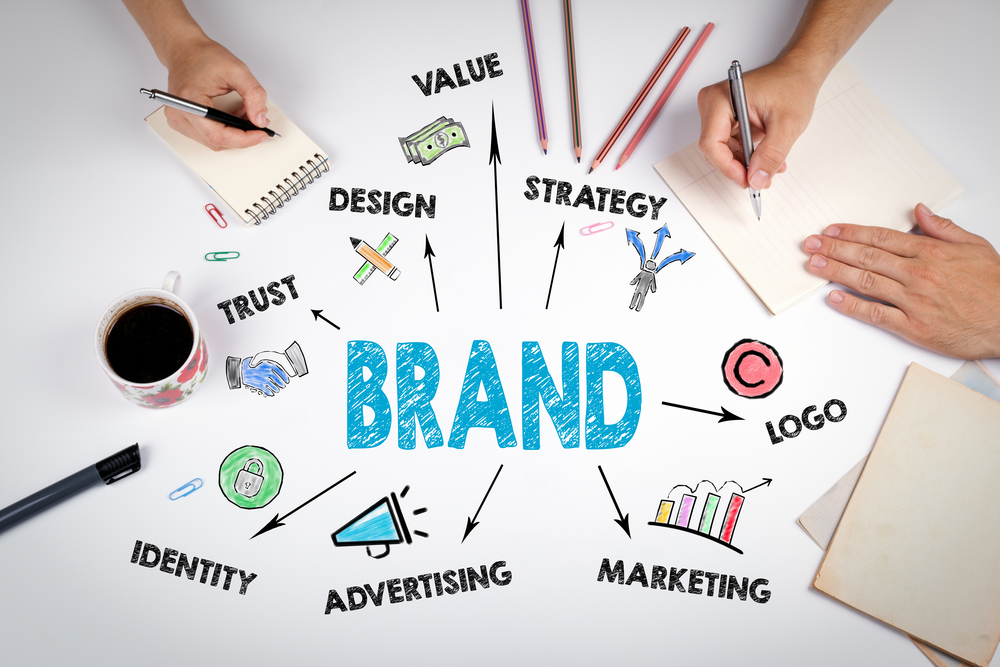
- personality
- reputation
- promise
- emotional “vibe”
- values
- positioning
Examples:
- Apple = simple, premium, innovative
- Nike = motivation, performance, “Just do it” mindset
- A local law firm might want to be known as “the compassionate fighter.”
- A skincare brand might want to be “clean, science-backed confidence.”
Branding creates meaning and expectation.
Marketing Strategy = Movement
It’s not just “posting content” or “running ads.”
It’s deciding:
- who you want to reach
- what you want them to think/feel
- where you’ll show up
- What message do they need at each stage
- What action do you want them to take
- How you’ll measure progress
Marketing creates visibility, awareness, and action.
Why They’re Two Halves of One System
Here’s the key idea:
Branding sets the direction. Marketing moves you there.
If you move fast but your compass is broken → you end up everywhere except where you should be.
What Happens When Branding Has No Marketing
Let’s make that real.
You might have:
- amazing service
- clear identity
- strong values
- great visuals
- a perfect offer
But if people don’t see it, or don’t see it enough, your brand doesn’t grow.
Symptoms:
- low awareness
- great customers, but too few of them
- Business depends on referrals only
- slow growth even with a good product
A boutique agency has an incredible brand and results, but doesn’t consistently do SEO, social, partnerships, or ads.
They stay “a hidden gem.”
Meaning exists, but it doesn’t spread.
That’s branding without marketing.
What Happens When Marketing Has No Branding
This is what most businesses do by accident.
They run:
- random ads
- trendy social posts
- scattered campaigns
- inconsistent content
- frequent pivots in tone or visuals
People might notice for a second… but they don’t remember you.
Symptoms:
- high traffic, low trust
- Sales depend on discounts
- inconsistent results
- Customers don’t return
- “We’re posting a lot, but nothing sticks.”
The audience doesn’t know what this brand is.
That’s marketing without branding.
What Happens When They Work Together
This is the sweet spot.
Your brand gives marketing power because:
- People recognize you faster
- Messaging feels coherent
- Trust builds before purchase
- Customers remember you after purchase
- It puts your identity in front of people
- It repeats your message enough to create a memory
- It turns meaning into growth
- Branding makes your message clear
- Marketing spreads that clarity
- Audiences understand you quickly
- Trust grows
- Conversion rates go up
- Customers stay longer
- Word-of-mouth increases
- Your marketing costs drop
- Brand gets stronger again
That’s sustainable growth.
A Simple Way to Picture It
If your business is a movie:
- Branding is the story, characters, and theme.
- Marketing strategy is the trailer, distribution, and audience outreach.
You need both.
Quick Practical Example
Let’s say you’re Excell and you want to be known for “smart, human-centered marketing that drives real growth.”
Branding defines:
- Your positioning: “strategy-first marketing partner”
- personality: confident, helpful, modern
- promise: growth that’s measurable and sustainable
- voice: clear, empowering, not jargon-heavy
- SEO blogs proving expertise
- case studies showing results
- social content with consistent tone
- ads repeating your core message
- Email funnels, reinforcing your promise
So every time someone sees Excell, they don’t just see content, they see the same clear identity in many places.
That’s branding and marketing strategy in harmony.
4. The Building Blocks of a Strong Brand
To build a lasting brand, you need more than visuals. You need a clear internal foundation.
4.1 Brand Purpose: Your “Why”
Purpose is your deeper reason for existing. It’s what makes you meaningful beyond transactions.
A purpose answers:
- Why do we exist?
- How do we improve our customers’ lives?
- What change are we trying to make in the world?
Customers buy from brands they believe in. Purpose gives them something to believe in.
4.2 Audience Definition: Who You’re For

Define:
- Who they are
- What they value
- What they fear
- What they want
- What they’re trying to solve
- What they’ve already tried
- Where your service fits
The best branding and marketing strategy starts with profound audience clarity.
4.3 Positioning: Your Place in the Market
Positioning is the space you want to own in your customer’s mind.
It answers:
- What makes you different?
- Why should customers choose you instead of alternatives?
- What is the fastest way to explain your value?
Good positioning is specific and straightforward.
4.4 Brand Values: Behavior in Action
Values aren’t posters. They’re priorities you prove through decisions.
If a brand says “customer-first,” then support quality, return policies, messaging tone, and service delivery should all reflect that.
Values turn promises into expectations.
4.5 Brand Personality: If Your Brand Were a Person
This guides your tone, visuals, and energy.
Choose 3–5 personality traits, like:
- Bold
- Grounded
- Curious
- Elegant
- Playful
- Direct
- Warm
Personality ensures your brand feels human.
4.6 Brand Promise: Your Consistent Deliverable
Promise = what customers should always get from you.
It must be:
- Clear
- Relevant
- Specific
- Something you can deliver consistently
A promise isn’t a marketing line; it’s a commitment.
4.7 Brand Identity: Visual and Verbal System
This includes:
- Logo and variants
- Color palette
- Typography
- Photography/illustration style
- Layout and spacing rules
- Iconography
- Storytelling templates
- Voice guidelines
5. The True Purpose of Marketing Strategy
A lot of people hear “marketing strategy” and think it means:
- posting on social media
- running ads
- doing SEO
- making content calendars
Those are tactics.
A marketing strategy is bigger. It’s the thinking system behind those tactics.
Marketing strategy is your growth blueprint.
It’s the plan that answers:
- Who exactly are we trying to reach?
- What do they need to hear to trust us?
- Where are they most likely to listen?
- What journey do they go through before buying?
- How do we move them through that journey?
- What does success look like, and how will we measure it?
Without those answers, tactics turn into random acts of marketing.
So instead of “doing marketing,” you’re engineering growth.
What Marketing Strategy Really Does (In Human Terms)
Marketing strategy isn’t about yelling louder. It’s about guiding people from “Who are you?” to “I trust you,” to “Let’s do this.”

Here’s how each purpose works in real life:
1. Creates awareness
But not just any awareness, the proper awareness.
Your strategy decides:
- Who should know you
- What they should know you for
- where you’ll show up to be discovered
If you’re a high-end brand, awareness through bargain-based channels can attract the wrong crowd and weaken your brand.
Strategy prevents that by choosing intentional visibility.
Awareness is the top of the customer journey.
If people never hear of you, the rest doesn’t matter.
2. Builds trust before purchase
They buy when they believe you.
Trust is built through:
- content that teaches or helps
- proof of results
- consistency in voice and message
- social validation (reviews, testimonials, community)
- Repeated exposure over time
A marketing strategy ensures trust-building happens on purpose, not by accident.
Example:
A service business might use:
- SEO blogs to answer questions
- case studies to show proof
- email sequences to nurture
- retargeting ads to reinforce credibility
That’s a trust engine, not random marketing.
3. Guides people through a decision
Most customers need time and clarity before making a purchase.
Your strategy maps the journey:
- Awareness: “I might have a problem.”
- Consideration: “I’m looking at solutions.”
- Decision: “I’m ready to choose.”
Each stage needs different messages.
Strategy makes sure your marketing doesn’t treat beginners like experts.
Example:
They need education first.
Strategy sequences your messaging.
4. Reinforces satisfaction after purchase
Marketing doesn’t stop when the sale happens.
Post-purchase marketing:
- reduces buyer’s remorse
- shows customers how to get results
- increases repeat buys and upsells
- builds loyalty
A brand that sends:
- onboarding emails
- tip guides
- community invites
- progress check-ins
That’s a strategy supporting retention.
5. Turns customers into advocates
Your best marketing often comes from your customers.
Advocacy happens when people feel:
- proud to be associated with you
- emotionally connected
- amazed by results
- part of something bigger
Strategy plans for advocacy through:
- referral systems
- shareable moments
- community building
- loyalty programs
- storytelling that customers want to repeat
That doesn’t happen by accident; it happens because the brand experience is worth sharing.
Why Marketing Strategy Without Branding Is Fragile
Branding is the meaning. Marketing spreads the meaning.
If marketing runs without brand clarity, you get:
- campaigns that don’t feel connected
- attention that doesn’t convert
- inconsistent messaging
- customers who don’t remember you
- sales driven only by discounts
It’s fragile because tactics can work in the short term, but they don’t build long-term identity.
Example:
You can run ads and spike sales, but if customers can’t describe what makes you different, they won’t stay loyal.
Marketing becomes a treadmill.
Why Branding Without Marketing Strategy Is Underutilized
If branding is strong but marketing strategy is weak, you get:
- a great brand that not enough people see
- slow growth despite quality
- dependence on word-of-mouth only
- low market share compared to weaker competitors
It’s underutilized because the brand engine isn’t connected to a growth engine.
Example:
A company with excellent positioning and identity but no SEO, no consistent content, and no funnel strategy remains a “hidden gem.”
“Gears in a Machine” What That Means Practically
Imagine two gears:
Gear A = Branding
- positioning
- promise
- voice
- values
- personality
- identity
- channels
- content
- campaigns
- ads
- funnels
- measurement
When Gear A is strong, Gear B turns smoother and faster.
If one gear slips, the whole machine stutters.
A Simple Scenario to Show This Working Together
“Strategy-first, human-centered marketing that produces measurable growth.”
That’s branding.
Now, the marketing strategy supports it by choosing:
- Channels: SEO + LinkedIn + email (where ideal clients already look for expertise)
- Content: thought leadership, case studies, practical guides
- Funnels: nurture sequences that educate before pitching
- Messages: consistent “strategy-first growth partner” positioning
- Measurement: tracking lead quality, CAC, conversions, and retention
So every marketing action reinforces the brand meaning, and the brand meaning makes marketing more effective.
That’s gears working together.
The Big Takeaway
Marketing strategy exists to shape customer behavior over time:
From:
- unaware → aware
- curious → trusting
- interested → buying
- buying → loyal
- loyal → advocating
It builds a brand that sells even when you’re not actively advertising.
6. How to Align Branding and Marketing Strategy: A Step-by-Step Framework
Alignment means every marketing action reflects your brand, and every brand element supports marketing goals.
What language do they use to describe their problem?
Use:
- interviews
- surveys
- review mining
- competitor research
- social listening
- sales team insights
If you don’t know your audience deeply, even the best branding and marketing strategy will miss the mark.
Step 2: Lock in positioning
Your positioning should be so precise that anyone can say it without a script.
Test it by asking:
- Is it specific enough to exclude some people?
- Is it meaningful, not generic?
- Can you prove it?
- Does it match what customers actually want?
Step 3: Build your messaging framework
This becomes your brand’s communication playbook.
Include:
- Core story
- Big idea (your central truth)
- Value proposition
- Key benefits
- Differentiators
- Proof points
- Brand voice rules
- Common objections and answers
A messaging framework keeps your branding and marketing strategy consistent at scale.
Step 4: Map the customer journey
Break it into stages:
- Awareness
- Consideration
- Decision
- Retention
- Advocacy
Each stage needs different content and messaging.
Step 5: Choose channels strategically
Pick platforms based on audience behavior, not your preferences.
Examples:
- B2B: LinkedIn, webinars, email, SEO
- Consumer lifestyle: TikTok, Instagram, YouTube
- Local services: Google search, maps, reviews, community groups
Depth beats width. Win 2–3 channels first, then expand.
Step 6: Create content pillars
Pillars = recurring topics that reinforce your brand position.
Example pillars:
- Educational how-tos
- Case studies
- Industry insights
- Behind-the-scenes trust content
- Product value demonstrations
Step 7: Ensure operational consistency
Your brand promise must be delivered in reality, not just in ads.
If your marketing says:
- “Premium service,” but support is slow
- “Fast delivery,” but shipping is delayed
- “Friendly,” but your tone is cold
You lose trust. Internal operations are part of branding.
Step 8: Measure, learn, refine
Great strategy evolves.
Track:
- Brand recall
- Engagement quality
- Conversion rates
- Customer retention
- Share of voice
- CAC and LTV
7. Brand Voice and Messaging: The Heart of Memorability
Your voice makes your brand feel like a personality rather than a company.
How to build a brand voice:
- Define traits (e.g., confident, kind, energetic)
- Write do’s and don’ts (tone boundaries)
- Create example phrases to emulate
- Standardize it in templates for ads, posts, emails, blogs
- Train your team
8. Content That Builds Brands: What to Create and Why

- Educational content: proves expertise
- Story content: builds emotional connection
- Social proof: makes trust visible
- Opinion/insight: differentiates you
- Community content: creates belonging
- Product content: shows real value
Every piece of content should support at least one of the following:
- Your positioning
- Your promise
- Your values
- Your audience’s motivation
9. Channel Strategy: Where Strong Brands Win Attention
Marketing channels are the roads to your customer’s mind.
Choose primary channels
Don’t try to be everywhere. Be excellent somewhere.
Choose based on:
- where your ideal customers already are
- What format do they prefer
- What your team can sustain
Consistency wins because:
- It increases recognition
- It builds trust through repetition
- It lowers customer uncertainty
10. The 5 Most Important Questions About Branding and Marketing Strategy (Answered)
You must clarify who you are before telling the world. But once explained, marketing is how customers meet that brand.
Question 2: How do I know if my brand is weak or my marketing is weak?
Answer: Look at the symptoms:
- High attention, low conversion = branding issue
- Low attention, high conversion = marketing issue
- High conversion, low retention = brand promise not delivered
- Confusing feedback = unclear positioning
Your funnel tells you where the weakness is.
Question 3: How often should I update branding and marketing strategy?
- Marketing strategy: optimize monthly, review quarterly
- Branding: review annually, refresh every 3–5 years (or when market shifts)
Question 4: Can small businesses compete with big brands using branding and marketing strategy?
Small brands win by:
- owning a niche
- building community
- telling authentic stories
- serving customers deeply
Specific beats massive when the brand is clear.
Question 5: What’s the fastest way to strengthen a brand through marketing?
Fast growth formula:
- Clear niche
- Strong promise
- Proof through content
- Repeatable messaging
- Funnel alignment
- Constant optimization
11. Common Mistakes That Weaken Brands
Broad brands are invisible. Specific brands attract loyalty.
Mistake 2: Copying competitors
Borrowing ideas is fine; borrowing identity kills differentiation.
Mistake 3: Inconsistent voice and visuals
Consistency isn’t dull, it’s trust-building.
Mistake 4: Over-focusing on short-term ads
Short-term marketing builds revenue today. Branding builds demand tomorrow.
Mistake 5: Treating branding as a one-time task
12. How to Measure Brand Strength and Marketing Success
- branded search growth
- direct traffic increase
- social mentions and sentiment
- repeat customers
- referrals
- increase in price tolerance
- conversion rates
- CAC / ROAS
- audience growth
- engagement quality
- lead quality
- retention and LTV
13. Real-World Examples of Branding and Marketing Strategy in Action
A boutique service provider positions itself as premium but approachable.
Branding choices:
- clean, minimal identity
- warm voice
- promise of clarity and personal attention
- thought-leadership blogs
- “behind the scenes” credibility posts
- case studies
- personalized email funnel
Result: higher trust, fewer objections, and higher pricing power.
Example B: The “Fast and Reliable” Local Business
A local provider wants trust and speed to be their identity.
Branding choices:
- bold colors
- direct voice
- clear promise of speed + security
- values focused on reliability
- Google Business Profile optimization
- review campaigns
- local SEO content
- retargeting ads focused on trust and speed
14. Final Takeaways + Strong Call to Action (Excell)
A strong brand doesn’t come from clever design alone. It comes from consistent, customer-centered execution where every marketing move reinforces who you are and why you matter.
When branding and marketing strategy align, your business becomes easier to understand, easier to trust, and easier to recommend. You stop competing on price and start competing on meaning.
Ready to build a brand people remember?
At Excell, we don’t do random marketing. We build complete branding and marketing strategy systems that create visibility, trust, and growth without losing authenticity.
If you want:
- Clearer positioning
- Stronger brand identity
- Messaging that converts
- Content that builds authority
- Marketing funnels that actually fit your brand

Let’s make it happen.
Contact us today and Book your free discovery call to get done for your services and let’s build a brand that stands out in your market and keeps winning long after the ads stop running.
Contact us:
6420 Richmond Ave., Ste 470
Houston, TX, USA
Phone: +1 832-850-4292
Email: info@excellofficial.com