



In the modern digital economy, social media branding has become one of the most powerful forces shaping how businesses are perceived, trusted, and chosen. Social platforms are no longer just communication tools; they are brand ecosystems where identities are formed, relationships are built, and buying decisions are influenced long before a customer ever lands on a website.
For brands seeking sustainable growth, visibility alone is not enough. You need consistency, clarity, and connection. This guide is a complete blueprint for understanding social media branding, how it works, why it matters, and how to execute it well.
Whether you’re a startup building awareness or an established business refining your presence, this article will help you create a branding system that delivers long-term value.
Table of Contents:
- Understanding Social Media Branding
- The Evolution of Branding in the Social Media Era
- Why Social Media Branding Is Critical for Business Growth
- Core Elements of Effective Social Media Branding
- Developing a Winning Social Media Branding Strategy
- Platform-by-Platform Branding Best Practices
- Content Strategy for Strong Social Media Branding
- Visual Branding: Design, Aesthetics, and Consistency
- Brand Voice, Tone, and Messaging Framework
- Community Building and Brand Loyalty
- Influencer Marketing and Brand Advocacy
- Measuring and Tracking Social Media Branding Performance
- Common Social Media Branding Mistakes to Avoid
- Social Media Branding Chart: Strategy vs. Results
- 5 Essential Social Media Branding Questions (Answered)
- Future Trends Shaping Social Media Branding
- Final Thoughts + Excell Call to Action
1. Understanding Social Media Branding
Social media branding is an intentional, strategic process. It shapes how your brand is perceived on social platforms through consistent visuals, messaging, tone, values, and audience interactions. Branding defines not just what you post, but how you communicate, why you exist, and how you build relationships in real-time digital spaces.
Unlike traditional branding, which is largely one-directional and controlled through ads, print, or broadcast media, social media branding is interactive, community-driven, and continuously evolving. Audiences don’t just consume brand messages; they respond to, share, challenge, and shape them. This makes social media branding both powerful and demanding.
At its foundation, effective social media branding consistently answers three critical questions:
- Who are you as a brand?
This covers your mission, personality, values, positioning, and unique identity. Your audience should immediately grasp what your brand represents and how it stands apart. - Why should people care?
Strong social media branding clearly communicates relevance. It shows how your brand solves real problems, adds value, educates, inspires, or entertains, giving audiences a reason to follow and engage. - Why should people trust you?
Trust comes from consistency, transparency, authenticity, and engagement. Reliable messaging, honest communication, and meaningful interactions build credibility over time.
Every touchpoint, whether it’s a post, comment, caption, story, video, direct message, or even how you handle criticism, contributes to your brand narrative. Nothing on social media exists in isolation. Each interaction reinforces (or weakens) your brand identity.
Strong social media branding makes all elements work together. It tells a clear, cohesive, intentional story aligned with your business objectives. When done right, social media becomes a brand-building engine that drives recognition, loyalty, and long-term growth.
2. The Evolution of Branding in the Social Media Era
Social media changed that dynamic entirely.
Today, brands no longer own the conversation, audiences do. Customers, followers, and critics shape brand perception with comments, reviews, shares, user-generated content, and discussions. One post can rapidly amplify brand equity or damage reputation. Social media branding now focuses on managing relationships, not just controlling messages.
This evolution has introduced several defining changes in how branding works.
From One-Way Broadcasting to Two-Way Communication

- Replying to comments and messages
- Acknowledging feedback and criticism
- Participating in conversations rather than dominating them
- Creating content that invites interaction
From Perfection to Authenticity
Traditional branding emphasized perfection. Ads were scripted and polished to present the ideal brand image. Social media branding now favors authenticity over perfection.
Audiences now prefer:
- Real people over stock imagery
- Honest messaging over corporate jargon
- Transparency over overproduction
From Audience Size to Community-Driven Growth
In the past, success meant reach and exposure. Now, in the social media era, success is driven by community.
Community-driven branding focuses on:
- Meaningful engagement rather than follower count
- Long-term relationships instead of short-term impressions
- Creating spaces where audiences feel heard and valued
From Scheduled Campaigns to Real-Time Reputation Management
Branding was once planned months in advance. Social media branding operates in real time. News, trends, and public sentiment shift quickly, requiring brands to respond quickly and with sensitivity.
Real-time branding requires:
- Monitoring conversations and mentions
- Responding to crises promptly
- Addressing misinformation quickly
- Adapting messaging as situations evolve
Changing Consumer Expectations in the Social Media Age
As branding changed, so did consumer expectations. Modern audiences expect brands to behave as societal participants, not distant corporations.
Consumers now expect brands to:
- Respond quickly. Delayed responses suggest indifference. Prompt engagement shows respect and attention.
- Show personality. A clear, human voice makes your brand approachable and memorable.
- Take positions on values. Silence on important issues can be mistaken for avoidance. Audiences now support brands that stand for something meaningful.
- Be transparent and human.
Admitting mistakes, communicating openly, and showing empathy build long-term trust.
Why Adaptation Is No Longer Optional
The evolution of branding in the social media era is not a trend; it is a permanent shift. Platforms, formats, and algorithms will continue to change, but the underlying expectation remains the same: brands must engage authentically and responsibly.
Brands that fail to adapt risk:
- Losing relevance
- Declining trust
- Reduced engagement
- Eroded brand equity
3. Why Social Media Branding Is Critical for Business Growth
Brand Discovery Starts on Social Media
Before purchasing, users often check:
- Instagram profiles
- TikTok videos
- LinkedIn pages
- Reviews and comments
Strong social media branding:
- Reduces skepticism
- Builds familiarity
- Shortens sales cycles
Algorithms Reward Branding
Platforms prioritize:
- Consistent posting
- Engagement
- Time spent on content
- Community interaction
Social Proof Drives Decisions
4. Core Elements of Effective Social Media Branding
Brand Identity
Your identity includes:
- Mission
- Vision
- Values
- Personality
- Target audience
Visual Consistency
Key components:
- Brand colors
- Typography
- Graphic templates
- Image style
- Video format
Brand Voice
Your brand voice reflects your personality:
- Educational
- Conversational
- Bold
- Empathetic
- Authoritative
Messaging Framework
- What problem do you solve?
- Who you serve
- Why are you different?
5. Developing a Winning Social Media Branding Strategy
Step 1: Define Clear Objectives
Examples:
- Increase brand awareness
- Build authority
- Drive engagement
- Strengthen loyalty
- Support lead generation
Research:
- Age
- Location
- Interests
- Pain points
- Buying behavior
Step 3: Choose the Right Platforms
Step 4: Create Brand Guidelines
Document rules for:
- Visuals
- Tone
- Language
- Hashtags
- Emojis
- Posting frequency
6. Platform-by-Platform Branding Best Practices
- Focus on aesthetics and storytelling.
- Maintain grid consistency
- Use Reels for discoverability.
- Leverage Highlights for brand pillars
TikTok
- Authentic content outperforms polished ads.
- Humanize your brand
- Participate in trends selectively.
- Educate and entertain simultaneously.
LinkedIn

- Position your brand as an industry authority.
- Share insights, data, and thought leadership.
- Balance professionalism with relatability.
- Build communities through groups.
- Share longer-form content
- Focus on storytelling and engagement.
X (Twitter)
- Reinforce brand voice
- Engage in conversations
- Share opinions and insights.
7. Content Strategy for Strong Social Media Branding
Content is the foundation of social media branding. It is the primary vehicle through which your brand communicates its identity, values, expertise, and personality. Without a clearly defined content strategy, even the strongest brand visuals and messaging frameworks lose effectiveness. Consistent, intentional content transforms social media from a posting habit into a strategic branding system.
A strong content strategy ensures that every post serves a purpose, whether to educate, engage, build trust, or reinforce brand authority. Rather than publishing content reactively or solely based on trends, effective social media branding relies on structured content pillars aligned with brand goals and audience needs.
At its core, a successful content strategy answers three essential questions:
- What value does this content provide to our audience?
- How does this content reinforce our brand identity?
- How does this content move the audience closer to trust, loyalty, or action?
High-Impact Content Types for Social Media Branding
Educational Content
Educational posts position your brand as a knowledgeable and reliable authority in your industry. This type of content focuses on teaching, explaining, or clarifying topics that matter to your audience.
Examples include:
- How-to guides and tutorials
- Industry insights and trends
- Tips, frameworks, and best practices
- Common mistakes and solutions
Short-Form Video Content
Short-form video has become one of the most powerful tools in modern social media branding. Platforms like TikTok, Instagram Reels, YouTube Shorts, and LinkedIn video favor this format due to its high engagement potential and algorithmic reach.
Short-form video allows brands to:
- Show personality quickly
- Communicate messages in an accessible way.
- Humanize their presence
- Capture attention in seconds.
Behind-the-Scenes Content
Behind-the-scenes content provides transparency and human connection. It pulls back the curtain on your processes, people, and culture elements that traditional branding rarely showcases.
Examples include:
- Team introductions
- Daily workflows
- Project development
- Office culture or remote work moments
Brand Storytelling
Storytelling is at the heart of powerful social media branding. Stories help audiences understand not just what your brand does, but why it exists.
Brand storytelling content may include:
- Your origin story
- Founder insights
- Brand milestones
- Customer success journeys
- Lessons learned along the way
User-Generated Content (UGC)
User-generated content is one of the strongest trust signals in social media branding. It showcases real people interacting with your brand, offering social proof and authenticity that brand-created content alone cannot achieve.
UGC can include:
- Customer photos or videos
- Reviews and testimonials
- Mentions and tags
- Community-created content
Testimonials and Social Proof
Testimonials validate your brand’s promises. They provide evidence that your products, services, or ideas deliver real results.
High-performing testimonial content includes:
- Short video reviews
- Quote graphics
- Case study highlights
- Before-and-after results
Live Sessions and Real-Time Content
Live content creates immediacy and authenticity. It allows brands to engage with audiences in real time, demonstrating transparency, confidence, and accessibility.
Examples include:
- Live Q&A sessions
- Product demonstrations
- Educational webinars
- Panel discussions or interviews
Polls, Q&As, and Interactive Content
Interactive content invites participation rather than passive consumption. Polls, questions, and Q&A formats signal that your brand values audience input and conversation.
Benefits of interactive content include:
- Increased engagement
- Audience insight collection
- Stronger community involvement
- Improved algorithm performance
From a branding perspective, interaction strengthens familiarity and reinforces your brand as approachable and community-oriented.
Each content type should reinforce your brand identity.
8. Visual Branding: Design, Aesthetics, and Consistency
Visual branding is one of the most powerful components of social media branding because it creates instant recognition. Before users read a caption or understand a message, they process visual cues, colors, layouts, imagery, and design style. In crowded social feeds where attention spans are short, strong visual branding allows your audience to recognize your content in seconds.
Effective visual branding ensures that your social media presence feels cohesive, professional, and intentional across all platforms. When visuals are consistent, your brand becomes familiar. Familiarity builds trust, and trust drives engagement and loyalty.
Why Visual Branding Matters in Social Media
Humans process visual information significantly faster than text. On social media, visuals often determine whether a user keeps scrolling or ignores a post entirely. Brands with a clear visual identity stand out not because they are louder, but because they are recognizable.
Strong visual branding:
- Increases brand recall
- Strengthens credibility
- Improves content performance
- Reinforces brand positioning
- Enhances emotional connection
Core Components of Visual Branding
Visual branding goes beyond logos. It includes every design element that shapes how your brand looks and feels online.
Key components include:
- Color palette
- Typography
- Graphic elements
- Image and video style
- Layout structure
- Spacing and composition
Best Practices for Strong Visual Branding
Templates ensure consistency and efficiency. Branded templates help maintain uniformity across posts, stories, reels, and ads, especially when multiple team members are involved.
Templates should define:
- Font usage
- Logo placement
- Color hierarchy
- Spacing and alignment
Maintain Color Consistency
Colors are one of the strongest brand identifiers. Consistent use of your brand’s color palette reinforces recognition and emotional association.
Best practices include:
- Limiting primary and secondary colors
- Using accent colors intentionally
- Avoiding frequent color changes
- Ensuring color harmony across visuals
Avoid Visual Clutter
Cluttered designs overwhelm viewers and dilute messaging. Clean visuals communicate confidence and professionalism.
To avoid clutter:
- Focus on one main message per post.
- Use ample white space.
- Limit text overlays
- Avoid excessive icons or graphics.
Use High-Quality Images and Videos
Low-quality visuals can damage brand credibility. Blurry images, poor lighting, or low-resolution graphics suggest a lack of professionalism.
High-quality visuals:
- Pay attention to detail.
- Increase perceived value
- Improve engagement rates
- Reinforce trust
Apply Consistent Filters and Editing Styles
Filters, color grading, and editing styles play a critical role in creating a cohesive aesthetic, especially on visual platforms like Instagram and TikTok.
Consistency in editing:
- Creates visual harmony
- Strengthens brand mood
- Makes your feed feel intentional
Keep Layouts Clean and Structured
Layouts determine how information is presented visually. Clean, predictable layouts help audiences process content quickly.
Effective layouts:
- Use a clear hierarchy.
- Balance text and imagery
- Maintain alignment
- Follow consistent spacing rules.
Visual Branding Across Platforms
While platforms differ in format, your visual identity should remain consistent.

This means:
- Adapting layouts without changing style
- Preserving colors and typography
- Maintaining the same visual tone across platforms
The Impact of Visual Consistency on Brand Recall
Visual inconsistency weakens brand recall by forcing audiences to repeatedly relearn your brand’s appearance. When visuals change unpredictably, recognition slows and attention drops.
Consistent visual branding:
- Speeds recognition
- Strengthens memory
- Builds trust over time
- Enhances long-term brand equity
Visual Branding as a Strategic Advantage
Visual branding is not about decoration; it is about communication. Every design choice sends a message about your brand’s quality, values, and professionalism.
Brands that invest in visual consistency position themselves as:
- Trustworthy
- Established
- Confident
- Memorable
9. Brand Voice, Tone, and Messaging Framework
Your brand voice should remain constant across platforms.
Tone adapts based on:
- Platform
- Content type
- Audience context
Example:
- Educational posts → authoritative
- Community replies → friendly.
- Announcements → confident
10. Community Building and Brand Loyalty
Strong social media branding prioritizes relationships.
Ways to build loyalty:
- Reply to comments
- Acknowledge followers
- Share user content
- Ask questions
- Host live discussions
11. Influencer Marketing and Brand Advocacy
Influencers extend brand reach and credibility.
Choose partners who:
- Align with your values.
- Speak to your audience.
- Create authentic content
12. Measuring and Tracking Social Media Branding Performance
Branding success isn’t just vanity metrics.
Track:
- Engagement rate
- Brand mentions
- Sentiment analysis
- Follower quality
- Share of voice
- Website traffic
13. Common Social Media Branding Mistakes to Avoid
- Inconsistent visuals
- No clear strategy
- Overposting promotional content
- Ignoring engagement
- Chasing trends blindly
- Copying competitors
14. Social Media Branding Chart: Strategy vs. Results
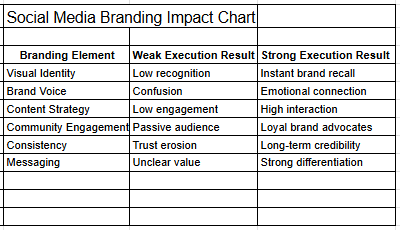
This chart highlights how intentional social media branding directly influences business outcomes.
15. 5 Essential Social Media Branding Questions (Answered)
1. What is the main goal of social media branding?
2. How long does social media branding take to work?
3. Is social media branding more important than paid ads?
4. Can small businesses win with social media branding?
5. How often should brands post?
16. Future Trends Shaping Social Media Branding
- AI-assisted content creation
- Personalized branding
- Founder-led storytelling
- Community-based platforms
- Values-driven branding
- Short-form video dominance
17. Final Takeaways + Excell Call to Action
At Excell, we help brands turn social media into a powerful branding and growth engine. From strategy and content to visuals and analytics, we build systems, not just posts.

- Inconsistent messaging
- Low engagement
- Weak brand recognition
- Poor conversion from social
Your brand deserves more than attention; it deserves impact.
Contact us:
6420 Richmond Ave., Ste 470
Houston, TX, USA
Phone: +1 832-850-4292
Email: info@excellofficial.com