


TikTok has grown from a short-form entertainment app to a leading discovery and search platform. In 2026, TikTok shapes how people search, learn, shop, and decide.
Millions now type questions in TikTok’s search bar instead of Google, seeking tutorials, reviews, recommendations, services, providers, and insights. This shift presents a significant opportunity for those who excel at TikTok SEO and a disadvantage for those who do not.
If your content isn’t optimized for TikTok search, you’ll remain invisible to users searching for your offerings.
This Excel guide covers TikTok SEO in 2026. You’ll learn how the algorithm works, how to rank, how to attract high-intent traffic, and how to turn TikTok visibility into business growth.
Table of Contents:
- What Is TikTok SEO and Why It Matters in 2026
- How TikTok’s Algorithm Really Works Today
- Why TikTok Is Replacing Traditional Search Engines
- TikTok SEO vs Traditional Social Media Posting
- Keyword Research for TikTok SEO (Complete Guide)
- How to Structure TikTok Videos for Maximum Rankings
- Captions, Hashtags, and On-Screen Text Explained
- Engagement Signals That Control TikTok SEO Rankings
- Content Formats That Dominate TikTok Search
- 5 Critical TikTok SEO Questions Answered
- Advanced TikTok SEO Strategies for 2026
- TikTok SEO vs Google SEO: Strategic Comparison
- How Businesses Use TikTok SEO to Generate Leads
- The Future of TikTok SEO Beyond 2026
- Final Takeaways + Excell Call to Action
1. What Is TikTok SEO and Why It Matters in 2026
TikTok SEO means optimizing your content for TikTok’s internal search. Your content then appears when users search for keywords, phrases, or topics.
Unlike trend strategies, TikTok SEO targets intent-driven visibility.
TikTok SEO in Simple Terms
TikTok SEO helps TikTok understand:
- What your video is about
- Who should see it
- When it should appear in search results
Why TikTok SEO Is Critical in 2026
- TikTok videos rank on Google search results.
- Users trust TikTok creators more than traditional ads.
- Search-optimized videos outperform trends long-term.
TikTok SEO allows content to generate:
- Consistent views
- Evergreen traffic
- High-intent leads
- Brand authority
2. How TikTok’s Algorithm Really Works Today
TikTok’s algorithm is no longer a mystery reliant on luck, trends, or random virality. In 2026, it is a relevance-driven discovery engine, like Google, but optimized for short videos and behavioral signals, not backlinks or long text.
To use TikTok SEO effectively, you must understand the algorithm. Otherwise, creators and brands misjudge why some videos succeed while others do not, even if they seem high-quality.
The key truth is this:
TikTok does not promote videos; it matches content to intent.
TikTok’s Algorithm Is Built Around Relevance, Not Popularity
Early TikTok virality was random; videos exploded for no clear reason. Now, that’s changed.
TikTok’s algorithm now favors relevance, not popularity. Videos do not need many followers or quick engagement to succeed. They must clearly answer a user’s question or search intent.
Key takeaway: To ensure lasting content success, focus on mastering TikTok SEO, as relevance and intent alignment drive discoverability and sustained visibility.
TikTok’s system evaluates each video by asking:
- What is this content about?
- Who is most likely to want this content?
- Does this content satisfy the viewer upon first viewing?
The Algorithm’s Core Goal
Deliver the most relevant content to the right user at the right time.
This mirrors the fundamental goal of all search engines.
Instead of relying on backlinks, domain authority, or long text, TikTok uses behavioral data, language recognition, visual analysis, and user patterns.
- Behavioral data
- Language recognition
- Visual analysis
- User interaction patterns
TikTok Is Now a Search-First Platform
In 2026, TikTok functions in two primary discovery modes:
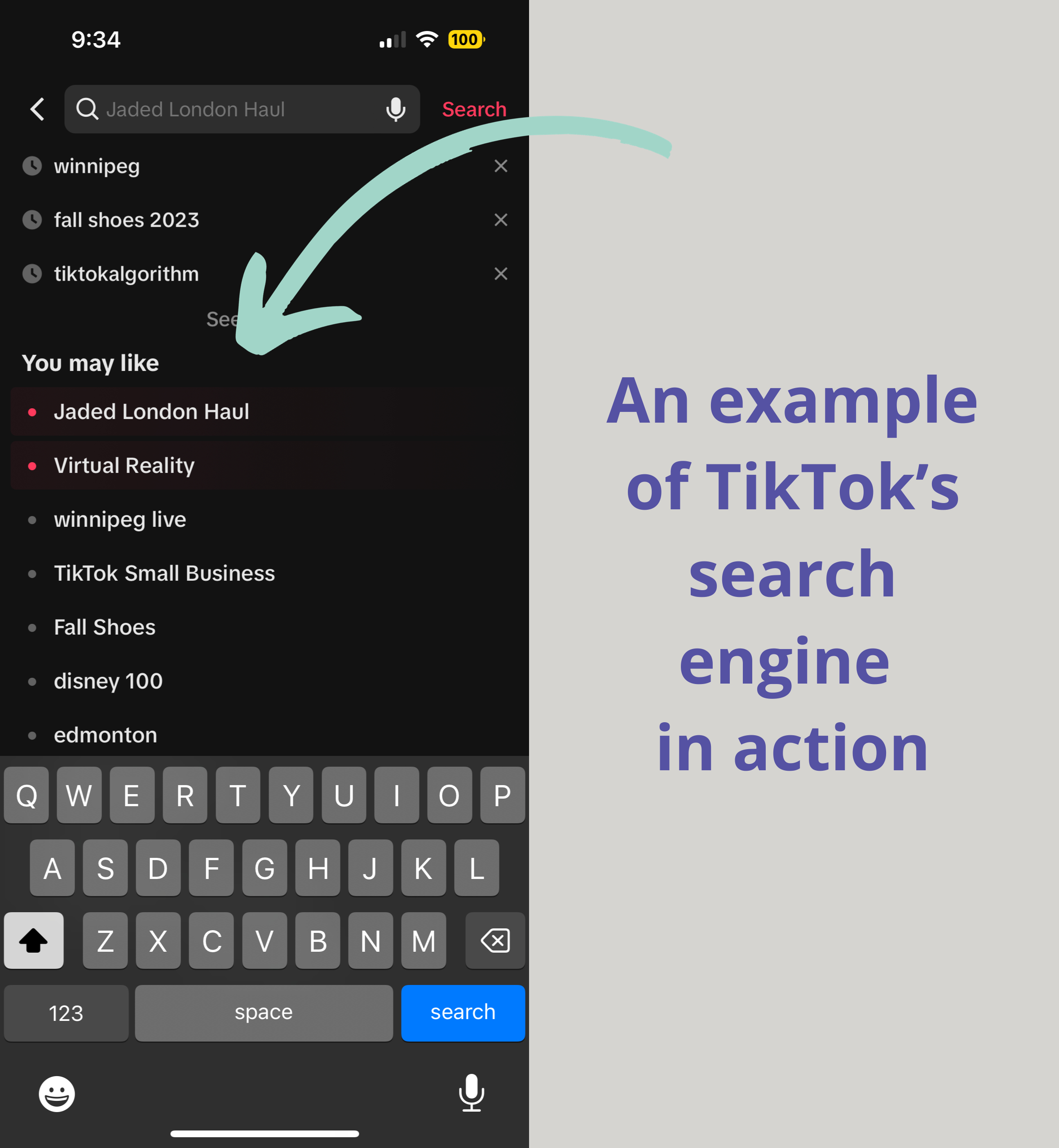
- For You Page (FYP) discovery
- Search-based discovery
TikTok SEO focuses heavily on the second mode.
When a user searches a term like:
- “TikTok SEO tips”
- “How to rank on TikTok.”
- “Best marketing strategy for TikTok”
- “TikTok SEO for business”
TikTok checks its video database and ranks content on semantic relevance and performance. Follower count does not matter.
This is why smaller creators and newer accounts can outrank established ones if their content is better optimized and more relevant.
TikTok Algorithm Ranking Signals Explained in Depth
TikTok evaluates content using many signals. None works alone; TikTok’s AI combines them to understand your content, who it’s for, and if it deserves to keep ranking.
Below is a detailed breakdown of each ranking factor and how it affects TikTok SEO.
1. Keywords in Captions
Captions are one of TikTok’s primary contextual signals.
When you include keywords in your caption, you are explicitly telling TikTok:
“This is what my video is about.”
TikTok’s algorithm can spot natural language and detect keyword stuffing.
Best practices for captions:
- Include the primary keyword within the first sentence.
- Write in complete, conversational sentences.
- Match the wording users would actually search.
A strong caption doesn’t just repeat keywords; it reinforces intent.
2. Keywords Spoken in Audio (Voice Recognition)
TikTok converts spoken words into text. It uses these words to understand video context.
This means:
- If you say your keyword out loud, TikTok can index it.
- If you don’t say it, TikTok may misclassify your content.
For example, if your video is about TikTok SEO but you never actually say “TikTok SEO,” TikTok may struggle to rank it accurately in search results.
Best practice:
- Say the primary keyword clearly within the first 3–5 seconds.
- Repeat it naturally during the explanation.
3. On-Screen Text Recognition (OCR)
TikTok uses optical character recognition (OCR) to read text displayed on screen.
This includes:
- Headline overlays
- Bullet points
- Step numbers
- Captions added inside the video.
OCR allows TikTok to:
- Reinforce keyword relevance
- Validate the topic of the video.
- Match content with search queries
In TikTok SEO, on-screen text serves as H1 and H2 headings, as in traditional SEO.
Best practices:
- Display the main keyword prominently.
- Use short, readable phrases.
- Avoid clutter or excessive text.
4. Watch Time and Completion Rate
Once TikTok understands what your video is about, performance determines how long it continues ranking.
Two of the most important performance metrics are:
- Average watch time
- Completion rate
Watch time signals whether your content holds attention. Completion rate signals whether it fully satisfies the viewer.
From TikTok’s perspective:
- High watch time = valuable content
- High completion rate = content fulfilled its promise.
5. Engagement Quality (Comments, Saves, Shares)
Engagement is not just about volume; it’s about quality and intent.

TikTok pays close attention to:
- Saves (signals long-term value)
- Shares (signals usefulness)
- Comments (signals relevance and interest)
Even more importantly, TikTok analyzes comment content.
Comments that include:
- Related keywords
- Follow-up questions
- Expressions of understanding
Reinforce the video’s topical authority.
Encouraging meaningful interaction, not just likes, is critical for TikTok SEO.
6. Search Behavior Alignment
TikTok monitors how users interact with content after searching.
For example:
- Does the user click your video after searching for a keyword?
- Do they watch it longer than other results?
- Do they save or share it?
- Do they stop searching afterward?
If users consistently choose your video and engage deeply, TikTok elevates its ranking.
3. Why TikTok Is Replacing Traditional Search Engines
TikTok now competes not only with other social media platforms but also with Google. In 2026, TikTok has become a behavior-driven search engine. Users actively seek answers, recommendations, and solutions, not just entertainment.
This shift did not happen by accident. TikTok is replacing traditional search engines because it delivers what search engines struggle with: human explanations, visual proof, and real-world context.
Instead of presenting users with a list of links, TikTok shows them answers from real people, often within seconds.
The Evolution of Search Behavior
Traditional search engines like Google were built for a world where:
- Users were comfortable reading long articles.
- Information was primarily text-based.
- Authority was measured by the number of backlinks and the number of websites.
User behavior has changed dramatically.
Today’s users, especially Gen Z and Millennials, want:
- Immediate clarity
- Visual confirmation
- Practical demonstrations
- Real opinions, not corporate messaging
TikTok Delivers Answers, Not Options
One of the biggest reasons TikTok is replacing traditional search engines is the way information is presented. conflicting information.
- Dense or technical language
Users must:
- Open multiple links
- Skim long text
- Compare sources
- Interpret information themselves
TikTok removes this friction.
A single TikTok video can:
- Clearly state the problem.
- Demonstrate the solution
- Show real results
- Provide context instantly
Google gives options. TikTok gives answers.
Why Users Prefer TikTok Search
TikTok search aligns with how humans naturally learn and make decisions.
Below are the core reasons users are shifting their search behavior.
Faster Answers With Less Effort
TikTok search delivers value immediately.
Instead of:
- Reading thousands of words
- Scrolling through ads
- Deciphering complex explanations
Users can:
- Watch a 30–60 second video.
- Hear the explanation
- See the process visually.
- Understand the outcome quickly.
Visual Demonstrations Build Understanding
Visual proof is one of TikTok’s strongest advantages over traditional search engines.
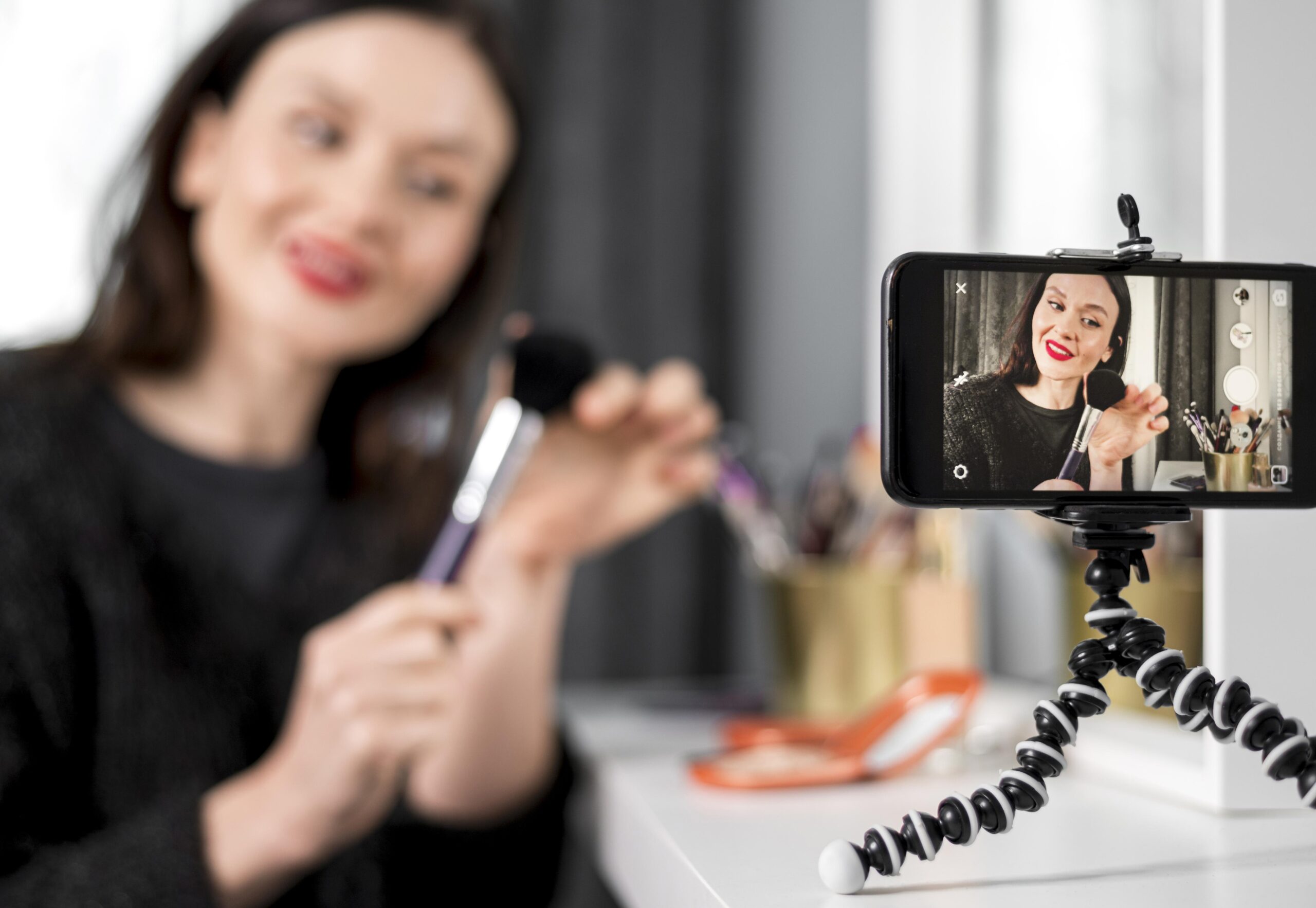
Users can:
- Watch a product being used.
- See before-and-after results
- Observe step-by-step processes
- Understand tone, nuance, and context.
This is especially powerful for searches related to:
- Marketing strategies
- Fitness routines
- Beauty and skincare
- DIY and tutorials
- Business advice
- Software walkthroughs
Trust in Real Creators Over Faceless Websites
Trust is one of the biggest reasons TikTok is replacing traditional search.
Modern users are skeptical of:
- SEO-stuffed articles
- Affiliate-heavy blog posts
- Corporate messaging
- Anonymous advice
TikTok flips this dynamic.
Users see:
- Real people
- Personal experiences
- Transparent opinions
- Successes and failures
This creates parasocial trust, in which users feel they know the creator even though they’ve never met them.
As a result, TikTok creators often carry more influence than high-ranking websites.
Easier to Understand Than Articles
Many traditional search results:
- Over-explain
- Use technical jargon
- They are written for algorithms, not humans.
TikTok content is:
- They are written for algorithms, not humans. Designed for clarity.
Creators naturally break down complex ideas into digestible explanations because they are speaking to real people, not optimizing for word count.
This makes TikTok search especially appealing for:
- Beginners
- Non-technical users
- People seeking quick clarity
Traditional search engines prioritize theoretical authority.
TikTok prioritizes practical experience.
On TikTok, users can see:
- What actually worked
- What failed
- What creators recommend after trial and error
TikTok Excels at Discovery-Based Searches
TikTok is especially powerful for searches where users don’t know exactly what they’re looking for.
Examples include:
- “Best way to grow on TikTok”
- “Marketing ideas for small businesses”
- “Things I should know before starting a business”
- “Is TikTok SEO worth it?”
TikTok Search Feels Personalized
TikTok’s algorithm tailors search results based on:
- Previous viewing behavior
- Engagement history
- Interests and preferences
This makes TikTok search feel:
- Personalized
- Relevant
- Less overwhelming
Two users searching the same phrase may see completely different results optimized for what TikTok believes will help them most.
This level of personalization is something traditional search engines are still struggling to replicate.
The Role of AI in TikTok’s Search Dominance
TikTok’s AI doesn’t just index content, it interprets it.
Using:
- Natural language processing
- Visual recognition
- Behavioral modeling
TikTok understands:
- Context
- Intent
- Satisfaction
This allows TikTok to match content to users with remarkable accuracy.
As a result, TikTok search often feels more intuitive and human than traditional search engines.
Why This Shift Makes TikTok SEO Essential
Because TikTok is now a search engine, TikTok SEO is no longer optional.
If your content is not optimized for TikTok search:
- It won’t appear when users search.
- It won’t reach high-intent audiences.
- It won’t generate consistent traffic.

TikTok SEO ensures your content:
- Is discoverable long-term
- Reaches users actively looking for answers
- Builds authority and trust at scale
Brands and creators who understand this shift gain a massive advantage.
Those who don’t will struggle to compete for attention in an increasingly search-driven digital world.
TikTok Is Not Replacing Google, It’s Redefining Search
It’s important to clarify one thing: TikTok is not eliminating traditional search engines. It is changing what people expect from search.
Search is no longer just about information; it’s about:
- Understanding
- Trust
- Demonstration
- Experience
TikTok delivers all four in a way traditional search engines rarely can.
That is why TikTok SEO is now a critical pillar of modern digital strategy, not just a social media tactic.
4. TikTok SEO vs Traditional Social Media Posting
Traditional Posting Looks Like:
- Jumping on trends
- Random captions
- No keyword targeting
- Short lifespan
TikTok SEO Posting Looks Like:
- Keyword-driven topics
- Search-intent hooks
- Structured captions
- Long-term discoverability
5. Keyword Research for TikTok SEO (Complete Guide)
Step 1:Keyword research is the foundation of successful TikTok SEO.
- Auto-suggestions
- Related searches
- Long-tail phrases
Typing “TikTok SEO” may show:
- tiktok seo tips
- tiktok seo keywords
- tiktok seo strategy
- tiktok seo for business
Step 2: Analyze Ranking Videos
- Hook language
- Caption structure
- Text overlays
- Video length
Step 3: Assign One Keyword Per Video
- One primary keyword
- 2–4 supporting phrases
6. How to Structure TikTok Videos for Maximum Rankings
Ideal TikTok SEO Video Structure
- Keyword-based hook (first 3 seconds)
- Clear value promise
- Structured explanation
- Visual reinforcement
- Engagement prompt
Example Hook:
“If you want to rank on TikTok search in 2026, this TikTok SEO strategy is essential.”
7. Captions, Hashtags, and On-Screen Text Explained
Captions for TikTok SEO
- Include the keyword early.
- Explain the video clearly.
- Match search intent
Hashtags in 2026
- #tiktokseHashtags help categorize, not boost artificially.nt trending tags.
On-Screen Text Is Mandatory
- Display the keyword
- Reinforce topic clarity
- Use readable fonts
8. Engagement Signals That Control TikTok SEO Rankings
Most Important Engagement Signals
- Watch time
- Completion rate
- Saves
- Shares
- Keyword-rich comments
- Ask a question
- Invite saves
- Respond to comments with videos.
9. Content Formats That Dominate TikTok Search
Best TikTok SEO Content Types
- How-to tutorials
- Explainer videos
- Lists and frameworks
- Mistake breakdowns
- Case studies
10. 5 Critical TikTok SEO Questions Answered
1. What is TikTok SEO and why is it important?
2. How long does TikTok SEO take to work?
3. Do captions really matter for TikTok SEO?
4. Are hashtags still useful in TikTok SEO?
5. Can TikTok SEO drive business leads?
11. Advanced TikTok SEO Strategies for 2026
- Build keyword content clusters.
- Repurpose SEO videos
- Optimize creator bios
- Use comment-based SEO replies.
Avoid:
- No keyword research
- Trend-only posting
- Ignoring search intent
- Keyword stuffing
- Weak hooks
12. TikTok SEO vs Google SEO: Strategic Comparison
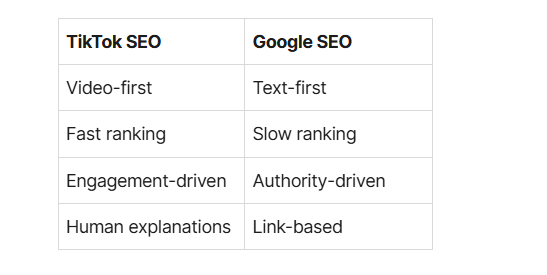
Best strategy? Use both together.
13. How Businesses Use TikTok SEO to Generate Leads
- Targeting problem-based keywords
- Educating users
- Positioning authority
- Adding strong CTAs
14. The Future of TikTok SEO Beyond 2026
- Voice search optimization
- AI-driven content indexing
- Deeper Google-TikTok integration
- Search-based monetization
15. Final Takeaways: TikTok SEO Is a Long-Term Growth Engine
- Build evergreen visibility

- Develop powerful TikTok SEO strategies.
- Create search-optimized video content.
- Turn views into leads and revenue.
Contact us today and Book your free discovery call to get done for your services and dominate TikTok SEO now and into the future.
Contact us:
6420 Richmond Ave., Ste 470
Houston, TX, USA
Phone: +1 832-850-4292
Email: info@excellofficial.com