


Search engine optimization has changed a lot in recent years. Old SEO methods that relied just on matching keywords and collecting backlinks are no longer enough for lasting results. Now, Google looks for websites that demonstrate expertise and authority and cover topics in depth.
That’s why topical map SEO is now one of the best ways to achieve steady organic growth.
A topical map organizes your website content around a main subject and connects related subtopics using smart internal links and relevant themes. Rather than having separate articles that compete with each other, topical mapping creates a network of connected content that boosts your website’s authority.
Businesses that implement topical mapping correctly often experience:
- Higher keyword rankings
- Increased organic traffic
- Better user engagement
- Improved crawlability
- Stronger topical authority
- More qualified leads
In this guide, we’ll show you how topical mapping works, why it’s important for today’s SEO, and how you can use it to grow your website traffic over time.
Table of Contents:
- What Is Topical Map SEO?
- Why Google Cares About Topical Authority?
- How Search Engines Understand Topics?
- How Topical Mapping Works?
- Pillar Pages and Topic Clusters Explained
- The Relationship Between Semantic SEO and Topical Mapping
- Benefits of Using Topical Map SEO
- How Topical Mapping Improves Organic Traffic?
- Step-by-Step Guide to Building a Topical Map
- Internal Linking and Topical Authority
- Common Topical Mapping Mistakes
- Real-World Examples of Topical Mapping
- Topical Map SEO vs Traditional SEO
- AI Search and the Future of Topical SEO
- Why Businesses Need Topical Mapping?
- How Long Does Topical Mapping Take to Work?
- Measuring Topical SEO Success
- 5 Common Questions About Topical Map SEO
- Final Thoughts
- Ready to Grow Your Organic Traffic?
What Is Topical Map SEO?
Topical map SEO means organizing your content around a main subject and its related subtopics. This helps build authority and improve your search engine rankings.
Instead of posting unrelated blog articles based solely on single keywords, topical mapping organizes your content so that each article supports your website’s main topic.
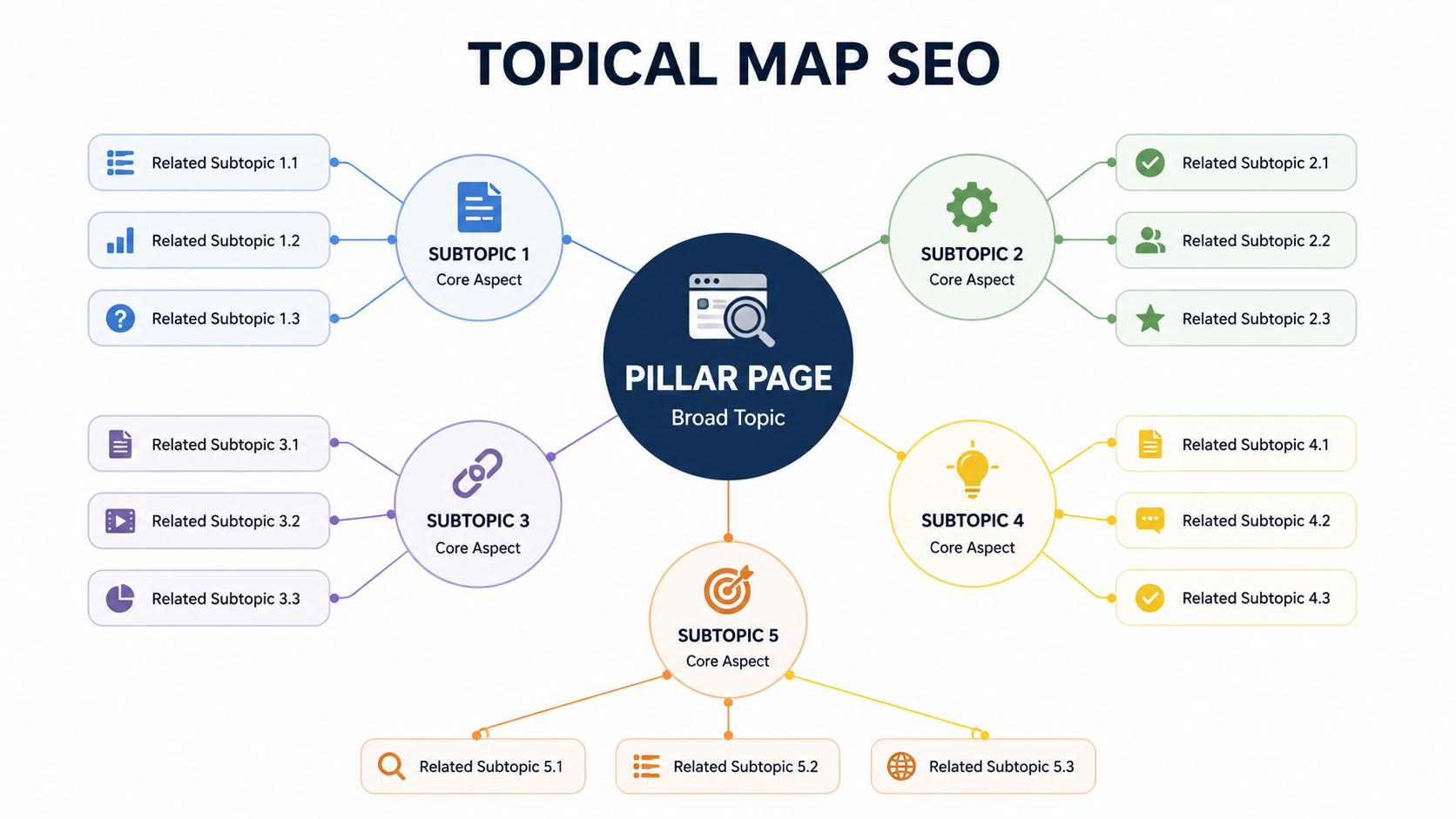
For example, if your website focuses on digital marketing, your topical map may include:
Main Topic
Digital Marketing
Subtopics
- SEO
- PPC Advertising
- Content Marketing
- Email Marketing
- Social Media Marketing
- Conversion Rate Optimization
- AI Marketing Tools
Each subtopic can lead to more detailed articles.
For SEO alone, you may create:
- Technical SEO Guide
- On-Page SEO Checklist
- Local SEO Strategies
- Semantic SEO Explained
- Internal Linking Best Practices
- Topical Authority SEO
- SEO for AI Search
All these pages link together to show your expertise.
This setup tells Google that your website has a strong understanding of the topic.
Why Google Cares About Topical Authority?
Google’s mission is simple:
Provide users with the best and most trustworthy answers possible.
To achieve this, search engines no longer evaluate pages independently. Instead, they assess:
- Website expertise
- Topic depth
- Semantic relationships
- Content quality
- User experience
- Authority within a niche
That’s why topical authority is so important.
A website with dozens of comprehensive, interconnected articles about SEO is usually more trustworthy than a website with only one SEO article.
Google’s algorithms analyze:
- How content relates semantically
- Whether topics are covered comprehensively
- Internal linking structures
- User engagement signals
- Consistency of expertise
Topical mapping helps with all these ranking factors.
How Search Engines Understand Topics?
Modern search engines use advanced AI and natural language processing to understand meaning rather than simple keyword repetition.
Google now recognizes:
- Synonyms
- Search intent
- Entities
- Topic relationships
- Contextual meaning
For example, Google understands that:
- “Topical authority”
- “Content clusters”
- “Semantic SEO”
- “Topic relevance”
They are all closely connected concepts.
Because of this change, websites can’t rely on keyword stuffing anymore.
Instead, search engines reward:
- Contextual relevance
- Topic depth
- Comprehensive information
- Semantic coverage
Topical mapping gives you all of these benefits.
How Topical Mapping Works?
A topical map structures content into layers.
These layers make it easier for search engines to see how topics are connected.
Core Topic
This is your primary niche.
Examples:
- Personal injury law
- SEO marketing
- Wildfire insurance claims
- Family law
- Fitness coaching
Pillar Pages
Pillar pages provide broad overviews of major topics.
Example:
“Complete Guide to SEO”
This page links to more detailed supporting articles.
Supporting Cluster Content
These are in-depth articles focused on specific subtopics.
Examples:
- Technical SEO Best Practices
- What Is Semantic SEO?
- How Internal Linking Works
- AI SEO Optimization
- Topical Authority Guide
Each supporting article links to the main pillar page and to other related articles.
Internal Link Structure
Internal links connect the content ecosystem together.
This makes your site more relevant to the topic and easier for search engines to crawl.
Pillar Pages and Topic Clusters Explained
Topic clusters are a major part of topical mapping.
A cluster includes:
- One broad pillar page
- Multiple supporting articles
Example of a Topic Cluster
Pillar Page
“Complete Guide to Local SEO”
Supporting Articles
- Google Business Profile Optimization
- Local Keyword Research
- Online Reviews for SEO
- Local Citation Building
- Local SEO Ranking Factors
- Mobile Optimization for Local Search
Together, these pages create a strong topical authority signal.
The Relationship Between Semantic SEO and Topical Mapping
Semantic SEO focuses on meaning and contextual relevance.
Topical mapping supports semantic SEO by naturally organizing related concepts.
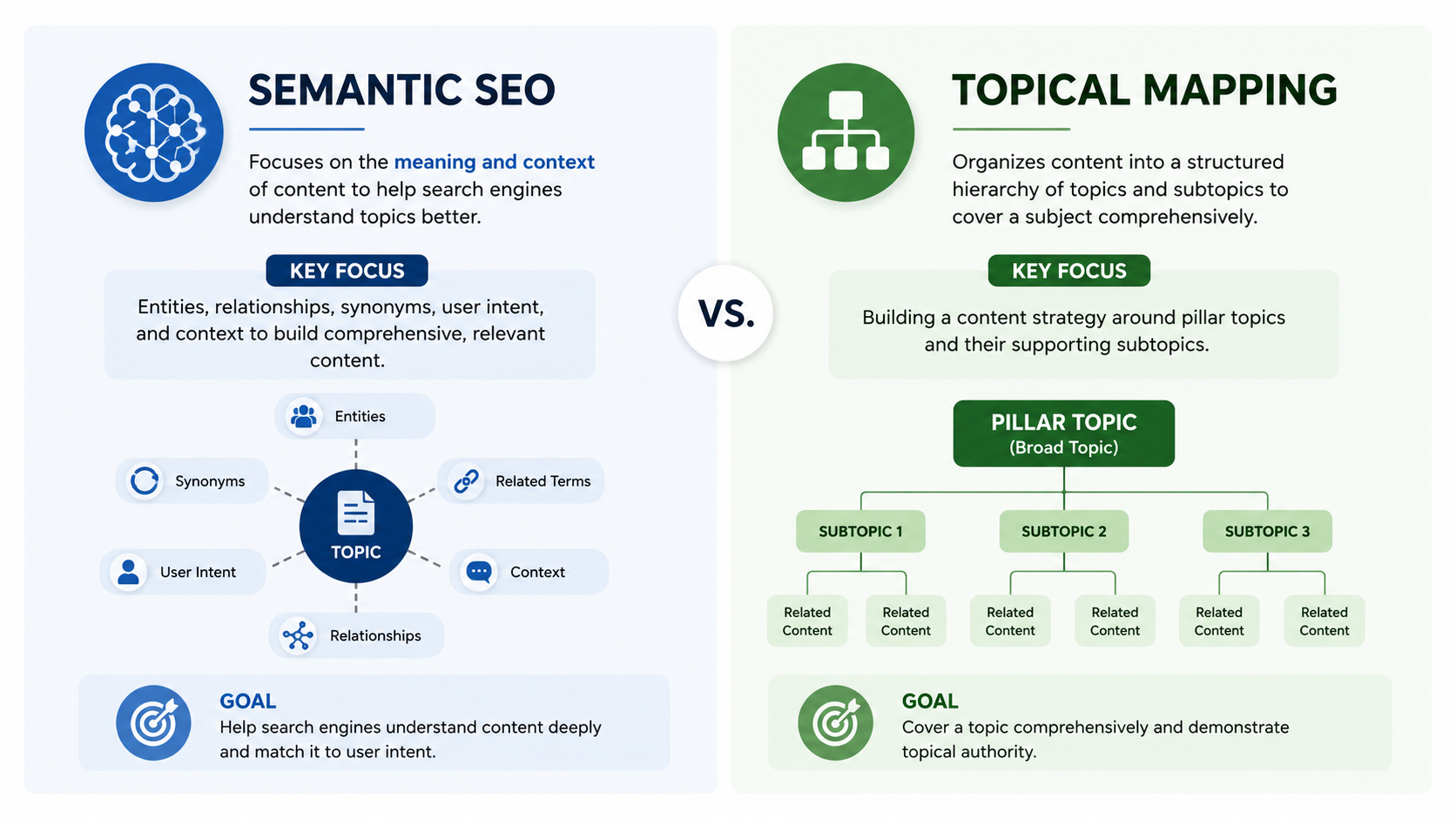
For example, a page about “topical authority” may also discuss:
- Search intent
- Entity SEO
- Semantic indexing
- Content clusters
- Knowledge graphs
Google recognizes that these ideas are connected.
This improves:
- Ranking potential
- Keyword diversity
- User satisfaction
Benefits of Using Topical Map SEO
1. Stronger Topical Authority
Topical maps help establish expertise within a niche.
The more complete your coverage is, the more trustworthy your site looks.
2. Higher Organic Rankings
With topical mapping, your pages can rank for many related keywords, not just one.
3. Better User Experience
Visitors can easily move between related topics.
This improves:
- Time on site
- Pages per session
- Engagement rates
4. Improved Crawlability
Search engines can find and understand your website more easily.
5. Increased Organic Traffic
Covering topics in depth helps you reach more keywords.
6. Long-Term SEO Stability
Websites with strong topical authority are less affected by algorithm changes.
7. More Featured Snippet Opportunities
Comprehensive content often wins:
- Featured snippets
- People Also Ask positions.
- AI-generated summaries
How Topical Mapping Improves Organic Traffic?
Organic traffic growth happens because topical mapping increases visibility across entire keyword ecosystems.
Instead of ranking for:
- One keyword
- One phrase
- One search query
Your website can rank for:
- Long-tail keywords
- Semantic variations
- Question-based searches
- Voice search queries
- Conversational AI searches
For example, a single article about topical map SEO may rank for:
- topical authority
- semantic SEO
- topic clusters
- content mapping SEO
- SEO content architecture
- internal linking strategy
This multiplies traffic opportunities.
Step-by-Step Guide to Building a Topical Map
Step 1: Choose a Core Topic
Start with your main industry or service.
Examples:
- SEO services
- Personal injury law
- Real estate investing
- Fitness coaching
Pick a topic that people are searching for.
Step 2: Perform Keyword Research
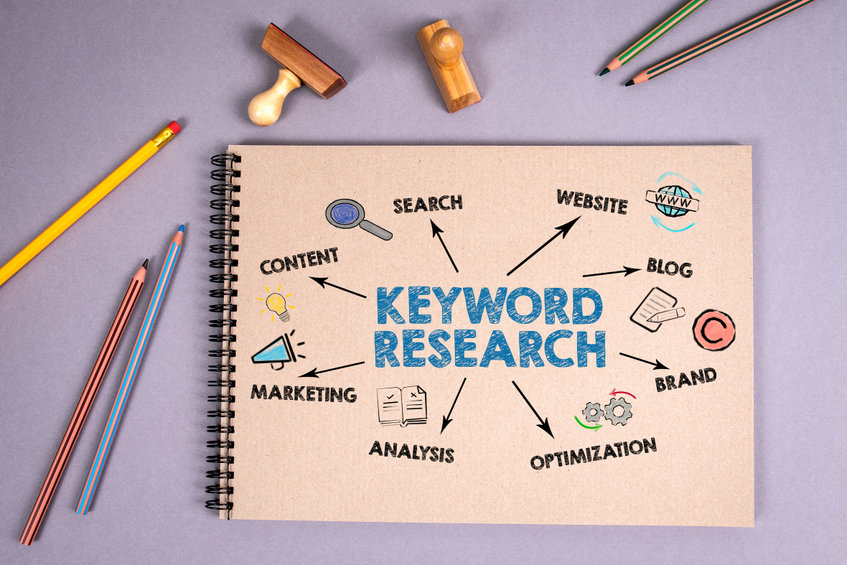
Use SEO tools to identify:
- Primary keywords
- Long-tail keywords
- Questions
- Related searches
- Semantic terms
For topical map SEO, related keywords may include:
- topical authority SEO
- semantic search optimization
- content clustering
- SEO topic clusters
- topical relevance
Step 3: Group Keywords Into Categories
Organize keywords into logical sections.
Main Topic
Topical Map SEO
Supporting Topics
- Content clusters
- Semantic SEO
- Internal linking
- Search intent
- Entity optimization
Step 4: Create Pillar Pages
Pillar pages should:
- Cover broad topics comprehensively.
- Link to supporting pages
- Provide strong foundational content.
Step 5: Publish Supporting Content
Supporting articles should answer detailed questions and explore subtopics deeply.
Step 6: Build Internal Links
Link related pages strategically.
Use natural anchor text.
Avoid spammy over-optimization.
Step 7: Update Content Regularly
Google values freshness.
Refresh content with:
- Updated statistics
- New examples
- Expanded insights
- Emerging trends
Internal Linking and Topical Authority
Internal linking is critical for topical mapping.
Without internal links, Google struggles to understand how pages relate to one another.
Strong internal linking:
- Distributes authority
- Helps indexing
- Improves navigation
- Reinforces semantic relevance
For example:
A page about “semantic SEO” should link to:
- topical authority
- AI SEO
- entity optimization
- content clusters
This strengthens the entire content network.
Common Topical Mapping Mistakes
Publishing Random Content
Unrelated articles weaken topical authority.
Keep your content focused on your main topic.
Ignoring Search Intent
Understand whether users want:
- Information
- Services
- Comparisons
- Tutorials
- Product recommendations
Weak Internal Linking
Disconnected pages reduce SEO strength.
Every cluster should connect naturally.
Thin Content
Short, shallow content rarely ranks well today.
Comprehensive content performs better.
Keyword Stuffing
Modern SEO prioritizes natural language and user experience.
Avoid excessive keyword repetition.
Real-World Examples of Topical Mapping
Example 1: Law Firm Website
Main Topic
Personal Injury Law
Supporting Topics
- Car accidents
- Truck accidents
- Wrongful death
- Insurance claims
- Settlement negotiations
- Injury compensation
This creates authority in the legal niche.
Example 2: Fitness Website
Main Topic
Weight Loss
Supporting Topics
- Fat-burning workouts
- Nutrition plans
- Meal prepping
- Cardio exercises
- Strength training
Each page supports the broader subject.
Example 3: Digital Marketing Agency
Main Topic
SEO Services
Supporting Topics
- Technical SEO
- Local SEO
- AI SEO
- Link building
- Content optimization
- Topical authority
This helps rank for numerous marketing searches.
Topical Map SEO vs Traditional SEO
Traditional SEO

Older SEO strategies focused heavily on:
- Exact-match keywords
- Individual pages
- Backlink quantity
This often produced disconnected content.
Modern Topical SEO
Today’s SEO emphasizes:
- Semantic relevance
- User intent
- Topic depth
- Entity relationships
- Content ecosystems
Topical mapping aligns perfectly with modern search algorithms.
AI Search and the Future of Topical SEO
Artificial intelligence is changing search rapidly.
Google now uses advanced AI systems to evaluate:
- Content quality
- Semantic meaning
- Contextual relationships
- Search intent
AI-generated search summaries rely heavily on authoritative content sources.
Websites with strong topical authority are more likely to appear in:
- AI Overviews
- Featured snippets
- Voice search responses
- Conversational search results
Topical mapping helps make your SEO strategy future-ready.
Why Businesses Need Topical Mapping?
If your business depends on organic traffic, you can’t afford to use scattered content strategies anymore.
A strong topical map helps:
- Build brand authority
- Improve lead generation
- Increase conversion opportunities
- Strengthen long-term visibility
Instead of going after random traffic, businesses can attract people who are actively seeking their expertise.
How Long Does Topical Mapping Take to Work?
Topical mapping takes time and is a long-term approach.
Results depend on:
- Competition
- Content quality
- Website authority
- Publishing consistency
- Internal linking structure
Some websites start to see results in just a few months.
Larger authority gains may take:
- 6 months
- 12 months
- Or longer in competitive niches
But the long-term rewards are worth it.
Measuring Topical SEO Success
Track these metrics:
Organic Traffic
Keep an eye on your overall growth.
Keyword Rankings
Track how your rankings change across different topic clusters.
User Engagement
Measure:
- Time on page
- Bounce rate
- Pages per session
Indexing and Crawlability
Use Google Search Console for crawl insights.
Conversions
Measure how many leads, calls, and inquiries you get from organic traffic.
5 Common Questions About Topical Map SEO
1. What is topical map SEO?
Topical map SEO is a content strategy that organizes website pages around a primary subject and related subtopics to improve topical authority and search visibility.
2. Why is topical authority important?
Topical authority helps Google recognize your website as a trusted source within a niche, improving rankings and organic visibility.
3. How does topical mapping increase organic traffic?
It allows websites to rank for broader groups of related keywords, semantic searches, and long-tail queries, rather than targeting individual keywords.
4. Are topic clusters necessary for SEO?
Yes. Topic clusters help search engines understand relationships between pages and strengthen content relevance.
5. Can small businesses use topical map SEO?
Absolutely. Small businesses can compete effectively by building deep expertise in a focused niche rather than targeting broad competitive terms.
Final Thoughts
SEO has evolved far beyond simple keyword optimization.
Modern search engines prioritize:
- Expertise
- Topic depth
- Semantic relevance
- User experience
- Comprehensive content ecosystems
That’s why topical map SEO is now one of the best long-term ways to grow your organic traffic.
A well-structured topical map helps websites:
- Build authority
- Improve rankings
- Strengthen internal linking
- Increase visibility
- Get steady, long-term traffic growth.
Businesses that focus on topical authority now will stay ahead of competitors who still use old SEO methods.
The future of SEO will favor websites that offer complete, well-organized, and trustworthy information.
Topical mapping helps make this possible.

Ready to Grow Your Organic Traffic?
At Excell, we focus on advanced SEO strategies that help businesses improve their search rankings and get real results.
Our team helps brands build:
- Topical authority
- SEO content clusters
- High-converting content strategies
- Technical SEO improvements
- AI-ready search optimization
- Long-term organic growth systems
If you want to generate more leads, boost your visibility, or beat the competition, Excell can help you build an SEO strategy that aligns with your business goals.
Contact us today and Book your free discovery call to get done for your services.
Contact us:
EXCELL INDUSTRIES LLC
6420 Richmond Ave., Ste 470
Houston, TX, USA
Phone: +1 832-850-4292
Email: info@excellofficial.com