

Table of Contents:
- Is Digital Marketing Real? The short answer
- How Does Digital Marketing Work?
- Digital Marketing Channels You Should Know
- Why Companies Invest in Digital Marketing?
- Measuring Results & Profitability
- Authentic Marketing vs. Deceptive Offers
- Why Campaigns Don’t Work?
- How to Choose a Digital Marketing Agency?
- A Practical Starting Plan
- FAQ (Common Questions)
- Excell – Take the Next Step
1. Is Digital Marketing Real? The short answer
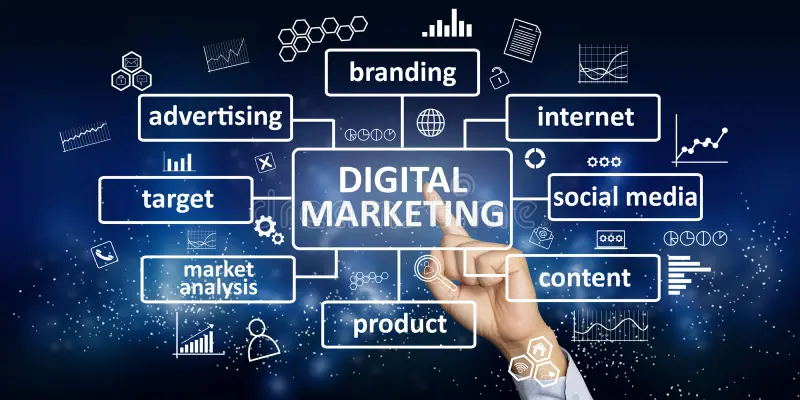
Yes, digital marketing is legit. It’s the discipline of using online channels to help customers discover a business, understand its value, and take actions such as making a purchase, booking an appointment, or seeking a quote. Digital marketing includes search engine optimization, paid advertising, email campaigns, social media, and website updates.
But being a reputable marketing channel doesn’t mean that all service providers are trustworthy or that all campaigns are profitable. Your results depend on your offer, your audience, the competition, your execution, your budget, and how well you convert leads into consumers.
If you’ve looked for “Is digital marketing legit?”, you may have found mixed messages. One company offers growth without any effort, another promises complex analytics, while a social media maker promises everyone can make money instantly. Such assertions can make a sound business discipline look like a dubious chance.
A crucial distinction is between selling an actual business and selling an income promise. Local contractor marketing connects homeowners with a service. There is a lot more to see with a sales pitch offering guaranteed passive income from some unknown “digital system.”
The question for business owners is if the planned work has a clear objective, measurable results, transparent expenses, and a plausible link to client demand. These are the parameters to apply when considering whether digital marketing should be part of your growth strategy.
2. How Does Digital Marketing Work?
Digital marketing is all about connecting a firm with potential clients through a series of decisions and interactions. The process starts with understanding the customer and continues through the transaction and the customer connection thereafter.
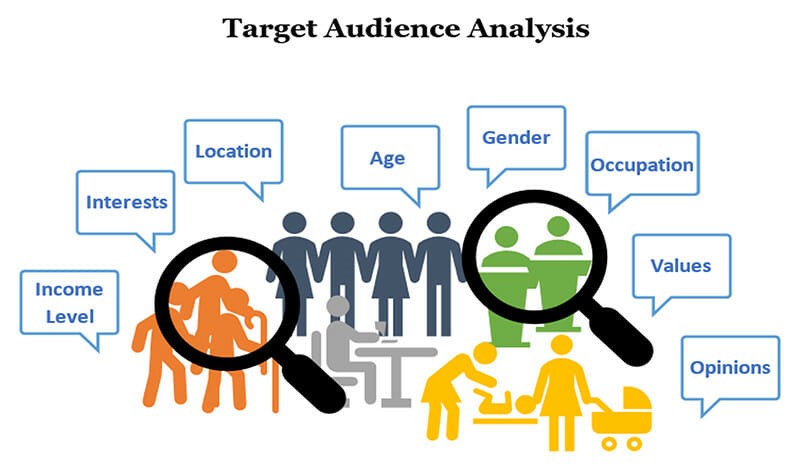
Define your target audience and business goal
“Get more exposure” is too vague a goal to inform a useful campaign. A more aggressive goal might be to get qualified commercial cleaning estimate requests in a certain service area.
That aim helps shape the audience, message, channel, budget, and measurement plan. It also makes it easier to see activity that is not relevant. Thousands of visits from people who are outside the service region may appear beneficial but do little to achieve that purpose.
Your audience research should include consumer needs, common objections, buying triggers, and decision criteria. A business selling immediate repairs demands a different approach than a company selling software that requires months of assessment.
Match message to purchase stage
A problem is dawning on some people. Some are shopping for providers or ready to purchase. Useful marketing gives every group the right next move.
An article for education may discuss the problem and alternative remedies. A comparison page can help buyers understand the available options. A service page might discuss scope, methodology, and reasons to contact the firm.
These interactions do not always occur in a neat sequence. A person may be referred to your organization, visit your site, read some reviews, and then come back through a search ad later on.
Make it easy to take action
Marketing should always link the message to a suitable destination. If an ad is for a specific service, the landing page should clarify the service and make the next step clear.
A successful page will contain a clear offer, helpful information, relevant proof, and a clear action such as “Request an Estimate” or “Book an Appointment.” It should be mobile-friendly and prevent unnecessary barriers.
Sending visitors to a misleading page could be a waste of otherwise relevant traffic. Marketing performance consequently depends both on appealing people and helping them to act.
Measure and Optimize
Compare the results with the original objective after launch. Assess if the campaign is reaching the proper audience, driving qualified actions and sales.
Then enhance the most vulnerable aspect of the process. If they are clicking but bouncing right away, look into your landing page & message match. If you have many queries but few buyers, look into the quality of your leads as well as your pricing, availability, and sales follow-up.
In practice, digital marketing is a cycle of plan, do, measure, and adjust.
3. Digital Marketing Channels You Should Know
Each channel has a different function. A business cannot implement all strategies simultaneously. The correct balance is a function of the customer behavior, the resources you have, and the final goal you want to achieve.
SEO
Search engine optimization (SEO) helps search engines find and understand your website and makes the material more useful to potential buyers.
This can mean upgrading the site structure, developing appropriate service pages, resolving customer concerns, and fixing difficulties that hinder people from getting to or understanding pages.
According to Google, applying SEO to content designed for people first can be beneficial. Its direction is geared toward helpful and credible information, not content that is only designed to influence ranking. The goal is to provide useful content for Google Search.
For a firm, this process involves creating material that helps customers make decisions. A detailed description of service alternatives could be more useful than a bunch of thin articles with similar keywords.
SEO is a constant process, and no one can guarantee rankings. Measure it by relevant search visibility, meaningful traffic, qualified inquiries, and business results.
Search engine marketing
Paid search advertising helps make a company visible to customers searching for related items or services.
Google’s ad system uses auctions to determine the visibility and placement of eligible ads. The factors include ad quality and landing page quality, bid, competition, and search context. The advertizer pays for cost-per-click bidding when the ad is clicked.
For example, a company that does office cleaning could advertize to consumers looking for commercial cleaning in its service region.
Paid advertising can bring traffic after campaigns are up and running, but traffic isn’t customers. Spending provides value based on search relevance, landing page quality, pricing, and follow-up.
Content Marketing
Content marketing is about attracting and helping potential customers with useful content. Examples include articles, videos, case studies, guides, and comparison pages.
Good content answers a real decision. Before reaching out to a supplier, a buyer of a sophisticated service may want to know the process, typical charges, preparation needed, and what limits to expect.
Content can also assist in sales conversations. A helpful guide gives your team a resource to share when prospects keep asking the same question over and over.
The value has to be taken in context. Some content gets early attention, and some content moves an established prospect closer to a purchase.
Marketing on Social Media
Social media provides a platform for businesses to showcase skills, share relevant work, explain products, and engage with an audience.
A service business might demonstrate its method. A retailer might show how a product works. A skilled firm can explain frequent consumer problems in straightforward words.
Pick platforms based on where your clients are paying attention and how they judge firms. Cross-posting everywhere can dilute resources without generating a substantial audience anywhere.
Follower numbers and reactions are contextual, but they shouldn’t replace the metrics that are tied to the business purpose.
E-mail marketing

Email builds relationships with subscribers, prospects, and consumers who want to hear from your business.
Welcome messages, educational updates, product information, appointment reminders, or relevant offers could be all useful campaigns.
Strong messaging gives readers an incentive to keep reading. It may be more appropriate to segment people by interest or stage than to blast every message to everyone.
Measure things like qualified answers, bookings, purchases, and repeat orders. Follow permission best practices and respect recipient choices.
Website conversion upgrades
Conversion improvement is to help visitors do an action you want them to take.
Changes could include clearer descriptions of services, simpler forms, more helpful product information, or a better mobile experience.
These enhancements can help multiple channels at once; for example, search, social, email, and advertising may all be driving users to the same page.
4. Why Companies Invest in Digital Marketing?
Companies employ digital marketing because it gives them options to get to clients, tell them what they offer, and measure how well it is working. “The potential benefits are huge, but they need to be planned for.”
Find persons with relevant needs
A business might focus its efforts on a certain service, customer segment, or area. This helps to tailor the message to the people most likely to require the offer.
A company that services one metro area should have a different acquisition plan than a nationwide internet shop. Digital channels can represent those disparities in a number of ways.
The practical payoff is relevance. A small audience that has a strong need is often better than a vast audience that has little motivation to buy.
Help customers assess the business
Potential clients frequently need more than just a phone number and a name. They might like to know how it works, compare possibilities, see samples, or see if a business serves their area.
Your internet presence can address those questions before the conversation even begins. When prospects have clear information available, it enables them to know if your firm is a good fit for them.
Marketing material must be factually correct and supported by relevant evidence. Concrete explanations are often more useful than vague claims of “bestness.”
Learn from how your customers behave
Campaign data may tell you what messages get people interested, what sites create inquiries, and what sources bring in clients.
That information can influence future investment and highlight problems beyond marketing. “The more questions you ask, the more gaps you can fill in.” When there are lots of inquiries but few purchases, this can be a sign of a qualification or offer problem.
There are restrictions to measurement, such as incomplete tracking and clients migrating between channels. Yet a systematic measurement method can lead to better decision-making.
Create reusable business assets
Helping out with many campaigns is possible through helpful articles, well-organized service sites, email sequences, and customer education materials.
A guide might be a detailed search for visitors, fodder for social posts, and sales follow-up. A clearer service page can benefit visitors from a number of sources.
These assets still have to be maintained. Their value is their ongoing usefulness to customers.
Support growth at a reasonable rate
Digital advertising can be tested within a restricted scope before investing further resources in a business.
A campaign based on a single service can be used to test the appeal of the message in generating qualified demand and the ability of the firm to fulfill the demand that results.
Scaling should be evidence-based. “If there is economics and operational capacity, more spending is useful.
5. Measuring Results & Profitability
The issue “Is digital marketing legit?” is easy to answer when reports link activity to company benefit.
Define success. A retailer may want to focus on completed purchases. A service firm may place a value on qualified appointments. A protracted sales cycle for a business may mean that opportunities must be tracked through multiple phases.
Use measurements that align with the goal
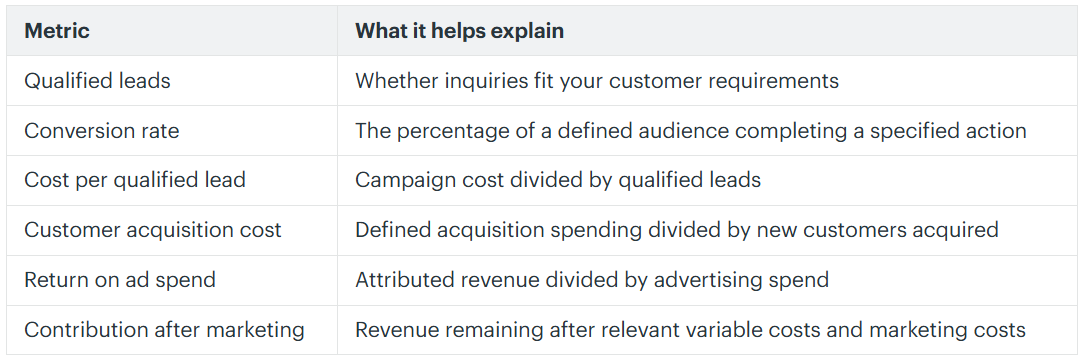
Keep definitions consistent. If one report counts all forms submitted, while another counts only forms by eligible prospects, their lead numbers are not directly comparable.
Also, separate advertising spend from total marketing expense. The overall cost of purchase may be affected by creative production, management, software, and other tasks.
See your revenue and costs together
Here is a hypothetical example:
The campaign spent $2,000 on advertising and $1,000 on management and creatives. It produces 40 qualifying leads, and 10 become clients.
That works up to $800 per consumer, or $8,000 total. The variable fulfillment expenses are 50% of revenue, which leaves $4,000 before marketing costs. $3,000 of the campaign expense is subtracted, leaving $1,000 before fixed overhead and other expenses.
The return on ad spend is 4:1 since $8,000 divided by $2,000 is four. But that doesn’t mean the campaign earned $6,000 profit. Advertising is just one of the costs.
In this simple example the acquisition cost per customer is $300. The statistics are illustrative of a calculation and are not an estimate or forecast.
Consider attribution restrictions
A client may touch multiple channels before buying. Each advertising platform can take credit, according to its own attribution guidelines.
Compare platform reports to client information, real sales, and a consistent reporting methodology. Don’t just total up every platform’s attributable revenue without checking for overlap.
Attributed sales are also different from incremental sales. Some customers would have bought even without the marketing. Controlled tests can provide stronger proof about new business created where possible.
6. Authentic Marketing vs. Deceptive Offers
Digital marketing services and online income opportunities are two different transactions. An agency can offer defined work for an existing firm. A course seller could offer to teach a skill. A promoter can offer a so-called automated business.
Assess each offer on its real terms
Business and coaching claims of guaranteed income, big returns, or a so-called proven money-making system can be scams, the Federal Trade Commission says. It also cautions against high-pressure sales and fraudulent testimonials.
With marketing services, ensure you have a stated scope, transparent prices, practical explanations, and reports linked to the agreed objectives.
A provider should be able to tell you what work will be done and why it matters to you. It should also clarify dependencies, such as access to the website, customer response times, or appropriate advertising data.
Watch out for proposals that rely on unexplained methodology, manufactured urgency, guaranteed rankings, or income claims that are not supported by a defensible basis.
Screenshots require context. An image of revenue can skip advertising expenditures, refunds, product costs, or the time it takes to achieve the outcome.
Just because a vendor has a certification or a slick presentation doesn’t mean they can address your specific business problem. Ask for relevant examples and enough detail to comprehend the work.
7. Why Campaigns Don’t Work?
A failed campaign does not mean the channel is scamming. It might be strategy, it could be execution, it could be economics, or it could be customer experience.
The offer does not meet the demand
Marketing can produce an offer, but it cannot guarantee that consumers want it at the price and terms offered.
Assess consumer needs, competitive products or services, service area, and reasons for rejection. Better messaging can help, but sometimes the problem is the offer itself.
Wrong people attracted to the campaign
Broad targeting or vague phrasing can encourage action from people who are unlikely to buy.
See real questions, and when applicable, search phrases and audience information. Refine the campaign using input from clients.
The site produces friction
This includes visitors not being able to access the information they’re looking for, not understanding the pricing expectations, or not being able to simply complete a form.
Trace the entire process from the ad/message to the final action. Ensure it works on common devices.
Follow-up collapses
Qualified inquiries might be wasted if calls are missed, mails are ignored, or prospects are left confused by a murky booking process.
Decide who will respond to questions and how results are documented. Marketing and sales need to agree on a definition of a qualified lead.
The evaluation time is unrealistic
An early program takes time to ramp up, learn, and drive sales. Long purchasing processes also delay visible revenue.
Define your review points based on the channel, the data you have, and the buying cycle. Only move forward if the evidence calls for the following step.
8. How to Choose a Digital Marketing Agency?

A good working relationship starts with clear expectations and accountability.
Ask for a proposal that includes the business purpose, target audience, proposed work, expenses, responsibilities, and reporting timeline. Clarify what is provided and what will demand extra investment.
Ask for examples that are applicable to your business strategy. A big surge in online sales for an e-commerce company doesn’t tell us much about how to get qualified appointments for a local service company.
Look at a case study and ask yourself, where did it start? How long did it go for? What was the budget? How did they define success? Results should be helpful, meaning they should have enough context.
Confirm access and ownership arrangements of accounts before work begins. Know who owns your domain, website, advertising accounts, analytics, and creative assets, and what happens if the connection stops.
Check the contract conditions, any cancellation clauses, and handover obligations. Clear terms mean fewer unnecessary arguments.
Explanations in straightforward English will be provided in the reporting. You deserve to know what happened, what it implies, and what happens next.
A good partner would also question your capacity, profitability, sales process, and customer fit. These elements decide if the firm will benefit from greater demand.
9. A Practical Starting Plan
You can start with a concentrated approach instead of opening every channel at once.
Choose one priority outcome first. Choose the one that counts, for example, qualified requests for a particular service. Record the existing baseline to provide a reference point for progress.
Secondly, review the customer journey. Look at your website, contact options, offer, and how you respond to inquiries. Fix obvious barriers before paying to shove more people through them.
Third, select a channel for a clear reason. Think about how people discover and assess your service. “Customer behavior and business needs have to justify a channel.
Fourth, create a thorough budget. This needs to include media, management, production, tools, and any necessary website work. Set expenditure caps and review points.
Fifth, specify measurement before launch. What’s going to count? How will you qualify leads? How will you record sales outcomes?
Sixth, analyze evidence and adjust. Don’t only look at activity but also lead quality and economics. If you have the results, and you have the ability to develop, then you can spend more. If the evidence does not support continuation, revise or halt work.
The goal is to have a reproducible decision process. Each cycle should expand your understanding of your clients and the economics of reaching them.
10. FAQ (Common Questions)
1. Is online marketing real for small businesses?
Yes. Digital marketing is a tool that small businesses may utilize to reach the right prospects, explain their offerings, and produce measurable inquiries or sales. Success is a matter of matching the approach to the business.
A local business can benefit from the clear local service information and concentrated promotion. It doesn’t need to have a massive audience or be on every platform.
Start with a business objective and measure qualifying results against the overall cost.
2. How long does it take for digital marketing to work?
The timeline depends on the channel, starting conditions, competition, and sales cycle.
Paid advertisements can drive traffic the moment they’re turned on, but it takes more evidence to discover which traffic converts successfully. SEO and content work often demand a lengthier review period because it takes time to build visibility and client response.
Agree on early deliverables, intermediate indicators, and business outcome review points. It is not a promise you can keep to give an exact revenue deadline without knowing the business.
3. Is digital marketing a guaranteed sale?
No vendor can ethically guarantee a precise sales outcome every time. Results are driven by customer demand, pricing and competition, fulfillment, and sales execution.
A provider can commit to defined deliverables, communication standards, reporting, and approved methodology. “Assumptions should be specified in performance forecasts.”
Use forecasts as a tool for planning and compare them with actual results as the data comes in.
4. How much should a corporation invest in digital marketing?
There isn’t one-size-fits-all business budget. A good budget incorporates your goal, margins, estimated acquisition costs, buying cycle, and flexibility to service additional demand.”
The cost of the work is $2,175. The advertising allotment does not in itself meet all the costs of executing a campaign.
Start with a scope that can provide useful evidence within your resources. Grow where customer quality, economics, and operational capability allow.
5. How do you know if a digital marketing agency is credible?
Ask for explicit explanations, a written scope, transparent pricing, relevant examples, and access to the information you need to evaluate performance.
Ask them how they assess success and what happens if a campaign fails. Check the ownership and access arrangements before you sign.
Be careful of promises of income, unexplained processes, high-pressure sales, or reports that focus on big figures but do not relate them to your business objective.
11. Excell – Take the Next Step
Digital marketing is a viable technique to reach potential clients and help build a firm. The benefit becomes evident when the strategy has a defined audience, a desirable product, transparent costs, and relevant measurement.”
Your firm deserves a practical answer to Is digital marketing legit a plan you can comprehend and evaluate.

Contact us today and Book your free discovery call to get done for your service to discuss your business goals and request a digital marketing proposal. Ask for clear priorities, defined scope, and concrete next actions. Bring your largest growth challenge. Start converting online interest into valuable customer relationships.
Contact us:
EXCELL INDUSTRIES LLC
6420 Richmond Ave., Ste 470
Houston, TX, USA
Phone: +1 832-850-4292
Email: info@excellofficial.com