
Today, ranking on Google is about more than just adding keywords to your blog posts. The businesses that do best in search results know that their content needs to match what users are really looking for. That’s why building a search intent content strategy is now one of the best ways to boost organic traffic, get more engagement, and increase conversions.
Search engines have changed significantly over the past decade. Google now cares more about relevance, helpfulness, expertise, and user satisfaction than old SEO tricks like keyword stuffing. Businesses that understand what users are searching for are more likely to get ahead of their competitors.
A good search intent content strategy helps marketers create content that meets people’s expectations when they search. Instead of writing generic articles, brands can offer targeted content that answers questions, solves problems, and helps users take action.
Whether you are running a startup, law firm, eCommerce store, SaaS company, or marketing agency, understanding search intent is essential for sustainable SEO success.
Table of Contents:
- What Is Search Intent?
- Why Search Intent Matters in SEO?
- The Evolution of Google and User Intent
- The Four Core Types of Search Intent
- How Search Intent Impacts Content Strategy?
- Keyword Research for Intent-Based SEO
- How to Analyze Search Intent Using SERPs
- Creating Content for Informational Intent
- Creating Content for Navigational Intent
- Creating Content for Commercial Investigation Intent
- Creating Content for Transactional Intent
- Search Intent and the Buyer’s Journey
- Search Intent and Topical Authority
- The Role of AI in Search Intent Optimization
- Best Content Formats for Different Intents
- How to Structure Content for User Intent
- Common Search Intent SEO Mistakes
- Measuring Search Intent SEO Success
- 5 Important Questions About Search Intent Content Strategy
- Advanced Search Intent Strategies
- The Future of Search Intent SEO
- Final Thoughts
- Strong Call to Action
What Is Search Intent?
Search intent refers to the real reason behind a user’s search on Google or any search engine. Every time someone types a phrase into the search bar, they are trying to accomplish something specific. They may want to learn new information, compare products, solve a problem, find a website, or make a purchase.
In simple terms, search intent answers the question:
“What does the user actually want?”
Understanding this concept is one of the most important parts of modern SEO because Google’s primary goal is not just to display pages containing keywords. Instead, Google wants to show the content that best satisfies the user’s needs.
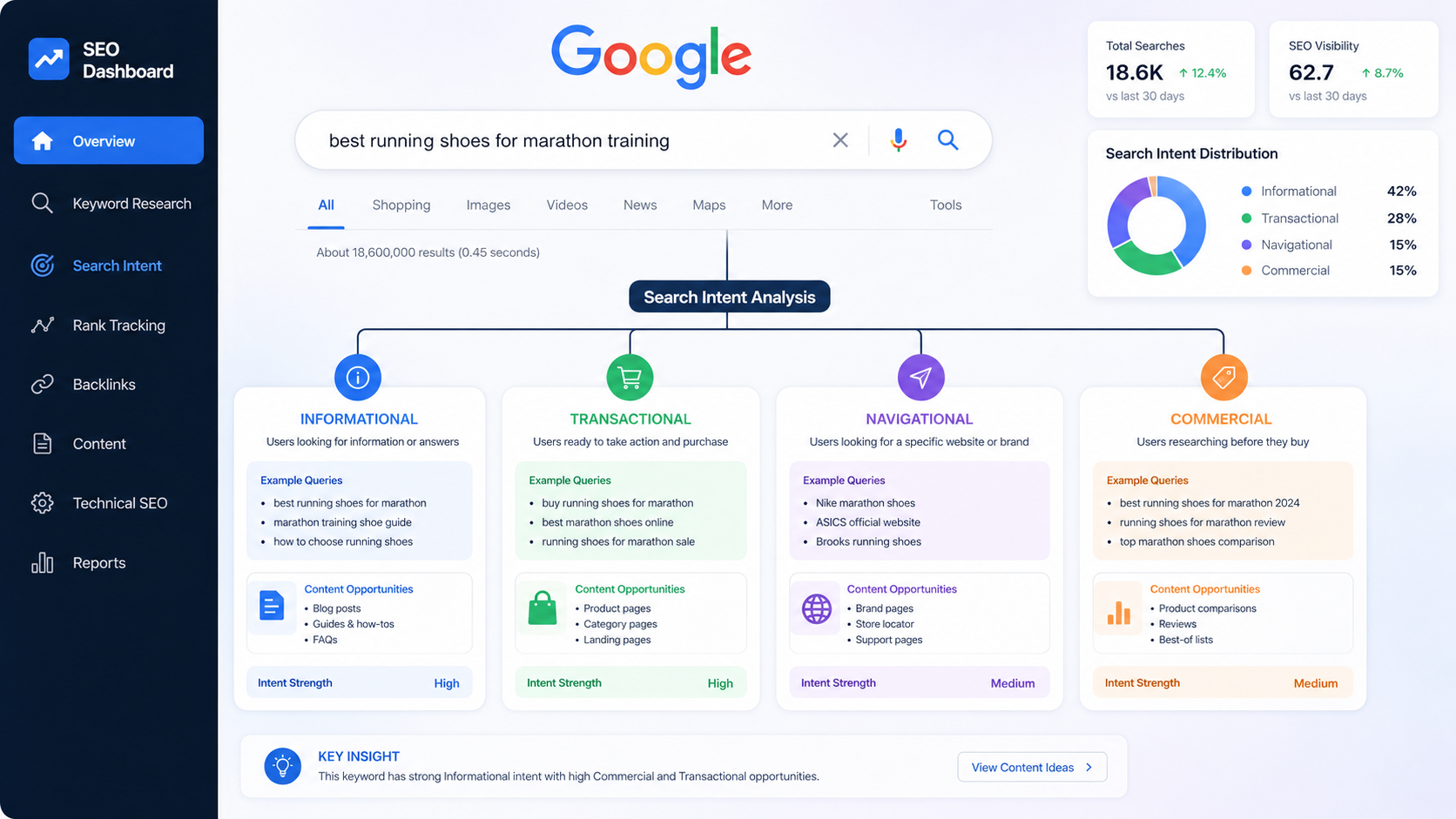
For example, if someone searches:
- “How to improve SEO rankings.”
They are likely looking for educational content, tutorials, or step-by-step guides. - “best SEO agency for small businesses”
They are researching options and comparing agencies before making a decision. - “Hire an SEO expert near me.”
They are ready to take action and probably want to contact or hire someone immediately.
Although all three searches are related to SEO, the user’s intention behind each search is completely different. That means Google will show different types of content for each query.
This is why businesses must create content that matches the user’s intent rather than simply inserting keywords into an article.
Why Search Intent Is Important in SEO?
In the early days of SEO, websites could rank by repeating keywords. Today, Google’s algorithms are much smarter. Search engines now analyze:
- user behavior
- context
- relevance
- content quality
- engagement signals
Google wants users to find the best answer as quickly as possible. If users click a page and immediately leave because it doesn’t answer their question, Google considers that a poor experience.
However, when users:
- stay on the page longer
- continue reading
- Click related links
- engage with the content
Google interprets that as a sign that the page successfully matched search intent.
This is why understanding intent can improve:
- search rankings
- organic traffic
- user engagement
- conversions
- overall SEO performance
Search Intent Goes Beyond Keywords
Many businesses make the mistake of focusing only on keywords without understanding user goals.
For instance, imagine two websites targeting the keyword:
“best laptops”
One website creates a short product page selling laptops directly.
Another website creates a detailed comparison guide featuring:
- laptop reviews
- pros and cons
- pricing comparisons
- performance analysis
Google will usually favor the second page because users searching for “best laptops” are often researching before buying. They want comparisons and recommendations, not just a sales page.
This demonstrates how a strong search intent content strategy focuses on delivering the type of content users expect.
The Relationship Between Search Intent and User Experience
Search intent is closely tied to user experience. Even great content can fall short if it doesn’t align with users’ expectations.
For example:
- A user searching for “how to bake a cake” expects a recipe or tutorial.
- If they land on a page aggressively selling baking equipment, they will likely leave.
When this happens, users get frustrated, and Google sees the content as less relevant.
A successful content strategy ensures:
- users quickly find answers
- The pages are easy to navigate.
- Information is clearly organized.
- The content solves the user’s problem.
The better the user experience, the better your SEO results will be.
Why Search Intent Matters in SEO?
Many businesses still create content without understanding intent. They choose keywords solely based on search volume, ignoring what users truly expect.
This leads to:
- poor engagement
- low conversions
- high bounce rates
- weak rankings
Search intent is important because Google rewards pages that do the best job of meeting users’ needs.
When users:
- Stay longer on your page.
- engage with your content
- Click through additional pages.
- avoid returning to search results
Google interprets these signals positively.
A strong search intent content strategy improves:
- organic traffic
- keyword rankings
- user engagement
- authority
- lead generation
- sales conversions
The Evolution of Google and User Intent
Years ago, SEO was heavily focused on exact-match keywords and backlinks. Content creators could rank by repeating phrases.
Today, Google uses:
- machine learning
- natural language processing
- AI-powered algorithms
- semantic search
to understand context and user behavior.
Updates like:
have made intent matching more important than ever.
Google no longer asks:
“Does this page contain the keyword?”
Instead, it asks :
“Does this page satisfy the user?”
This change has completely transformed how SEO works.
The Four Core Types of Search Intent
Understanding the four major intent categories is the foundation of an effective search intent content strategy.
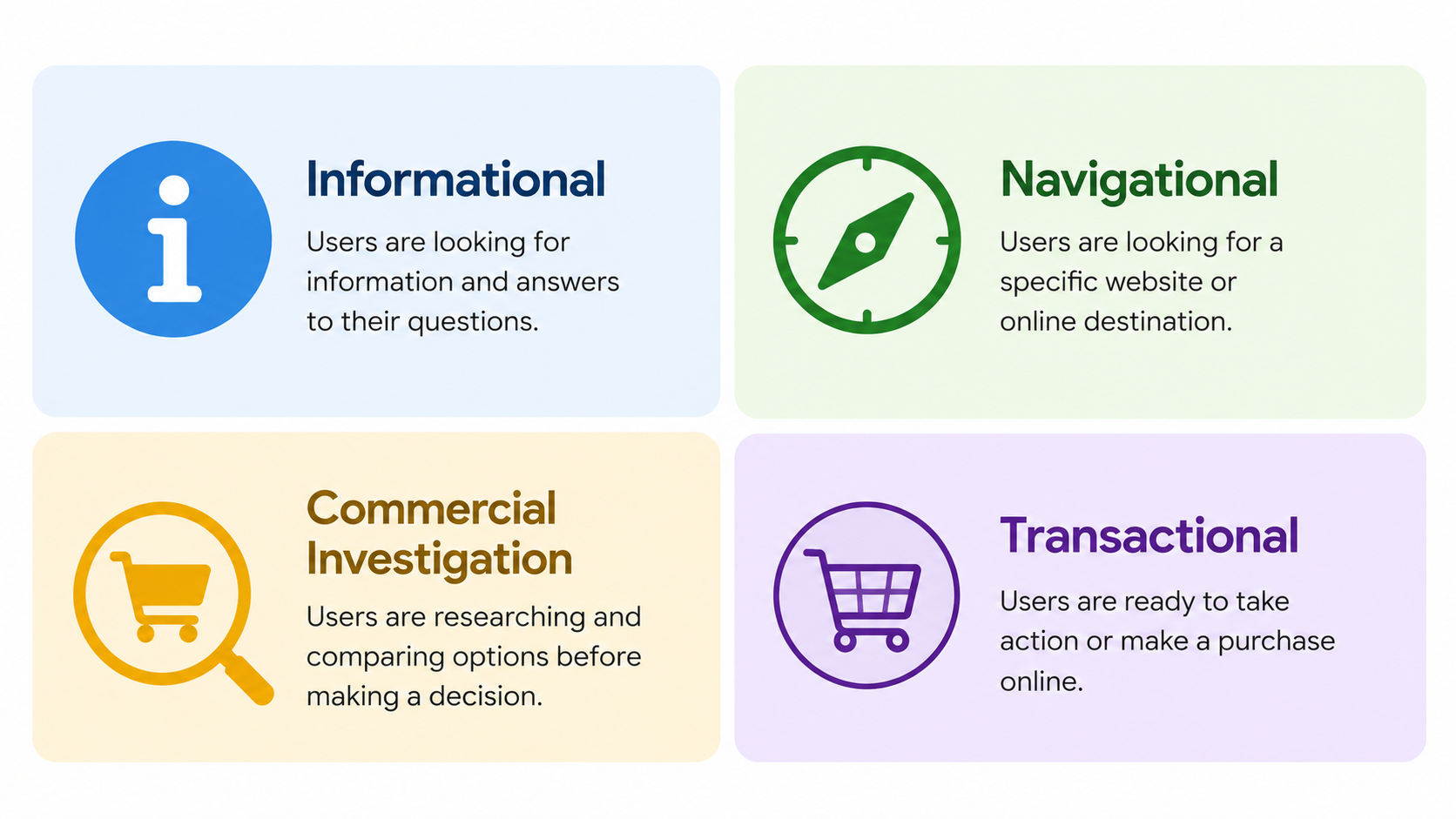
1. Informational Intent
Informational intent occurs when users want to learn something.
These searches often begin with:
- how
- what
- why
- tips
- guide
- tutorial
Examples:
- “What is SEO?”
- “How does content marketing work?”
- “Tips for local SEO”
Users are not necessarily ready to buy. They want answers, education, or solutions.
Best Content Formats
- blog posts
- tutorials
- guides
- videos
- infographics
- educational resources
SEO Goal
Build trust and attract top-of-funnel traffic.
2. Navigational Intent
Navigational intent occurs when users already know the website or brand they want to visit.
Examples:
- “Facebook login”
- “YouTube Studio”
- “Excell SEO services”
The user’s goal is navigation, not research.
Best Content Formats
- homepage optimization
- branded landing pages
- knowledge panels
- optimized navigation systems
SEO Goal
Ensure users can easily find your brand.
3. Commercial Investigation Intent
Commercial intent occurs when users compare products or services before making a decision.
Examples:
- “Best SEO tools”
- “Top content marketing agencies”
- “Ahrefs vs SEMrush”
Users are evaluating options.
Best Content Formats
- reviews
- comparison articles
- buyer guides
- case studies
- product roundups
SEO Goal
Build credibility and guide decision-making.
4. Transactional Intent
Transactional intent means users are ready to take action.
Examples:
- “Hire an SEO consultant.”
- “Buy SEO software.”
- “Affordable SEO services”
These users are highly valuable because they are close to conversion.
Best Content Formats
- service pages
- product pages
- landing pages
- booking forms
- demo pages
SEO Goal
Convert traffic into leads or sales.
How Search Intent Impacts Content Strategy?
A modern search intent content strategy influences every part of content creation.
This includes:
- keyword research
- content structure
- tone
- formatting
- CTA placement
- internal linking
- visual design
If your content doesn’t match user intent, even well-written articles might not succeed.
For example:
If users search:
“Best email marketing software”
They expect:
- comparisons
- pricing
- reviews
- pros and cons
A simple educational article might not rank if it doesn’t meet what most users are looking for.
Keyword Research for Intent-Based SEO
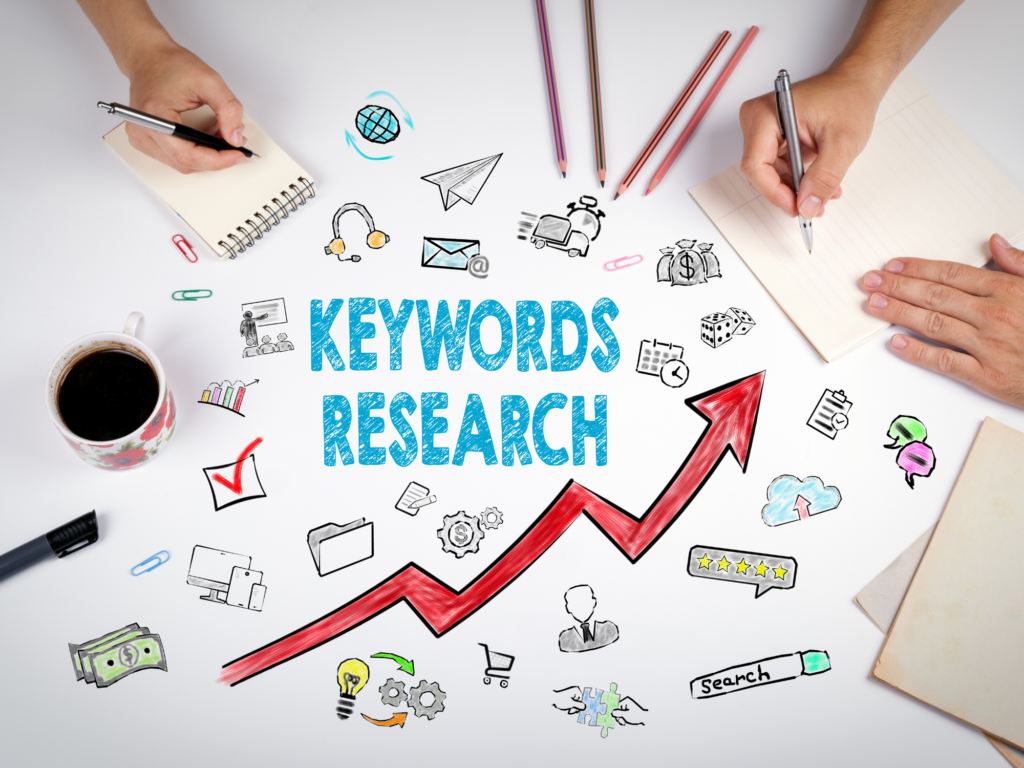
Keyword research is no longer just about volume. Intent must guide targeting decisions.
Step 1: Analyze Keyword Modifiers
Modifiers reveal intent.
Informational Modifiers
- how
- guide
- tutorial
- tips
Commercial Modifiers
- best
- review
- comparison
- alternatives
Transactional Modifiers
- buy
- hire
- pricing
- services
Step 2: Study Search Engine Results Pages
Google already reveals user intent through rankings.
Ask:
- Are blogs ranking?
- Are product pages dominating ?<|join|>Are product pages dominating?
- Are videos appearing?
- Are featured snippets visible?
Analyzing search results is one of the most effective tools you can use for SEO.
Step 3: Build Intent-Based Clusters
Organize keywords by intent.
Example Cluster
Informational
- What is search intent?
- How search intent works
Commercial
- best SEO content strategy tools
Transactional
- SEO content strategy services
This approach helps build your authority on a topic.
How to Analyze Search Intent Using SERPs?
One of the best ways to understand search intent is to analyze Search Engine Results Pages (SERPs). SERPs are the pages Google displays after a user enters a search query.
These results provide valuable clues about what users expect to find and what type of content Google believes best satisfies that expectation. Instead of guessing what users want, marketers can study the current search results to identify patterns. Google has already analyzed millions of user interactions, so the top-ranking pages often reveal the dominant search intent behind a keyword.
For example, if most results for a keyword are detailed guides and tutorials, Google likely sees that query as informational. If the results are product pages and shopping ads, the intent is probably transactional.
This is why SERP analysis is one of the most important steps in building a successful search intent content strategy. By understanding the structure of search results, businesses can create content that better aligns with user expectations and improves their chances of ranking.
Things to Analyze
When analyzing SERPs, several key elements can help identify search intent. Each feature on the results page provides insight into how users search and which types of content perform best.
Featured Snippets
Featured snippets are short answer boxes that appear near the top of Google search results. These snippets usually provide quick answers to questions and are often pulled directly from high-ranking pages.
Google displays featured snippets because users want fast, direct information without having to click through multiple pages. This is especially common for informational searches such as:
- “What is SEO?”
- “How to improve website speed.”
- “Benefits of content marketing”
If a keyword triggers a featured snippet, it usually indicates that users are looking for concise explanations, definitions, or step-by-step guidance.
Businesses can optimize for featured snippets by:
- answering questions clearly
- using bullet points
- including numbered lists
- writing concise summaries
- structuring content with proper headings
Getting a featured snippet can greatly boost your visibility and organic clicks.
People Also Ask
The “People Also Ask” section is another valuable SERP feature that reveals related user questions. These expandable boxes show additional queries connected to the main search topic.
For example, if someone searches:
“search intent SEO”
Google may also display related questions like:
- “Why is search intent important?”
- “What are the four types of search intent?”
- “How do I optimize for user intent?”
This section provides direct insight into what users are curious about and what additional information they may need.
Analyzing “People Also Ask” helps content creators:
- discover related subtopics
- Identify content gaps
- improve FAQ sections
- create more comprehensive articles
Including answers to these related questions can improve content relevance and increase opportunities to rank for multiple keywords.
Video Results
When video results appear prominently in SERPs, it often indicates that users prefer visual or multimedia content for that topic.
Certain topics are easier to understand through video demonstrations, tutorials, or walkthroughs. For example:
- software tutorials
- cooking recipes
- fitness exercises
- DIY projects
If Google shows YouTube videos or video carousels for a keyword, it suggests that users may prefer visual explanations over text-only content.
This insight is important because it helps businesses diversify content formats. Instead of relying solely on written blogs, companies may benefit from:
- creating video tutorials
- embedding videos in articles
- producing visual demonstrations
- adding multimedia content
Optimizing your videos can help keep users engaged, increase time spent on your page, and improve your SEO .
Shopping Results
Shopping results usually indicate strong transactional intent. These results often appear when users are close to making a purchase decision.
For example, searches like:
- “Buy a gaming laptop.”
- “best wireless headphones price”
- “cheap SEO software”
may display:
- product listings
- pricing information
- product reviews
- shopping ads
When shopping results dominate SERPs, users are typically looking to compare products, evaluate pricing, or make a purchase quickly.
Businesses targeting transactional keywords should focus on creating:
- optimized product pages
- clear pricing structures
- compelling product descriptions
- trust-building reviews
- strong calls to action
Understanding how shopping results work helps brands create content that encourages users to make purchases.
Local Packs
Local packs appear when Google detects local intent behind a search query. These results often include:
- maps
- nearby businesses
- customer reviews
- contact information
- operating hours
For example:
- “SEO agency near me”
- “digital marketing company in Los Angeles”
- “coffee shop nearby.”
These searches indicate that users want services or businesses in a specific geographic location.
Local packs are extremely important for businesses that rely on local customers because they can drive:
- phone calls
- website visits
- foot traffic
- local leads
If local packs appear in search results, businesses should focus on:
- local SEO optimization
- Google Business Profile management
- local keyword targeting
- customer reviews
- location-specific landing pages
Good local SEO can make your business much more visible in local searches.
Creating Content for Informational Intent
Informational content attracts large amounts of organic traffic.
However, quality matters enormously.
Best Practices for Informational Content
1. Provide Immediate Answers
Users should not scroll endlessly to find information.
Include:
- concise introductions
- summaries
- clear headings
2. Create Comprehensive Coverage
Google rewards depth and expertise.
Include:
- statistics
- examples
- expert insights
- case studies
Thin content rarely performs well today.
3. Use Visual Enhancements
Visuals improve engagement.
Examples:
- charts
- screenshots
- infographics
- videos
4. Optimize for Featured Snippets
Featured snippets increase visibility dramatically.
Use:
- numbered lists
- definitions
- concise answers
- tables
Creating Content for Navigational Intent
Navigational SEO helps users quickly reach your brand.
Important Strategies
Branded Keyword Optimization
Target:
- company name
- product names
- branded services
Strong Metadata
Ensure:
- title tags are optimized
- Meta descriptions are clear.
Improve Site Architecture
Users should navigate easily.
This improves:
- UX
- engagement
- crawlability
Creating Content for Commercial Investigation Intent
Commercial intent often produces highly qualified traffic.
Users are actively researching solutions.
Best Content Types
Product Comparisons
Example:
- “SEMrush vs Ahrefs”
These pages often convert well.
Reviews
Detailed reviews build trust .<|join|>Detailed reviews build trust.
Include:
- advantages
- disadvantages
- use cases
Buyer Guides
Guide users toward the right decision.
Industry Rankings
Examples:
- “Top SEO agencies in 2026”
These generate strong traffic.
Creating Content for Transactional Intent
Transactional pages should focus heavily on conversions.
Essential Elements
Strong Headlines
Example:
“Affordable SEO Services for Growing Businesses”
Clear Benefits
Explain:
- outcomes
- ROI
- advantages
Testimonials and Social Proof
Trust signals improve conversions.
Strong Calls to Action
Examples:
- Book a consultation
- Request a quote
- Contact us today
Search Intent and the Buyer’s Journey
Search intent aligns directly with the marketing funnel.
Funnel Stage Intent Type Content
Awareness Informational Blogs
Consideration Commercial Comparisons
Decision Transactional Service Pages
A good search intent content strategy helps at every stage of the buyer’s journey.
Search Intent and Topical Authority
Google rewards websites that demonstrate expertise across entire topics.
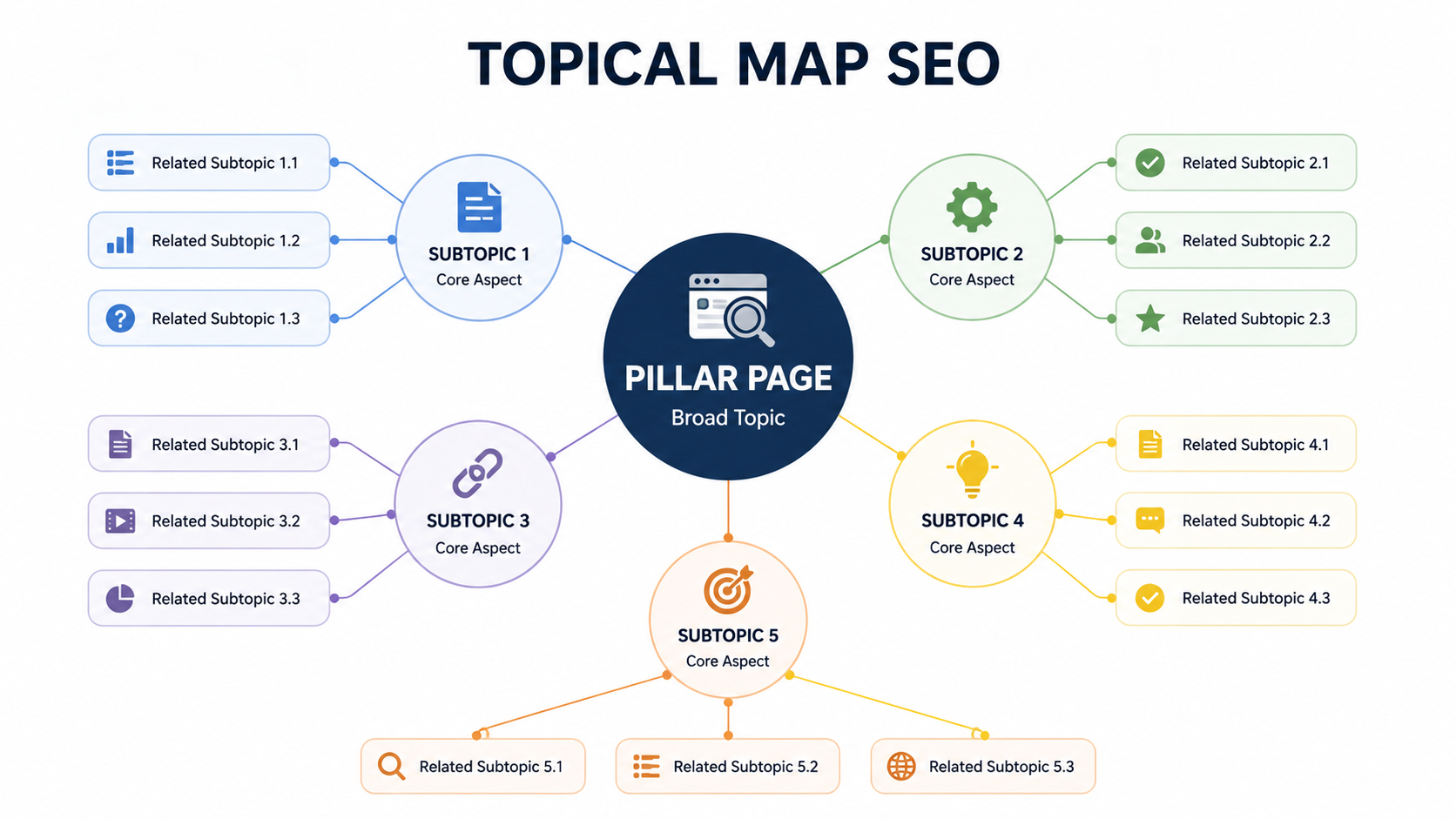
This means businesses should create:
- pillar pages
- supporting blogs
- FAQs
- case studies
- service pages
Topic clusters improve:
- authority
- internal linking
- rankings
The Role of AI in Search Intent Optimization
AI is transforming search dramatically.
Google now understands:
- context
- semantics
- behavior
- relevance
This means stuffing your content with exact-match keywords is no longer effective.
Instead, successful SEO focuses on:
- solving problems
- delivering value
- matching user expectations
AI-powered search systems increasingly reward helpful content.
Best Content Formats for Different Intents
Different intents require different formats.
Intent Ideal Formats
Informational Blogs, guides
Navigational Landing pages
Commercial Comparisons, reviews
Transactional Sales pages
Choosing the right content format for each intent leads to better results.
How to Structure Content for User Intent
Content structure affects readability and SEO.
Use clear headings.
Headings improve:
- Scanability
- UX
- SEO structure
Add Bullet Points
Bullet points simplify complex information.
Include FAQs
FAQs help:
- satisfy user questions
- improve snippet opportunities
Use Internal Links
Guide users toward related resources.
Common Search Intent SEO Mistakes
1. Ignoring SERPs
Always analyze Google results first.
2. Focusing Only on Search Volume
High-volume keywords are meaningless if there are intent mismatches.
3. Keyword Stuffing
This harms readability and trust.
4. Weak Content Depth
Short or low-quality content rarely meets today’s users’ needs.
5. Poor CTAs
Every page should guide users toward next actions.
Measuring Search Intent SEO Success
Tracking your results is essential if you want to improve your strategy.
Key Metrics
Organic Traffic
Measure visibility growth.
Bounce Rate
A high bounce rate could mean your content isn’t meeting users’ needs.
Conversion Rate
Track:
- leads
- sales
- inquiries
Time on Page
Longer engagement often indicates relevance.
Click-Through Rate
Optimized metadata improves CTR.
5 Important Questions About Search Intent Content Strategy
1. What is a search intent content strategy?
A search intent content strategy is an SEO approach focused on creating content that aligns with the goals behind user searches. Instead of targeting keywords alone, it prioritizes delivering relevant answers and solutions.
2. Why is search intent important for SEO?
Search intent matters because Google prioritizes content that satisfies users. When content aligns with intent, it improves rankings, engagement, and conversions.
3. How do I identify search intent?
You can identify intent by analyzing:
- keyword modifiers
- SERP results
- ranking page formats
- user behavior
Google’s current top-ranking pages often reveal the dominant intent.
4. Can one article target multiple intents?
Yes, but carefully. Some pages naturally combine informational and commercial intent.
However, trying to target every intent at once may confuse users and reduce effectiveness.
5. How often should I update intent-focused content?
It’s important to update your content regularly. Refresh key pages every few months to keep them relevant and aligned with evolving search habits.
Advanced Search Intent Strategies
Create Topic Clusters
Topic clusters improve:
- authority
- rankings
- internal linking
Use Behavioral Analytics
Analyze:
- heatmaps
- click patterns
- bounce rates
to understand intent satisfaction.
Optimize for Voice Search
Voice searches are conversational.
Example:
“What’s the best SEO strategy for startups?”
Use natural language.
Personalize Content
Tailor:
- recommendations
- offers
- CTAs
based on user behavior.
Build E-E-A-T
Google values:
- Experience
- Expertise
- Authoritativeness
- Trustworthiness
Use:
- expert insights
- real examples
- trustworthy data
The Future of Search Intent SEO
Search intent will become even more important as AI evolves.
Conversational Search
Users increasingly search naturally.
Predictive Search
Google anticipates user needs earlier.
AI Summaries
Search engines summarize content instantly.
Only highly valuable content will stand out.
Visual and Multimodal Search
Images and videos are becoming more important in SEO.
Hyper-Personalized Search Results
Search engines increasingly tailor results to user behavior.
Why Businesses Must Prioritize Search Intent Now
Businesses ignoring intent-focused SEO risk:
- declining rankings
- lower visibility
- reduced engagement
Meanwhile, companies with strong intent alignment gain:
- sustainable traffic
- higher authority
- stronger conversions
Having a search intent content strategy isn’t optional anymore; it’s a must for success.
Final Thoughts
SEO success today depends on understanding people, not just keywords.
A strong search intent content strategy helps businesses
- create more valuable content
- improve rankings
- attract qualified traffic
- increase conversions
- build long-term authority
Search engines are moving more toward user-focused experiences. Businesses that follow this trend will continue to grow their organic traffic.Instead of trying to keep up with every algorithm change, focus on solving real problems for your users.
This is the key to long-lasting SEO success.
Strong Call to Action
At Excell, we specialize in advanced SEO and content marketing strategies designed around real search intent. Our team helps businesses create high-performing content that improves rankings, attracts qualified traffic, and converts visitors into loyal customers.
Whether you need:
- SEO content strategy
- keyword research
- technical SEO
- content marketing
- conversion-focused optimization
- long-form SEO blog writing
Excell is ready to help your business grow faster online.
Partner With Excell Today
Stop spending time on content that doesn’t get results.

Let Excell create a search intent content strategy that brings you more traffic, better visibility, and lasting business growth.
Contact us today and Book your free discovery call to get done for your services.
Contact us:
EXCELL INDUSTRIES LLC
6420 Richmond Ave., Ste 470
Houston, TX, USA
Phone: +1 832-850-4292
Email: info@excellofficial.com