
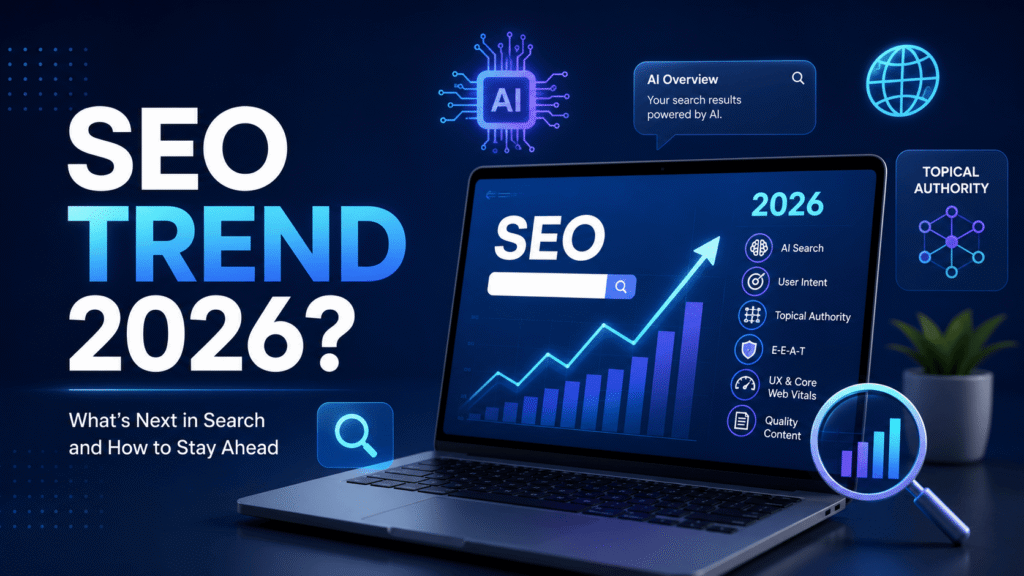
The biggest SEO trends 2026 include AI-powered search, a greater focus on user intent, high-quality content, and improved website experience. To stay ahead, businesses must move beyond outdated SEO tactics and prioritize creating valuable, trustworthy content while optimizing their websites for both users and search engines.
As search engines continue to evolve, understanding these changes is essential for maintaining strong organic visibility and long-term online success.
Table of Contents:
- Introduction
- Why SEO Is Changing in 2026?
- The Biggest SEO Trends 202
- How Businesses Should Adapt?
- Invest in High Quality Content
- Build Authority and Brand Credibility
- Strengthen Technical SEO Performance
- Optimize for AI-Powered Search
- Prioritize User Experience at Evey Stage
- Build a Strong Internal Linking Strategy
- Measure Metrics that reflect Business Growth
- Common SEO Mistakes to Avoid
- Frequently Asked Questions
- Final Thoughts
- Partner with Excell
Introduction
Search engines are now smarter than ever. Instead of just matching keywords, today’s algorithms understand context, connections, user behavior, and content quality. AI-driven search has changed how people find information, making SEO much more competitive.
SEO trends for 2026 show that websites need to focus on delivering a great user experience, not just on optimizing for search engines.
Whether you run an ecommerce store, local business, SaaS company, healthcare practice, law firm, or enterprise organization, adapting to these changes will help you remain competitive. At the same time, your competitors struggle to keep up.
Why SEO Is Changing in 2026?
SEO has always changed, but the speed of change heading into 2026 is faster than ever. Search engines don’t just match keywords to pages anymore. They use advanced AI, machine learning, natural language processing, and user behavior analysis to understand what people want and deliver the best results. Because of this, old tactics like keyword stuffing, thin content, or low-quality backlinks no longer work. To succeed with SEO in 2026, businesses need a complete strategy that gives real value to users.
Big changes are affecting how search engines rank websites and how people use search results. If you want your business to stay visible online, it’s important to understand these shifts.
Artificial Intelligence Is Transforming Search
Artificial intelligence is now a major force behind today’s search engines. Google’s AI systems can understand context, user intent, and how topics connect, not just exact keywords. This helps search engines give more accurate, personalized, and helpful results.
For example, a search for “best SEO strategy for small businesses in 2026” involves more than just looking for those exact words. Google’s AI checks if a page fully answers the question, shows expertise, has up-to-date information, and gives practical advice. Even if the keyword isn’t used much, a thorough and well-organized article will likely rank higher than one that repeats the keyword without real insights.
AI-powered search introduces features such as AI-generated summaries, conversational search, and predictive suggestions. As these tools improve, businesses need to create content that search engines consider reliable and trustworthy.
Instead of just focusing on keywords, marketers should cover topics, answer user questions, and provide complete information. This change makes it more important than ever to create high-quality, detailed content.
The Biggest SEO Trends 2026
1. AI-Powered Search Is Becoming the New Normal
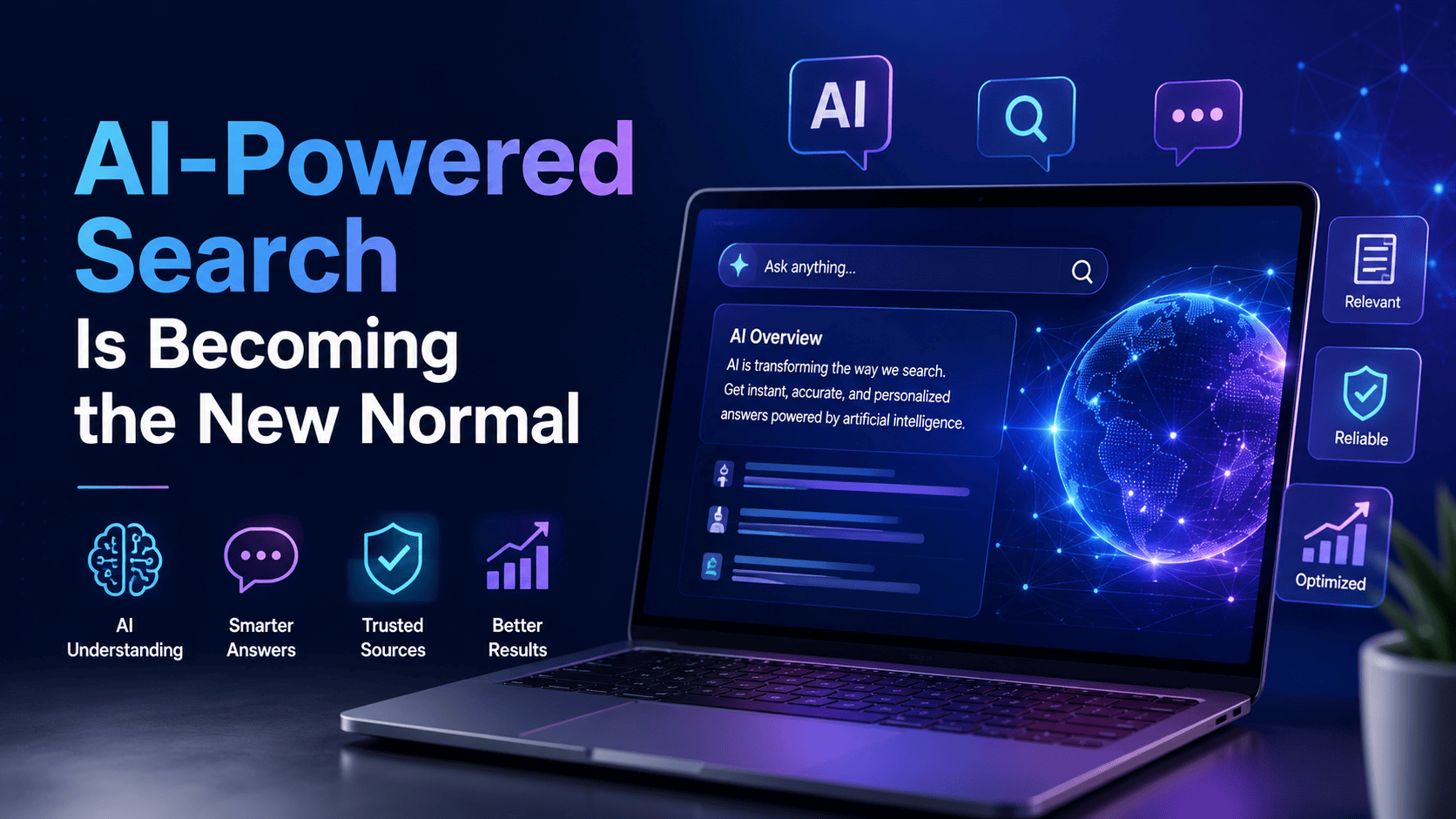
Artificial intelligence is transforming every aspect of search.
Instead of displaying ten blue links, search engines increasingly generate AI-powered summaries that answer questions immediately.
This changes how businesses earn visibility.
Winning SEO in 2026 means becoming the source AI systems trust enough to reference.
To accomplish this:
- Publish original research
- Cite credible sources
- Add expert opinions
- Answer questions clearly
- Structure content properly
- Update information regularly
Content that repeats existing articles is unlikely to perform well.
2. Search Intent Matters More Than Exact Keywords
Years ago, SEO focused on placing keywords throughout a page.
Today, search engines understand meaning rather than exact wording.
For example, these searches all have similar intent:
- Best SEO software
- Top SEO platforms
- SEO tools comparison
- Which SEO software should I use?
Google understands these are closely related. When targeting 2026 SEO trends, your content should answer every related question users might have rather than repeating the exact keyword excessively.
Intent categories include:
Informational
Users want to learn.
Example:
“What are SEO trends 2026?”
Commercial
Users compare products.
Example:
“Best SEO agency”
Transactional
Users are ready to buy.
Example:
“Hire SEO company”
Navigational
Users want a specific website.
3. Helpful Content Wins Every Time
Google’s Helpful Content System continues rewarding content written for humans.
Characteristics of helpful content include:
- Original insights
- Practical advice
- Clear organization
- Accurate information
- Real examples
- Updated statistics
- Easy readability
Content written solely to rank will continue to lose visibility.
4. E-E-A-T Continues to Grow
Experience. Expertise. Authority. Trust.
These four elements influence how search engines evaluate quality.
Ways to improve E-E-A-T include:
Showcase Real Experience
Include case studies.
Share personal expertise.
Provide screenshots.
Explain processes.
Build Expertise
Publish industry-specific resources.
Update articles frequently.
Write comprehensive guides.
Establish Authority
Earn backlinks.
Mention awards.
Feature media appearances.
Publish research.
Increase Trust
Use HTTPS.
Display contact information.
Provide author biographies.
Include privacy policies.
5. User Experience Directly Impacts Rankings
SEO is no longer just about content.
Search engines increasingly measure how users interact with websites.
Important UX factors include:
Fast Loading Speed
Slow websites increase bounce rates.
Mobile Optimization
Most users browse from smartphones.
Easy Navigation
Visitors should quickly find information.
Accessibility
Accessible websites serve more users while improving SEO.
Readability
Use:
- Short paragraphs
- Bullet points
- Headings
- Images
- White space
6. Zero-Click Searches Continue Expanding
Many users receive answers without clicking any website.
Examples include:
- Featured snippets
- AI summaries
- Knowledge panels
- Local packs
- People Also Ask
Instead of fearing zero-click searches, optimize for them.
Use:
- FAQ sections
- Numbered lists
- Tables
- Definitions
- Concise answers
7. Semantic SEO Replaces Keyword Stuffing
Search engines now understand relationships between concepts.

For an article about SEO trends 2026, include related topics such as:
- AI SEO
- Search intent
- Technical SEO
- Core Web Vitals
- Local SEO
- Schema markup
- Entity SEO
- Content optimization
- Voice search
- Video SEO
This improves topical relevance naturally.
8. Video SEO Continues Rising
Video content is becoming essential.
Search engines increasingly display:
- YouTube videos
- Short-form videos
- Tutorials
- Product demonstrations
Optimize videos by:
- Writing keyword-rich titles
- Adding transcripts
- Creating engaging thumbnails
- Using timestamps
- Embedding videos on webpages
9. Voice Search Keeps Evolving
Smart speakers and mobile assistants continue growing.
Voice searches tend to be conversational.
Instead of:
“SEO trends”
Users ask:
“What are the biggest SEO trends in 2026?”
Optimize for natural language.
Include FAQ sections.
Write conversationally.
10. Visual Search Is Expanding
Users increasingly search using images.
Optimize images by:
- Compressing files
- Writing descriptive filenames
- Adding alt text
- Using structured data
- Providing surrounding context
11. First-Party Data Becomes Critical
Privacy changes reduce third-party tracking.
Businesses should collect first-party data through:
- Email newsletters
- Customer accounts
- Loyalty programs
- Surveys
- Downloadable resources
This supports long-term marketing success.
12. Entity SEO Will Become Essential
Search engines increasingly understand entities rather than keywords.
An entity is:
- A person
- Company
- Location
- Product
- Event
- Organization
Strengthen entity recognition by:
- Using structured data
- Maintaining consistent branding
- Building authoritative citations
- Creating comprehensive about pages
13. Structured Data Continues Growing
Schema markup helps search engines understand webpages.
Popular schema types include:
- FAQ
- Article
- Product
- Organization
- Local Business
- Review
- Breadcrumb
- Event
Proper implementation increases eligibility for rich results.
14. Technical SEO Remains the Foundation
Without strong technical SEO, great content may never reach its potential.
Important priorities include:
Crawlability
Search engines must access every important page.
Indexability
Ensure valuable pages are indexed.
Site Architecture
Logical navigation improves crawling.
XML Sitemaps
Help search engines discover content.
Canonical Tags
Prevent duplicate content issues.
HTTPS
Maintain website security.
15. Local SEO Continues Growing
For local businesses, Google Business Profile remains vital.
Improve visibility by:
- Collecting reviews
- Updating business information
- Posting regularly
- Responding to customer feedback
- Building local citations
16. Content Refreshes Become a Ranking Factor
Older articles should never remain untouched.
Update:
- Statistics
- Screenshots
- Examples
- Internal links
- References
- FAQs
Fresh content maintains relevance.
17. Topical Authority Beats Individual Articles
Publishing one excellent article isn’t enough. Instead, build content clusters.
Example:
Main Page:
SEO Trends 2026
Supporting Pages:
- AI SEO Guide
- Technical SEO Checklist
- Content Marketing Guide
- Local SEO Strategy
- Core Web Vitals Guide
- Link Building Strategies
- Schema Markup Tutorial
Internal linking strengthens authority.
18. Brand Signals Influence Rankings
Search engines increasingly recognize trusted brands.
Strengthen branding through:
- Consistent messaging

- Positive reviews
- PR campaigns
- Social mentions
- High-quality backlinks
Brand trust supports long-term SEO success.
How Businesses Should Adapt to SEO Trends 2026?
As search engines become increasingly intelligent and user expectations continue to evolve, businesses must rethink their approach to search engine optimization. The days of relying on keyword stuffing, purchasing low-quality backlinks, or publishing large volumes of mediocre content are over. In 2026, successful SEO is built on delivering genuine value, demonstrating expertise, and creating exceptional digital experiences that satisfy both users and search engines.
Adapting to the latest SEO trends in 2026 requires more than reacting to every algorithm update. Instead, businesses should develop a long-term strategy that prioritizes quality, authority, technical excellence, and measurable business outcomes. Organizations that invest in sustainable SEO practices today will be better equipped to maintain strong search visibility and outperform competitors in the years ahead.
Below are the most effective strategies businesses should implement to stay ahead of the evolving search landscape.
Invest in High-Quality Content
Content remains the foundation of every successful SEO strategy, but the definition of “high-quality content” has changed dramatically. Search engines now evaluate content based on its usefulness, originality, credibility, and ability to satisfy user intent. Simply publishing articles filled with keywords is no longer enough to compete in search results.
Businesses should shift their focus from producing a high volume of content to creating fewer, more comprehensive resources that provide genuine value to readers. A single in-depth guide that thoroughly covers a topic often generates more organic traffic and backlinks than dozens of short, generic blog posts.
High-quality content should answer users’ questions completely, provide practical solutions, and demonstrate expertise in the subject matter. It should also be well-organized, easy to read, and regularly updated to reflect the latest industry developments.
For example, instead of writing a 600-word article that briefly discusses SEO trends, a business should publish a detailed guide covering AI-powered search, user experience, technical SEO, semantic search, content optimization, local SEO, and future predictions. Comprehensive content establishes authority while increasing the likelihood of ranking for multiple related keywords.
When creating content in 2026, businesses should focus on:
- Solving real customer problems rather than simply targeting keywords.
- Writing original content based on firsthand experience, industry expertise, or proprietary research.
- Including examples, statistics, visuals, and actionable recommendations.
- Organizing articles with descriptive headings, bullet points, tables, and FAQs for better readability.
- Refreshing existing content regularly to keep information accurate and up to date.
Search engines increasingly reward websites that become trusted educational resources within their industries. Businesses that consistently publish valuable content will earn greater visibility, stronger user engagement, and higher-quality backlinks over time.
Build Authority and Brand Credibility
Authority has become one of the strongest competitive advantages in modern SEO. Search engines aim to provide users with information from reliable and trustworthy sources, making brand credibility an essential ranking factor.
Building authority involves much more than acquiring backlinks. It requires establishing your business as a recognized expert within your industry by consistently producing valuable content, sharing unique insights, and earning recognition from respected organizations.
Businesses should invest in thought leadership by publishing original research, industry reports, case studies, and expert opinions unavailable elsewhere. These resources naturally attract citations, backlinks, and media attention while strengthening brand recognition.
Authority can also be enhanced by:
- Contributing guest articles to reputable industry publications.
- Participating in webinars, podcasts, and conferences.
- Building relationships with journalists and influencers.
- Encouraging satisfied customers to leave positive reviews.
- Maintaining accurate business information across online directories.
- Showcasing certifications, awards, and professional affiliations.
Google’s emphasis on Experience, Expertise, Authoritativeness, and Trustworthiness (E-E-A-T) reinforces the importance of demonstrating real-world expertise. Businesses should clearly display author biographies, company credentials, contact information, and customer testimonials to build confidence among users and search engines alike.
Strong authority also improves the effectiveness of future content. When a trusted website publishes a new article, search engines are generally more likely to recognize its value and rank it competitively because the domain has already established credibility over time.
Strengthen Technical SEO Performance
Even the most informative content may struggle to rank if a website has underlying technical issues. Technical SEO provides the foundation that allows search engines to crawl, understand, and index website content efficiently.
As websites grow larger and search engines become more sophisticated, technical optimization becomes increasingly important. Businesses should conduct regular technical audits to identify and resolve issues that may limit search visibility or negatively impact user experience.
Key areas to evaluate include:
Improve Website Speed
Website loading speed remains one of the most important factors in user experience. Visitors expect pages to load almost instantly, and slow websites often experience higher bounce rates and lower conversion rates.
Businesses should optimize page speed by:
- Compressing images without sacrificing quality.
- Using modern image formats.
- Reducing unnecessary JavaScript and CSS files.
- Leveraging browser caching.
- Utilizing content delivery networks (CDNs).
- Choosing reliable web hosting.
A faster website not only improves SEO but also creates a smoother browsing experience, encouraging visitors to stay on the site longer.
Fix Broken Links and Crawl Errors
Broken internal links, missing pages, and crawl errors make it difficult for search engines to understand website structure. They can also frustrate users who encounter error pages while navigating the site.

Regular technical audits should identify:
- Broken internal links.
- Redirect chains.
- Duplicate pages.
- Missing metadata.
- Orphan pages.
- Crawl errors.
- Indexing issues.
Addressing these problems improves both search engine accessibility and user satisfaction.
Enhance Mobile Usability
With mobile devices accounting for the majority of online searches, responsive design is no longer optional. Every webpage should function seamlessly across smartphones, tablets, and desktop computers.
Businesses should ensure:
- Responsive layouts adapt to different screen sizes.
- Text remains readable without zooming.
- Buttons are easy to tap.
- Navigation menus are intuitive.
- Forms are simple to complete on mobile devices.
Providing an excellent mobile experience improves engagement while supporting Google’s mobile-first indexing approach.
Improve Site Architecture
A logical website structure helps both users and search engines locate important information quickly.
Effective site architecture includes:
- Clear navigation menus.
- Logical category organization.
- Consistent internal linking.
- Descriptive URLs.
- XML sitemaps.
- Breadcrumb navigation.
An organized website distributes authority efficiently throughout the site while making content easier to discover.
Implement Structured Data
Structured data, also known as schema markup, provides search engines with additional context about webpage content. Proper implementation increases eligibility for enhanced search results such as rich snippets, FAQs, product information, reviews, and event listings.
Businesses should implement schema wherever appropriate to improve visibility and click-through rates.
Optimize for AI-Powered Search
Artificial intelligence is fundamentally changing how people search for information online. Instead of displaying only traditional search results, AI-powered search engines increasingly generate summaries, answer questions directly, and recommend authoritative sources.
Businesses must optimize content not only for traditional rankings but also for AI-generated search experiences. One of the most effective ways to accomplish this is by creating content that directly answers common customer questions in a clear, structured format. Articles should anticipate user intent and provide concise explanations before expanding into detailed discussions.
Content optimized for AI search typically includes:
- Descriptive headings.
- Question-and-answer sections.
- Step-by-step instructions.
- Bullet points.
- Tables.
- Definitions.
- Summary sections.
AI systems also prioritize trustworthy information. Businesses should support claims with reliable data, cite credible sources when appropriate, and demonstrate genuine expertise rather than publishing generic content generated solely for search rankings.
Additionally, organizations should build topical authority by creating interconnected content clusters that comprehensively cover related subjects. For example, instead of publishing a single article on SEO, businesses can develop supporting guides on technical SEO, local SEO, content optimization, keyword research, schema markup, link building, and AI search optimization. This interconnected approach signals expertise and increases the likelihood of becoming a trusted source for AI-generated search results.
Prioritize User Experience at Every Stage
One of the defining characteristics of SEO trends 2026 is the growing importance of user experience. Search engines increasingly analyze how users interact with websites after clicking a search result. If visitors quickly leave a page because it is slow, confusing, or unhelpful, search engines may interpret this as a sign that the content is not meeting user expectations.
Businesses should optimize every aspect of the user journey by making websites intuitive, visually appealing, and easy to navigate.
This includes:
- Designing clean and uncluttered page layouts.
- Using descriptive headings and short paragraphs.
- Including visual elements such as images, charts, and videos.
- Ensuring accessibility for users with disabilities.
- Reducing intrusive advertisements and pop-ups.
- Simplifying navigation between related pages.
An excellent user experience encourages visitors to spend more time on the website, explore additional content, and complete desired actions, such as making a purchase or submitting a contact form.
Build a Strong Internal Linking Strategy
Internal linking is often overlooked, yet it plays a critical role in helping search engines understand the relationships between pages. It also improves navigation by guiding users toward additional valuable content.
Businesses should create topic clusters in which a comprehensive pillar page links to supporting articles that cover related subtopics. This approach strengthens topical authority while distributing link equity throughout the website.
For example, an article targeting SEO trends 2026 can naturally link to related content about:
- Technical SEO.
- Keyword research.
- Local SEO.
- Link building.
- Content marketing.
- Core Web Vitals.
- Schema markup.
- AI search optimization.
This interconnected structure benefits both users and search engines by creating a logical content ecosystem.
Measure Metrics That Reflect Business Growth
One of the biggest mistakes businesses make is evaluating SEO success solely by keyword rankings. While rankings remain important, they do not necessarily indicate whether SEO efforts are generating meaningful business results.
Modern SEO should be measured using metrics that align with organizational objectives and demonstrate real return on investment.
Important performance indicators include:
Organic Traffic
Track the number of visitors arriving through unpaid search results. An increase in qualified organic traffic indicates improved search visibility and broader audience reach.
User Engagement
Analyze how visitors interact with your content by monitoring metrics such as average engagement time, pages viewed per session, scroll depth, and bounce rate. High engagement suggests that users find your content relevant and valuable.
Conversion Rate
Ultimately, SEO should contribute to business growth. Measure how many visitors complete valuable actions such as purchasing products, requesting consultations, downloading resources, subscribing to newsletters, or filling out contact forms.
Lead Generation
For service-based businesses, monitor the number and quality of leads generated through organic search. Strong SEO should consistently deliver qualified prospects rather than simply increasing website traffic.
Revenue Generated from Organic Search
Calculate how much revenue is directly attributable to organic traffic. This metric provides one of the clearest indicators of SEO success and helps justify continued investment in optimization efforts.
Returning Visitors
A growing number of returning visitors demonstrates that users trust your website and consider it a valuable resource. Repeat traffic often indicates strong brand recognition and customer loyalty.
Content Performance
Evaluate which articles generate the most traffic, backlinks, engagement, and conversions. Understanding top-performing content allows businesses to refine their content strategy and produce more of what resonates with their audience.
By focusing on these comprehensive performance indicators rather than rankings alone, businesses gain a clearer understanding of how SEO contributes to long-term growth and profitability.
Common SEO Mistakes to Avoid in 2026
Many websites lose rankings not because SEO is dead, but because they continue relying on outdated tactics. Avoid these common mistakes to stay competitive.
Publishing Low-Quality AI Content
Artificial intelligence can speed up content creation, but publishing unedited, generic articles often leads to poor engagement. AI should assist writers—not replace expertise. Always review, fact-check, and enhance AI-generated content with unique insights.
Ignoring Search Intent
Targeting a keyword without understanding what users actually want results in low rankings and poor conversions. Every page should satisfy the intent behind the search query, whether it’s informational, commercial, or transactional.
Keyword Stuffing
Repeating SEO trends 2026 unnaturally throughout a page will not improve rankings. Instead, use natural language, related phrases, and semantic keywords that help search engines understand the topic.
Neglecting Mobile Experience
A website that performs poorly on mobile devices risks losing both users and rankings. Responsive design, fast loading speeds, and intuitive navigation are no longer optional.
Failing to Update Existing Content
SEO is an ongoing process. Articles with outdated information, broken links, or obsolete screenshots lose relevance over time. Regular content refreshes can help preserve rankings and improve user satisfaction.
Frequently Asked Questions
1. What are the biggest SEO trends 2026?
The biggest SEO trends 2026 include AI-powered search experiences, greater emphasis on search intent, stronger E-E-A-T signals, semantic SEO, video optimization, structured data, entity-based optimization, and an increased focus on user experience. Businesses that prioritize valuable content and technical excellence will be better positioned to rank well.
2. Is SEO still worth investing in during 2026?
Yes. SEO remains one of the most cost-effective digital marketing strategies because it delivers long-term organic traffic. While algorithms evolve, the core principle of providing valuable, trustworthy content continues to drive sustainable visibility and lead generation.
3. How does AI affect SEO in 2026?
AI changes how search engines interpret queries and present results. Rather than relying on exact keyword matches, AI understands context, relationships, and user intent. Businesses should create original, authoritative content that answers questions clearly and demonstrates expertise to remain competitive.
4. What should businesses prioritize for better rankings?
Businesses should focus on improving website speed, creating comprehensive content, building topical authority, implementing structured data, earning quality backlinks, and maintaining an excellent user experience. These factors work together to improve visibility in modern search results.
5. How can I prepare my website for future SEO updates?
Start by conducting a technical SEO audit, refreshing outdated content, organizing pages into topic clusters, optimizing for AI-generated search results, and monitoring performance metrics beyond rankings. Consistently adapting your strategy in response to user behavior and industry changes will help future-proof your SEO efforts.
Final Thoughts
The future of search belongs to businesses that adapt early. The SEO trends 2026 reveal a clear shift away from outdated optimization tactics toward a holistic strategy that combines technical excellence, authoritative content, exceptional user experience, and AI readiness.
Rather than chasing algorithm updates, focus on becoming the most trusted resource in your niche. Publish content that solves real problems, demonstrates genuine expertise, and provides value that users and search engines can recognize. Companies that embrace these principles will not only maintain their rankings but also build stronger brands and more sustainable sources of organic traffic.
SEO in 2026 is no longer about gaming the system. It’s about earning visibility through quality, credibility, and consistency. The sooner you align your strategy with these evolving trends, the greater your opportunity to outperform competitors and capture long-term organic growth.
Stay Ahead with Excell
Search is evolving, but you don’t have to navigate these changes alone. At Excell, we help businesses build future-ready SEO strategies that drive measurable results, not just higher rankings, but qualified traffic, stronger brand authority, and increased revenue.
Whether you need a comprehensive SEO audit, technical optimization, content strategy, AI search optimization, local SEO, or ongoing digital marketing support, our team has the expertise to help your business thrive in the era of SEO trends 2026.

Don’t let your competitors get ahead. Partner with Excell today and transform your website into a powerful growth engine. Contact us today and Book your free discovery call to get done for your services.
Contact us:
EXCELL INDUSTRIES LLC
6420 Richmond Ave., Ste 470
Houston, TX, USA
Phone: +1 832-850-4292
Email: info@excellofficial.com