


Search engine optimization has changed dramatically over the past decade. Gone are the days when simply adding keywords to a page was enough to achieve top rankings. Today, search engines use sophisticated algorithms, artificial intelligence, and semantic understanding to interpret content and deliver the most relevant results to users.
As search engines become smarter, website owners and marketers must provide clearer signals about what their content means, not just what it says. This is where schema markup becomes one of the most valuable technical SEO tools available.
Schema markup helps search engines understand the context, purpose, and meaning of information on your website. It can transform ordinary search results into enhanced listings that include ratings, pricing information, FAQs, business details, event dates, recipes, and more. These enhanced listings often attract more attention, improve click-through rates, and enhance the user experience.
If you’ve heard about structured data but aren’t sure how it works, this comprehensive schema guide will walk you through everything you need to know. Whether you’re a business owner, SEO specialist, marketer, blogger, or web developer, understanding schema markup can give you a significant advantage in today’s competitive search landscape.
Table of Contents:
- What Is Schema Markup?
- Understanding Structured Data
- Why Schema Markup Matters for SEO?
- How Search Engines Use Schema?
- The History of Schema.org
- Types of Schema Markup
- Choosing the Right Schema for Your Website
- How to Implement Schema Markup?
- JSON-LD vs Microdata vs RDFa
- Practical Schema Markup Examples
- 5 Common Questions About Schema Markup
- Common Schema Mistakes to Avoid
- Testing and Validating Schema
- Measuring Schema Performance
- Advanced Schema Strategies
- Schema Markup and AI Search
- Best Practices for Long-Term Success
- Conclusion
- Ready to Elevate Your SEO Strategy with Excell?
What Is Schema Markup?
Schema markup is a type of structured data that website owners add to their webpages to help search engines better understand the meaning, context, and relationships of the information presented on the page. Rather than simply reading text and attempting to interpret its significance, search engines can use schema markup as a clear set of instructions that explains exactly what specific pieces of content represent.
At its core, schema markup serves as a communication bridge between your website and search engines such as Google, Bing, Yahoo, and Yandex. While modern search engines are incredibly sophisticated and capable of understanding content through natural language processing and artificial intelligence, they can still benefit from explicit information that removes uncertainty and improves accuracy.
Think of schema markup as a digital labeling system. Imagine walking into a large warehouse filled with boxes. If none of the boxes are labeled, it would take considerable effort to determine what is inside each one. However, if every box has a detailed label describing its contents, locating and organizing items becomes much easier. Schema markup serves a similar purpose for search engines. It labels the important elements of your website so search engines can quickly understand them.
For example, when a search engine encounters a sequence of numbers such as:
(555) 123-4567
It may recognize that the number could be a phone number, but it does not know with complete certainty. With schema markup, you can explicitly identify that number as a business contact phone number.
Similarly, a date displayed on a webpage could represent:
- A publication date
- An event date
- A deadline
- A product release date
- A last-updated timestamp
Schema markup removes the guesswork by clearly defining what the date represents.
Understanding Ambiguity in Search
One of the biggest challenges search engines face is ambiguity. Human readers naturally use context and experience to understand the meaning of words and phrases, but machines must rely on data and signals to reach the same conclusion.
Consider the word:
Apple
Without additional context, several interpretations are possible:
- Apple Inc., the technology company
- An apple fruit
- An Apple Store retail location
- The Apple TV streaming platform
- Apple products such as the iPhone or MacBook
Humans can usually determine the intended meaning by reading the surrounding text, viewing images, and considering the page’s overall context. Search engines attempt to do the same, but ambiguity can still create confusion.
Schema markup helps eliminate that uncertainty by explicitly defining the entity being discussed. For example, a technology blog discussing the latest iPhone release can use schema markup to indicate that the page is about Apple Inc. as an organization and the iPhone as a product. This allows search engines to understand the content with much greater precision.
How Schema Markup Works?
Schema markup adds machine-readable code to a webpage. This code is usually invisible to visitors but can be read by search engine crawlers when they scan the site.
The markup contains structured information that identifies:
- The type of content on the page
- Important attributes of that content
- Relationships between different entities
- Context that helps search engines correctly classify information.
For example, an article page can include structured data identifying:
- The headline
- The author
- The publication date
- The featured image
- The publisher
- The article category
Similarly, a local business page can define:
- Business name
- Address
- Phone number
- Operating hours
- Reviews
- Geographic coordinates
- Service areas
This additional information helps search engines organize and present content more effectively.
The Role of Schema.org
Schema markup is based on a standardized vocabulary maintained by Schema.org, an initiative launched in 2011 by major search engines, including Google, Bing, Yahoo, and Yandex.
Before Schema.org, there was no universally accepted framework for structured data. Different search engines often use different standards, creating confusion for website owners and developers.
Schema.org solved this problem by creating a shared vocabulary that everyone could use. Today, it includes hundreds of schema types and thousands of properties that describe virtually every type of content found online.
Examples include:
- Articles
- Products
- Organizations
- People
- Events
- Recipes
- Courses
- Reviews
- Videos
- FAQs
- Local businesses
- Medical information
- Software applications
Because major search engines support Schema.org, implementing its vocabulary helps ensure your content can be interpreted consistently across different search platforms.
Why Schema Markup Matters?
Schema markup is important because search engines are no longer focused solely on matching keywords. Modern search algorithms aim to understand the meaning behind content and user queries.
For example, if someone searches:

“best personal injury lawyer near me”
Google does not simply look for pages containing those exact words. Instead, it identifies businesses, locations, expertise signals, reviews, and other contextual information that indicate relevance.
Schema markup helps provide those signals.
When search engines clearly understand your content, they can:
- Categorize pages more accurately.
- Improve indexing efficiency
- Display enhanced search results
- Connect related entities
- Support voice search responses.
- Improve local search visibility.
- Enhance AI-generated search experiences.
In many cases, schema markup can also help webpages qualify for rich results, which are enhanced search listings that provide users with more information directly within search results.
Schema Markup and Rich Results
One of the most visible benefits of schema markup is the potential to earn rich results.
Rich results are enhanced search listings that include additional information beyond a standard blue link and meta description.
Examples include:
- Star ratings
- Product pricing
- Availability status
- Event dates
- Recipe information
- FAQ dropdowns
- Breadcrumb navigation
- Business details
These enhanced listings often attract more user attention and can improve click-through rates by providing useful information before someone even visits the website.
For instance, if two websites appear in search results for the same topic and one displays review stars, pricing information, and FAQs while the other displays only a title and description, users are more likely to click the enhanced listing.
Schema Markup Is Not Just for Large Websites
A common misconception is that schema markup is only useful for large companies or enterprise websites. In reality, websites of all sizes can benefit from structured data.
Small businesses can use schema markup to improve local search visibility.
Bloggers can use the article schema to help search engines understand their content.
E-commerce stores can use product schema to showcase pricing and availability.
Service providers can use the service schema to communicate offerings more clearly.
Even a simple business website can benefit from organization schema and local business schema, helping search engines understand who the company is, where it operates, and what services it provides.
Understanding Structured Data
Many people use the terms “schema markup” and “structured data” interchangeably, but there is a subtle difference between the two.
Structured Data
Structured data is information organized in a standardized format.
For example:
Business Name | Excell |
Phone Number | (555) 123-4567 |
Address | 123 Main Street |
Hours | 9 AM – 5 PM |
This organization makes information easier for machines to process.
Schema Markup
Schema markup is the specific vocabulary used to structure that data.
Schema provides labels and relationships that help search engines understand:
- People
- Places
- Organizations
- Products
- Events
- Reviews
- Articles
In simple terms:
Structured data is the format. Schema markup is the language.
Why Schema Markup Matters for SEO?
Many marketers wonder whether schema markup directly improves rankings.
The answer is nuanced.
Google has repeatedly stated that schema markup is not a direct ranking factor in most situations. However, that does not mean it lacks SEO value.
In reality, schema markup can significantly improve search performance through indirect benefits.
Enhanced Search Listings
One of the most noticeable benefits is eligibility for rich results.
Rich results may include:
- Star ratings
- Product prices
- Business details
- Event information
- FAQs
- Images
- Breadcrumb navigation
Compared to standard listings, rich results are more visually appealing and informative.
Increased Click-Through Rates
Imagine two search results:
Result A:
Simple title and meta description.
Result B:
Title, meta description, review stars, pricing information, and FAQ dropdowns.
Most users naturally gravitate toward Result B.
Higher visibility often leads to:
- More clicks
- Better engagement
- Greater brand recognition
Improved Search Understanding
Search engines aim to understand entities and relationships.
Schema markup helps clarify:
- Who created the content?
- What products are being sold
- Which organization owns a website
- Where a business operates
The clearer these signals become, the easier it is for search engines to categorize and rank content appropriately.
Better Eligibility for Emerging Search Features
Modern search is rapidly evolving.
Features now include:
- AI-generated search summaries
- Voice search
- Knowledge panels
- Visual search
- Conversational search
Structured data helps search engines connect your content to these experiences.
How Search Engines Use Schema?
Search engines crawl billions of pages every day.
Their challenge is not simply reading content but understanding meaning.
Schema markup provides explicit information that assists in this process.
For example, an article page may contain:
- Author name
- Publication date
- Headline
- Featured image
Without a schema, Google must infer these details.
With a schema, every element is clearly defined.
This allows search engines to:
- Index content more efficiently
- Understand relationships
- Generate rich results
- Improve search presentation
The better search engines understand your content, the more effectively they can match it to relevant search queries.
The History of Schema.org
Schema.org was launched in 2011 through collaboration among major search engines,
including:
- Microsoft Bing
- Yahoo
- Yandex
The goal was simple:
Create a universal vocabulary that website owners can use to consistently communicate structured information.
Before Schema.org existed, structured data standards varied widely.
Today, Schema.org contains hundreds of entity types and thousands of properties, covering virtually every kind of content imaginable.
This standardized approach has become the foundation of modern structured data implementation.
Types of Schema Markup
A key component of any comprehensive schema guide is understanding the major schema categories.
Organization Schema
Organization schema identifies a company or brand.
It typically includes:
- Company name
- Logo
- Contact information
- Social media profiles
- Website URL
This schema helps search engines understand brand identity.
Local Business Schema
Local businesses benefit enormously from structured data.
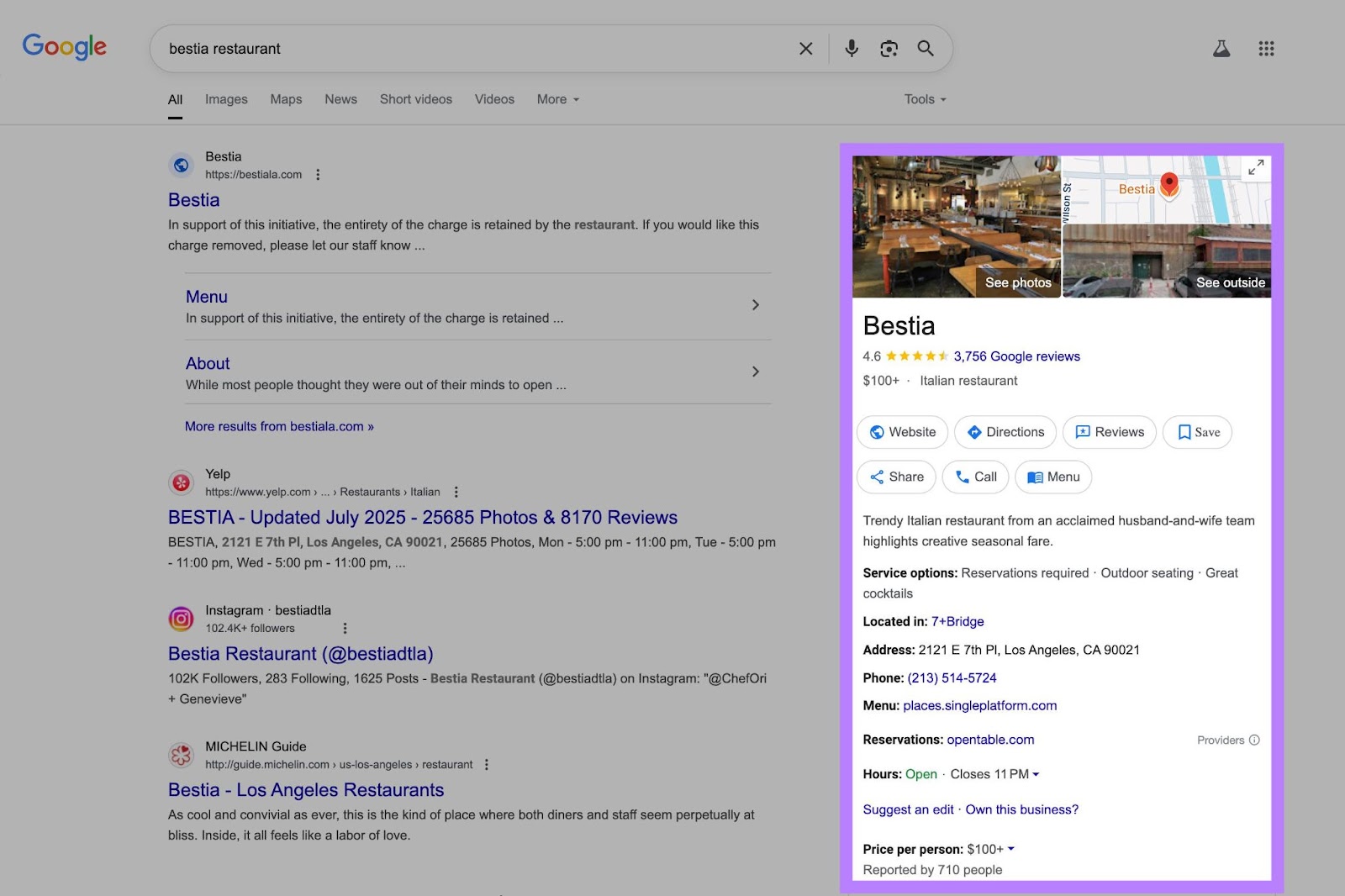
Information may include:
- Business address
- Phone number
- Operating hours
- Service area
- Customer reviews
This schema supports local SEO efforts and can improve visibility in local search results.
Article Schema
Article schema is ideal for:
- Blog posts
- News content
- Editorial publications
Key properties include:
- Headline
- Author
- Date published
- Featured image
Search engines can use this information to display enhanced article results.
Product Schema
Product schema is essential for e-commerce websites.
Information may include:
- Product name
- Brand
- Price
- Availability
- SKU
- Reviews
Proper implementation can significantly improve product visibility.
FAQ Schema
The FAQ schema allows search engines to display questions and answers directly within search results.
Benefits include:
- Increased SERP visibility
- Improved user experience
- Higher click-through rates
Event Schema
Event schema helps promote:
- Conferences
- Webinars
- Concerts
- Workshops
It communicates:
- Event name
- Date
- Location
- Ticket availability
Review Schema
Review schema highlights customer feedback.
Displayed ratings can increase trust and improve click performance.
Person Schema
Useful for:
- Authors
- Public figures
- Business leaders
This schema helps establish entity recognition.
Service Schema
Service schema is especially valuable for service-based businesses.
Examples include:
- SEO agencies
- Law firms
- Medical practices
- Consultants
Choosing the Right Schema for Your Website
Many websites qualify for multiple schema types.
For example, a law firm’s website may include:
- Organization schema
- Local business schema
- Service schema
- FAQ schema
- Article schema
The key is selecting schema types that accurately reflect page content. Avoid adding schema simply because it exists. Relevance and accuracy matter far more than quantity.
How to Implement Schema Markup?
Implementing schema markup involves several steps.
Step 1: Identify Content Type
Determine what the page represents.
Examples:
- Blog article
- Product page
- Local business
- Service page
Step 2: Choose Relevant Schema
Match the schema to the page content.
Examples:
Page Type | Recommended Schema |
Blog Post | Article |
Store Product | Product |
Service Page | Service |
FAQ Page | FAQPage |
Step 3: Generate Structured Data
Several tools simplify schema creation.

Options include:
- Schema generators
- SEO plugins
- CMS integrations
- Manual coding
Step 4: Add JSON-LD
Google recommends JSON-LD because it is:
- Clean
- Easy to update
- Separate from page content
Most SEO professionals prefer this format.
Step 5: Validate Markup
Validation helps identify:
- Missing fields
- Formatting issues
- Eligibility problems
Never skip this step.
JSON-LD vs Microdata vs RDFa
There are three primary implementation methods.
JSON-LD
The industry standard.
Advantages
- Easier maintenance
- Cleaner HTML
- Preferred by Google
Recommended?
Yes.
Microdata
Embedded directly into HTML tags.
Advantages
- Integrated with content
Disadvantages
- More complex
- Harder to scale
RDFa
An extension of HTML5.
Advantages
- Highly flexible
Disadvantages
- Technical complexity
For most websites, JSON-LD remains the best choice.
Practical Schema Markup Examples
Article Schema Example
A blog post may include:
- Headline
- Author
- Publish date
- Featured image
This helps search engines classify content correctly.
Product Schema Example
An online store can communicate:
- Product name
- Pricing
- Availability
- Reviews
This information may appear directly in search results.
Local Business Schema Example
A local business may display:
- Phone number
- Address
- Operating hours
This improves local search relevance.
5 Common Questions About Schema Markup
1. Does Schema Markup Improve SEO?
Yes, indirectly. While the schema itself is not typically a ranking factor, it can improve visibility, user engagement, and click-through rates, all of which contribute to stronger SEO performance.
2. Can Schema Markup Hurt SEO?
Only if implemented incorrectly.
Common problems include:
- Invalid code
- Misleading information
- Incorrect schema types
Proper validation minimizes risks.
3. Is Schema Markup Necessary for Small Businesses?
Absolutely. Small businesses often benefit significantly from schema, which improves local search visibility and helps communicate business information clearly.
4. How Long Does It Take to See Results?
There is no guaranteed timeline.
Google must:
- Crawl the page
- Process structured data
- Determine eligibility
Results may appear within days or several weeks.
5. Should Every Page Have Schema Markup?
Not necessarily every page, but the most important pages should include relevant structured data.
Focus on:
- Homepage
- Service pages
- Product pages
- Blog posts
- FAQ pages
Common Schema Mistakes to Avoid

Using Inaccurate Information
- Schema must match visible page content.
- Never add information users cannot see.
Choosing Incorrect Schema Types
- Product schema belongs on product pages
- Article schema belongs on content pages
- Using an incorrect schema reduces effectiveness.
Missing Required Properties
- Many schema types require specific fields.
- Missing these fields can prevent eligibility for rich results.
Overusing Schema
- Adding every possible schema type creates confusion.
- Use only what is relevant.
Ignoring Validation
- Even small errors can prevent search engines from correctly understanding markup.
- Testing is essential.
Testing and Validating Schema
Validation ensures structured data functions properly.
Rich Results Test
Checks eligibility for Google’s rich results.
Useful for:
- FAQs
- Products
- Events
- Articles
Schema Validators
These tools verify:
- Syntax
- Structure
- Compliance
They help identify technical issues before deployment.
Google Search Console
Search Console provides valuable structured data reports.
You can monitor:
- Errors
- Warnings
- Performance
This ongoing monitoring is critical for long-term success.
Measuring Schema Performance
After implementation, track performance metrics.
Organic Click-Through Rate
One of the most important indicators.
Rich results often improve CTR significantly.
Rich Result Impressions
Monitor visibility growth in search results.
Organic Traffic
Look for increases in:
- Sessions
- Users
- Search-driven visits
Conversion Rates
More qualified traffic often leads to:
- More leads
- More sales
- More inquiries
Search Visibility
Track keyword rankings and SERP features.
Structured data often improves how listings appear.
Advanced Schema Strategies
Once basic implementation is complete, advanced techniques can provide additional benefits.
Nested Schema
A nested schema connects related entities.
For example:
A product page may contain:
- Product schema
- Review schema
- Organization schema
This creates richer contextual relationships.
Entity SEO
Modern search increasingly focuses on entities rather than keywords.
Schema helps establish:
- Brand identity
- Expertise
- Relationships
This supports semantic SEO initiatives.
Content Cluster Markup
When multiple articles cover related topics, schema can reinforce topical authority.
This strategy is particularly useful for large content hubs.
Knowledge Graph Optimization
Strong schema implementation can contribute to:
- Knowledge panels
- Brand recognition
- Entity associations
These features enhance authority and visibility.
Schema Markup and AI Search
The rise of AI-powered search experiences has made structured data more important than ever.
AI systems seek to understand:
- Entities
- Context
- Relationships
- User intent
Schema markup helps provide this information in a machine-readable format.
As AI-generated search experiences continue expanding, websites with clear, structured data may have an advantage in content interpretation and visibility.
This is one reason every modern schema guide emphasizes structured data as a future-proof SEO strategy.
Best Practices for Long-Term Success
To maximize the value of schema markup:
Use JSON-LD Whenever Possible
It remains the preferred format.
Match Visible Content
Never create misleading structured data.
Stay Updated
Schema.org evolves regularly.
Review implementation periodically.
Validate Continuously
Check for errors after updates.
Monitor Search Console
Identify issues before they affect performance.
Focus on User Value
Schema exists to improve understanding and user experience, not to manipulate rankings.
Conclusion
Schema markup has become one of the most valuable components of modern technical SEO. It helps search engines better understand content, improves eligibility for rich results, supports semantic search, and enhances the user experience.
While structured data alone will not guarantee top rankings, it strengthens communication between your website and search engines. When combined with high-quality content, strong technical SEO, authoritative backlinks, and a solid user experience, schema markup becomes a powerful competitive advantage.
This comprehensive schema guide has explored what schema markup is, how it works, why it matters, how to implement it, common mistakes to avoid, and advanced strategies for long-term SEO success.
As search engines continue evolving toward AI-driven understanding, entity recognition, and semantic relevance, businesses that invest in structured data today will be better positioned to compete tomorrow.
Ready to Elevate Your SEO Strategy with Excell?
Implementing schema markup correctly is only one piece of the SEO puzzle. True digital growth requires a strategic combination of technical optimization, content marketing, local SEO, authority building, conversion optimization, and data-driven decision-making.
At Excell, we help businesses transform their websites into powerful lead-generation engines. Our team combines technical expertise, advanced SEO strategies, and proven marketing frameworks to help brands increase visibility, attract qualified traffic, and generate measurable business growth.
Our SEO Services Include:
✅ Technical SEO Audits & Optimization
✅ Schema Markup Implementation & Structured Data Strategy
✅ Local SEO & Google Business Profile Optimization
✅ Content Marketing & SEO Copywriting
✅ Semantic SEO & Topic Authority Development
✅ Link Building & Digital PR
✅ AI Search Optimization
✅ Conversion Rate Optimization
✅ Enterprise SEO Solutions

Whether you’re a local business, an eCommerce brand, a startup, or an established company, Excell can help you achieve sustainable search growth and outperform your competitors.
Don’t leave your rankings to chance. Contact us today and Book your free discovery call to get done for your services, drive qualified leads, and maximize revenue in today’s competitive digital landscape.
Contact us:
EXCELL INDUSTRIES LLC
6420 Richmond Ave., Ste 470
Houston, TX, USA
Phone: +1 832-850-4292
Email: info@excellofficial.com