


If you’re wondering how to do local keyword research, you’re already taking the first step toward attracting customers who are actively searching for your products or services nearby. Local keyword research is one of the most effective SEO strategies for businesses that serve specific cities, neighborhoods, or regions. Whether you’re a law firm, contractor, dental office, restaurant, or retail business, targeting the right local keywords can dramatically increase your visibility in Google Search and Google Maps.
Local keyword research is different from general keyword research because it focuses on search terms that include a location. People who use these searches often want to buy soon, since they’re looking for businesses they can contact or visit right away.
This guide will show you step by step how to do local keyword research from beginning to end.
Table of Contents:
- What Is Local Keyword Research?
- Why Local Keyword Research Matters?
- Understanding Local Search Intent
- How to Do Local Keyword Research Step-by-Step?
- Finding Local Keyword Ideas
- Use Google Autocomplete to Discover Real Customer Searches
- Check Google’s “People Also Ask”
- Analyze Related Searches
- Use Google Keyword Planner
- Use Professional SEO Tools
- Research Competitors
- Find “Near Me” Keywords
- Focus on Long-Tail Keywords
- Organize Keywords by Search Intent
- Create Local Landing Pages
- Keyword Mapping
- Optimize Your Content
- Optimize Your Google Business Profile
- Build Local Citations
- Create Local Content
- Monitor Keyword Performance
- Common Local Keyword Research Mistakes
- Frequently Asked Questions
- Final Thoughts
- Ready to Dominate Local Search? Partner with Excell
What Is Local Keyword Research?
Local keyword research is the foundation of every successful local SEO campaign. Before your website can rank on Google for searches like “roof repair in Dallas,” “family dentist near me,” or “personal injury lawyer in Los Angeles,” you first need to understand exactly what your potential customers are typing into the search bar.
Unlike traditional keyword research, which targets broad audiences across the country or even globally, local keyword research focuses on identifying search phrases that include a specific city, neighborhood, ZIP code, or geographic intent. These keywords connect your business with people who are actively looking for products or services in your service area.
For example, if someone searches for “coffee shop,” they might just want general information. But if they search for “coffee shop in downtown Austin” or “coffee shop near me,” they probably want to visit a business soon. They’re not just browsing; they’re likely planning to stop by within the next few minutes or hours.
This difference is what makes local keyword research so valuable. It helps businesses reach people who are ready to buy, which means you get better website traffic, more engagement, and higher conversion rates.
When you do local keyword research well, it’s more than just finding popular search terms. You learn how your customers think, what words they use, what problems they want to solve, and what services they need. This helps you create content that matches what people are looking for and shows Google that your business is a great fit for local searches.
No matter if you run a law firm, contracting business, dental office, HVAC company, restaurant, or retail shop, learning how to do local keyword research gives you an edge. It helps you show up in front of local customers right when they’re ready to take action.
Why Local Keyword Research Matters ?
Google handles billions of searches every day, and many of them are from people looking for something local.
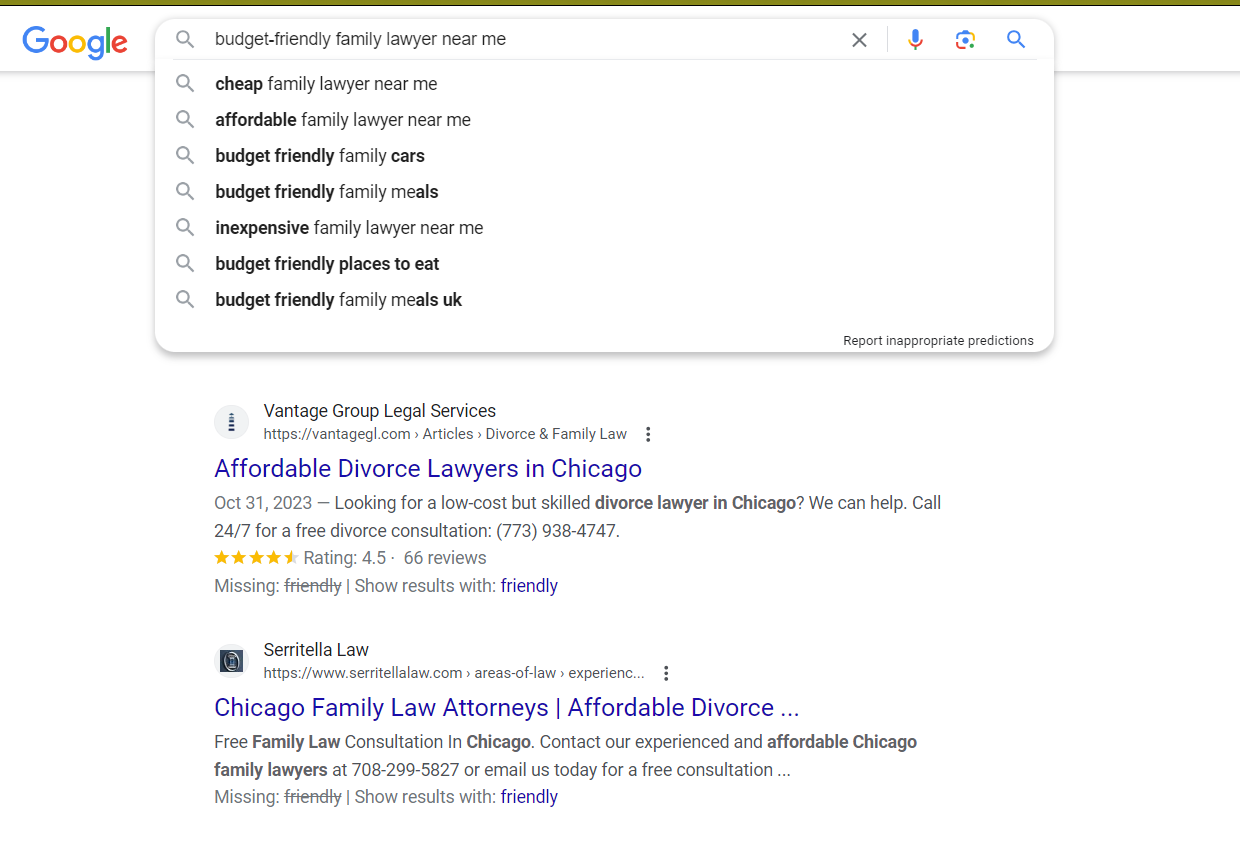
When people search for:
- “best electrician near me”
- “personal injury attorney in Miami”
- “Italian restaurant Boston”
they want to find businesses they can reach out to right away.
Benefits of local keyword research include:
- Higher local search rankings
- Better Google Business Profile visibility
- Increased qualified website traffic
- More phone calls
- More appointment bookings
- Better conversion rates
- Lower SEO competition than national keywords
Instead of trying to compete with everyone, you’re focusing on the people most likely to become your customers.
Understanding Local Search Intent
A key part of local keyword research is understanding what people really want when they search.
Local searches generally fall into three categories.
Informational
People are looking for answers.
Examples:
- best neighborhoods in Denver
- how much does roof repair cost in Houston
- average dentist prices near me
Commercial
Users are comparing businesses.
Examples:
- best HVAC company Phoenix
- top family lawyers Chicago
- highest-rated dentist Dallas
Transactional
These users are ready to contact someone.
Examples:
- emergency plumber near me
- schedule HVAC repair Austin
- personal injury lawyer free consultation
These keywords often generate the highest conversion rates.
How to Do Local Keyword Research Step-by-Step?
Let’s break the process into manageable steps.
Step 1: Identify Your Core Services
Start with the services your business provides.
Example:
A roofing company may offer:
- Roof repair
- Roof replacement
- Storm damage repair
- Commercial roofing
- Emergency roof repair
- Roof inspection
Each service becomes its own keyword category.
Step 2: Add Geographic Modifiers
Now combine your services with locations.
Examples:
- roof repair Dallas
- Dallas roof replacement
- emergency roofing Dallas TX
- commercial roofing Dallas
Also include:
- neighborhoods
- nearby cities
- counties
- ZIP codes
- districts
Step 3: Include Keyword Variations
People search differently.
Examples:
- roofing company Dallas
- roofers Dallas
- roofing contractor Dallas
- roofing services Dallas
Google can tell the difference between these searches, but using different versions of your keywords helps you reach more people.
Finding Local Keyword Ideas
Good keyword research begins with brainstorming ideas.
Think about:
- services
- products
- customer problems
- neighborhoods
- city names
- nearby towns
- landmarks
For example:
Instead of only:
- dentist Chicago
also consider:
- cosmetic dentist Chicago
- pediatric dentist Chicago
- emergency dentist Chicago
- Invisalign Chicago
Use Google Autocomplete to Discover Real Customer Searches
One of the simplest and often most overlooked ways to discover valuable local keywords is by using Google’s Autocomplete feature. Every suggestion that appears in the search bar is based on actual searches made by users, making it an excellent source of keyword ideas without requiring any paid tools.
Start by typing your main service into Google, but don’t hit Enter. As you type, Google will show you a list of related searches. These suggestions are based on what’s popular, where you are, and what people are searching for right now.
For example, if you own a landscaping company and begin typing “landscaping company Dallas,” Google may suggest:
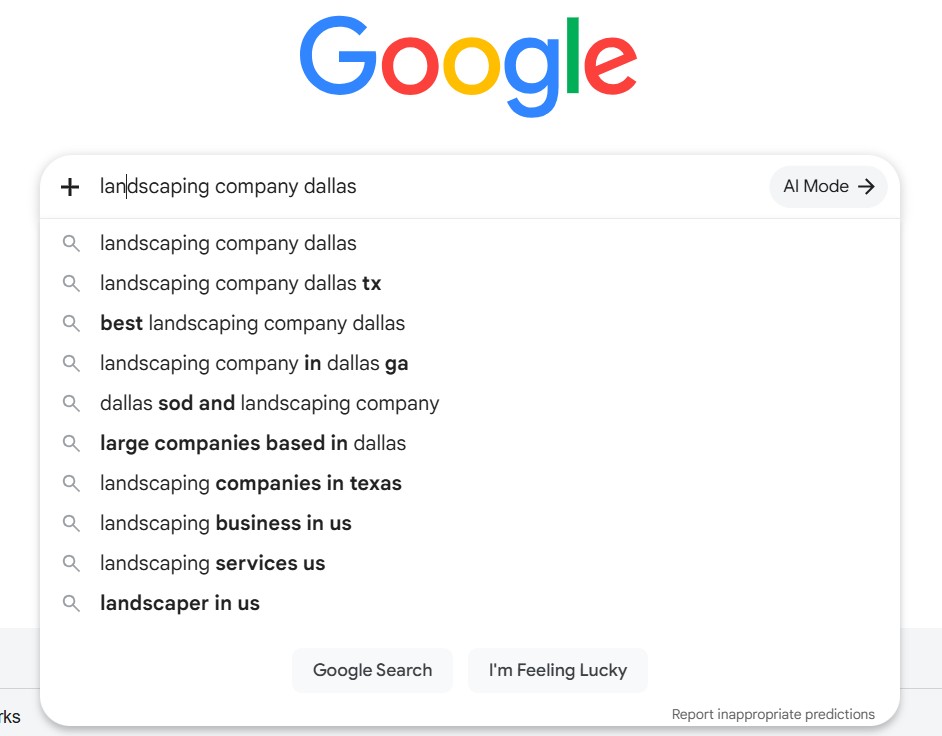
- landscaping company Dallas TX
- affordable landscaping company Dallas
- commercial landscaping Dallas
- landscaping services near me
- best landscaping company Dallas
Each suggestion is a chance to create content or improve a service page using a keyword that real people are searching for.
You can go even further by adding different letters after your keyword.
Examples:
roof repair Dallas a
roof repair Dallas b
roof repair Dallas c
Google will show new suggestions for every letter, helping you find dozens or even hundreds of long-tail keywords that your competitors might have missed.
This method is especially helpful because it shows you the words your audience actually uses. Instead of just using keyword tools, you’re getting ideas straight from Google’s search data, so you can create content that matches what people really search for.
Check Google's "People Also Ask"
The “People Also Ask” section provides valuable keyword ideas and content opportunities.
Examples:
- How much does a personal injury lawyer cost?
- When should I hire a lawyer?
- Can I sue after a car accident?
You can turn each question into a blog post or add it to your FAQ section.
Analyze Related Searches
Scroll to the bottom of Google.
You’ll often find:
- related services
- nearby locations
- common search variations
These make great secondary keywords to target.
Use Google Keyword Planner
Google Keyword Planner is free.
It provides:
- search volume
- keyword ideas
- competition
- seasonal trends
Search for:
- electrician
- chiropractor
- roofing company
After that, filter the results by your target location.
Use Professional SEO Tools
Paid tools can give you even more detailed information.
Popular choices include:
- Ahrefs
- SEMrush
- Moz
- Ubersuggest
- Mangools
- KeywordTool.io
These platforms reveal:
- search volume
- keyword difficulty
- traffic potential
- competitor rankings
- SERP features
Research Competitors
Your competitors can help you find valuable keyword ideas.
Look for:
- page titles
- H1 headings
- URLs
- blog topics
- FAQs
- Google Business Profile categories
If you see several competitors ranking for a keyword, it probably means a lot of people are searching for it.
Find "Near Me" Keywords
You don’t need to add “near me” to every page, but it’s important to understand how people use these searches.
Examples include:
- dentist near me
- chiropractor near me
- roofing contractor near me
Google usually interprets these searches based on the user’s location.
Rather than making lots of “near me” pages, focus on making your local landing pages clearly show your location.
Focus on Long-Tail Keywords
Long-tail keywords usually have less competition and show that people are more ready to buy.
Examples:
Instead of:
- lawyer
Use:
- car accident lawyer in Dallas
- truck accident attorney Dallas TX
- free consultation injury lawyer Dallas
Long-tail keywords often lead to more conversions because they match exactly what people are looking for.
Organize Keywords by Search Intent
Create categories such as:
Service Keywords
- HVAC repair Dallas
- AC installation Dallas
Location Keywords
- HVAC Plano
- HVAC Richardson
- HVAC Frisco
Informational Keywords
- why is my AC blowing warm air?
- HVAC maintenance tips
Commercial Keywords
- best HVAC company Dallas
- affordable HVAC repair Dallas
Create Local Landing Pages
Each important location deserves its own optimized page.
Example:
/roof-repair-dallas/
/roof-repair-plano/
/roof-repair-garland/
Avoid duplicating content.
Each page should include:
- local information
- neighborhood references
- customer testimonials
- unique FAQs
- customized service descriptions
Keyword Mapping
Assign one primary keyword to each page.
Example:
Homepage
Primary keyword:
- roofing company Dallas
Service page
Primary keyword:
- roof replacement Dallas
Blog article
Primary keyword:
- roof replacement cost Dallas
Location page
Primary keyword:
- roof repair Plano
This helps you avoid having multiple pages compete for the same keyword.
Optimize Your Content
Once you’ve completed your local keyword research, naturally incorporate your keywords into:
- Page title
- Meta description
- URL
- H1
- H2 headings
- Opening paragraph
- Image alt text
- Internal links
- Conclusion
Don’t overuse your keywords.
Always write in a way that feels natural and puts your readers first.
Optimize Your Google Business Profile
Your Google Business Profile is essential for local SEO.
Include:
- accurate business name
- address
- phone number
- service categories
- business description
- services
- products
- photos
- customer reviews
Google uses this information to determine local relevance.
Build Local Citations
Ensure your business information is consistent across:
- Yelp
- Bing Places
- Apple Maps
- Yellow Pages
- Better Business Bureau
- Chamber of Commerce directories
Consistency improves trust with search engines.
Create Local Content
Sharing content that focuses on your local area helps show your expertise.
Ideas include:
- Local events
- Community involvement
- City-specific guides
- Neighborhood spotlights
- Industry news affecting your area
Google gives better rankings to businesses that show they know their local area well.
Monitor Keyword Performance
Track rankings using tools like:
- Google Search Console
- Google Analytics
- Ahrefs
- SEMrush
Important metrics:
- impressions
- clicks
- click-through rate
- average position
- conversions
- phone calls
- form submissions
Change your strategy as needed based on what the data shows.
Common Local Keyword Research Mistakes
Avoid these common pitfalls:
Targeting Only High-Volume Keywords
Sometimes, keywords with lower search volume actually bring in more customers.
Ignoring Search Intent
Getting lots of visitors won’t help if they don’t become customers.
Stuffing Keywords
Use keywords naturally.
Ignoring Mobile Users
Most people do local searches on their phones.
Make sure your website loads fast and works well on mobile devices.
Not Updating Research
Search trends can change over time.
Check your keyword strategy every few months to keep it up to date.
Frequently Asked Questions
1. What is local keyword research?
Local keyword research is the process of finding search terms that people use when looking for businesses, products, or services in a specific geographic area. It helps businesses improve their visibility in local search results and attract nearby customers.
2. How do I find the best local keywords?
Start by listing your services, adding city or neighborhood names, using Google Autocomplete, analyzing competitors, reviewing “People Also Ask” questions, and using keyword research tools such as Google Keyword Planner, Ahrefs, or SEMrush to identify search volume and competition.
3. Should I target multiple cities on one page?
It’s generally better to create dedicated, high-quality pages for important service areas. Each page should contain unique content tailored to that specific location rather than simply swapping city names, which can appear repetitive and offer limited value to users.
4. Are “near me” keywords important?
Yes. “Near me” searches are extremely common, especially on mobile devices. While you don’t need to repeat the phrase excessively, optimizing your site with accurate location information, a well-maintained Google Business Profile, and local relevance helps Google match your business to these searches.
5. How often should I update my local keyword research?
Review your local keyword strategy at least every six months, or more frequently if your business expands into new service areas, introduces new services, or if search trends shift significantly. Regular updates help maintain and improve local search visibility.
Final Thoughts
Learning how to do local keyword research is one of the most valuable investments you can make in your digital marketing strategy. By understanding your audience, identifying the right search terms, targeting specific locations, and optimizing your website around user intent, you can attract highly qualified local traffic that is more likely to convert into leads and customers.
Keep in mind that local SEO is something you need to work on regularly, not just once. Keep an eye on your keyword performance, update your content, make sure your Google Business Profile is current, and stay up to date with changes in local search habits. Businesses that keep improving their local keyword strategy are more likely to beat the competition and stay visible in their communities.
Ready to Dominate Local Search? Partner with Excell
At Excell, we help businesses grow with smart local SEO and keyword research based on real data. If you want to boost your Google rankings, get more local customers, or build a strong long-term SEO plan, our team is ready to support you.

Contact us today and Book your free discovery call to get done for your services. See how expert keyword research, optimized content, and proven strategies can help your business get more leads, increase website traffic, and grow for the long term.
Contact us:
EXCELL INDUSTRIES LLC
6420 Richmond Ave., Ste 470
Houston, TX, USA
Phone: +1 832-850-4292
Email: info@excellofficial.com