
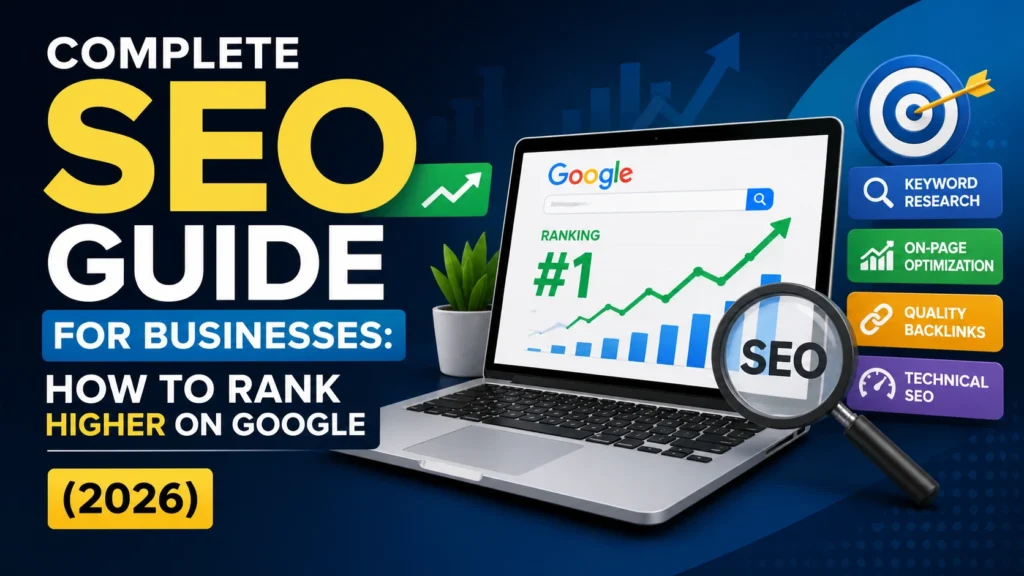
In today’s digital world, being visible on Google is crucial for any business. Most people use search engines to find products, services, and answers to their questions. If your business isn’t on the first page of results, you could be missing out on valuable customers.
This guide will give you a practical and up-to-date understanding of SEO for 2026. No matter your business size, learning SEO can help you improve your online presence and support long-term growth.
Table of Contents:
- What is SEO and Why It Matters in 2026?
- How Google Works: Understanding the Algorithm?
- Keyword Research: Building a Strong Foundation
- Understanding Search Intent and User Behavior
- On-Page SEO: Optimizing Every Page for Success
- Technical SEO: Building a Strong Website Infrastructure
- Content Marketing: The Core of SEO Strategy
- Local SEO: Dominating Your Area
- Link Building: Establishing Authority and Trust
- Mobile SEO and User Experience
- Voice Search and AI-Driven SEO
- Measuring SEO Performance
- Common SEO Mistakes to Avoid
- SEO Trends for 2026 and Beyond
- FAQs About SEO for Businesses
- Final Thoughts and Call to Action
What is SEO and Why It Matters in 2026?
Search Engine Optimization (SEO) is the strategic process of improving a website’s visibility in search engine results pages (SERPs), primarily on platforms like Google. At its core, SEO involves optimizing multiple elements: content, technical infrastructure, and authority signals so that search engines can better understand, index, and rank your website for relevant queries.
By 2026, SEO is much more than adding keywords or getting backlinks. It’s now a complete digital strategy that includes user experience, high-quality content, AI, and trust-building.
Today, businesses need to look beyond rankings and focus on giving real value to users at every step.
Today, businesses need to look beyond rankings and focus on giving real value to users at every step.
Search engines today are powered by advanced AI systems that evaluate not only what your content says, but also how helpful, credible, and user-friendly it is. This means your website must meet both technical standards and human expectations simultaneously.
Why SEO Is More Important Than Ever?
In 2026, SEO is at the heart of digital success. It’s now a main driver of growth for all kinds of businesses. With more competition and people relying on search engines to decide what to buy, companies that ignore SEO risk losing out on visibility, trust, and sales.
SEO Is About Visibility, Trust, and Relevance
SEO is about more than just getting to page one. It helps your business get found, builds trust, and shows you’re relevant to your audience. When your site shows up for key searches, it strengthens your brand and shows you’re a dependable choice.
Organic Traffic Dominates the Digital Landscape
One of the most compelling reasons SEO matters is the dominance of organic search traffic. The majority of online experiences begin with a search engine query. Whether users are looking for products, services, or information, Google is often their starting point.
Organic traffic is especially valuable because:
- It is intent-driven users who are actively searching for something specific.
- It delivers consistent, long-term results.
- It reduces dependency on paid advertising.
With social media or paid ads, your visibility often ends when the budget does. SEO, however, continues to drive traffic over time. A well-optimized page can keep generating leads and sales long after it’s published.
Higher ROI Compared to Paid Advertising
SEO is known as one of the most cost-effective ways to market online. While it takes time and effort to get started, the long-term return is usually much better than most paid ads.
Paid advertising offers immediate visibility, but it comes with ongoing costs. Once you stop paying, your traffic disappears. SEO, on the other hand, builds compounding value:
- Content continues to rank and attract traffic over time.
- Strong domain authority improves overall site performance.
- Organic leads often have higher conversion rates.
By 2026, more businesses will choose SEO because it offers steady, lasting growth rather than short-term results.
Credibility and Trust Are Built Through Rankings
Users naturally trust search engines to deliver the best and most relevant results. As a result, websites that appear at the top of Google are often perceived as more credible and authoritative.
Ranking high in search results sends powerful trust signals:
- Your business is established and reliable.
- Your content is valuable and accurate.
- Your brand is recognized within your industry.
This matters even more in crowded markets where customers compare many choices. If your competitors rank above you, they’re more likely to win customers’ trust and business.
SEO Influences the Entire Customer Journey
SEO is unique because it impacts every stage of the customer journey, from initial awareness to final conversion.
1. Awareness Stage
Users discover your brand through informational searches (e.g., “what is SEO” or “how to improve website traffic”).
2. Consideration Stage
They compare options and evaluate solutions (e.g., “best SEO services for small businesses”).
3. Decision Stage
They take action and convert (e.g., “hire SEO agency near me”).
When you optimize your site for different search intents, you help users move smoothly through each step of their journey. SEO then becomes more than just a way to get traffic, it helps turn visitors into customers.
SEO Aligns with Modern Consumer Behavior
Consumer behavior has shifted dramatically in recent years. People now expect:
- Instant access to information
- Personalized search results
- Fast, mobile-friendly experiences
- High-quality, trustworthy content
SEO helps your business meet these needs. By focusing on user experience, fast loading, and useful content, you build a website that matches how people search and use the internet today.
Competitive Advantage in a Saturated Market
By 2026, almost every business will be online, making it harder to get noticed. SEO helps you rise above the competition by getting your website higher in search results.
Businesses that invest in SEO gain a significant advantage:
- They capture more traffic.
- They generate more leads.
- They build stronger brand authority.
On the other hand, businesses that ignore SEO often struggle to get noticed, even if their products or services are great.
SEO Supports Other Marketing Channels
Another reason SEO is so important is its ability to enhance other marketing efforts.
It works in synergy with:
It works in synergy with:
- Content marketing: SEO ensures your content reaches the right audience
- Social media: Optimized content performs better when shared
- Paid advertising: SEO insights improve targeting and messaging
- Email marketing: SEO-driven content provides valuable resources for campaigns
Rather than operating in isolation, SEO acts as a foundation that strengthens your entire digital strategy.
How Google Works: Understanding the Algorithm
To do well with SEO, it’s important to know how Google decides which websites to rank.
Core Components of Google’s Algorithm
1. Crawling and Indexing
Google uses bots (spiders) to crawl your website and index its content.
2. Ranking
Once indexed, pages are ranked based on relevance and quality.
3. Ranking Signals
- Content quality
- Backlinks
- User experience
- Page speed
- Mobile usability
E-E-A-T Framework
Google evaluates content using:
- Experience
- Expertise
- Authority
- Trustworthiness
This means your content must demonstrate real knowledge and credibility.
Keyword Research: Building a Strong Foundation
Keyword research is a key part of this SEO guide for businesses.
Why Keywords Matter
Keywords connect your content to what users are searching for.
Types of Keywords
- Short-tail (e.g., “SEO”)
- Long-tail (e.g., “complete SEO guide for businesses 2026”)
- Transactional (buy intent)
- Informational (learning intent)
Steps to Effective Keyword Research
- Brainstorm topics relevant to your business.
- Use keyword tools
- Analyze competition
- Choose keywords based on intent and difficulty.
Advanced Keyword Strategy
- Focus on topic clusters.
- Use semantic keywords
- Optimize for questions and voice search.
Understanding Search Intent and User Behavior
Search intent determines what users expect to find.
Four Types of Intent
- Informational
- Navigational
- Transactional
- Commercial
How to Match Intent
- Analyze top-ranking pages
- Identify content format (blog, product page, video)
- Provide better answers than competitors.
Failing to match intent is one of the biggest SEO mistakes.
On-Page SEO: Optimizing Every Page for Success
On-page SEO ensures your content is structured properly.
Key Elements
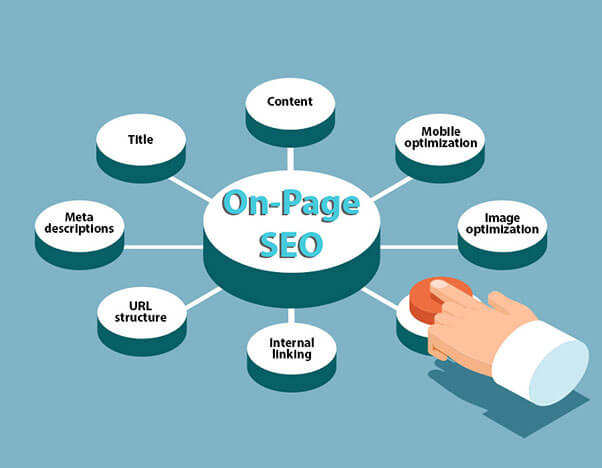
Title Tags
- Include keyword
- Make it engaging
Meta Descriptions
- Summarize content
- Encourage clicks
Headers
- Organize content
- Improve readability
Internal Links
- Connect pages
- Boost SEO performance
URL Structure
- Clean and keyword-rich
Technical SEO: Building a Strong Website Infrastructure
Technical SEO focuses on how your website functions.
Essential Elements
- Fast loading speed
- Mobile responsiveness
- Secure connection (HTTPS)
- XML sitemap
- Structured data
Why It Matters
Even the best content won’t rank if your website is slow or doesn’t work properly.
Content Marketing: The Core of SEO Strategy
Content is at the heart of SEO.
What Makes Content Successful
- High-quality information
- Clear structure
- User-focused writing
- Regular updates
Content Types
- Blog posts
- Guides
- Videos
- Infographics
- Case studies
Content Optimization Tips
- Use keywords naturally
- Answer user questions
- Add FAQs
Local SEO: Dominating Your Area
Local SEO helps your business reach customers in your area.
Key Strategies
- Optimize Google Business Profile
- Collect reviews
- Use local keywords
- Build citations
Benefits
- Increased visibility
- More foot traffic
- Higher conversions
Link Building: Establishing Authority and Trust
Link building is still one of the most important parts of SEO in 2026. Even as search engines change, backlinks are a key signal that helps Google judge your site’s authority, trust, and relevance.
A backlink is simply a link from another website to yours. When a trusted site links to your content, it’s like a vote of confidence for search engines. The more quality backlinks you have, the more authority your website gains in your field.
However, modern link building is no longer about acquiring as many links as possible. Instead, it is about earning meaningful, relevant, and high-quality links that enhance your brand’s reputation and visibility.
Why Backlinks Are a Major Ranking Factor?
Search engines like Google use backlinks to evaluate three critical elements:

1. Authority
Websites with strong backlink profiles are seen as more authoritative. If multiple credible sources link to your content, Google interprets this as a sign that your website is a trusted resource.
2. Relevance
Backlinks from websites within your industry or niche carry more weight. For example, a link from a reputable marketing blog is far more valuable for an SEO agency than a random link from an unrelated site.
3. Trust
Links from well-established, secure, and reputable websites contribute to your site’s trustworthiness. This aligns with Google’s E-E-A-T principles (Experience, Expertise, Authority, Trust).
Effective Link-Building Strategies
Getting good backlinks takes a smart, honest, and long-term plan. Here are the best link-building methods to focus on in 2026.
1. Guest Posting
Guest posting involves writing and publishing content on other websites in your industry. In exchange, you typically receive a backlink to your site.
Why It Works:
- Builds authority in your niche
- Expands your audience reach
- Generates high-quality backlinks
Best Practices:
- Target reputable and relevant websites
- Provide high-value, original content.
- Avoid low-quality or spammy blogs.
Guest posting works best when you build real relationships and offer value, not just when you try to get links.
2. Outreach
Outreach is the process of connecting with website owners, bloggers, journalists, or influencers to request backlinks or collaborations.
Common Outreach Approaches:
- Asking for link placements in relevant articles
- Suggesting your content as a resource
- Building partnerships with industry leaders
Tips for Successful Outreach:
- Personalize your messages
- Focus on mutual value.
- Be professional and concise.
Outreach isn’t only about getting links—it’s also about building lasting connections that help your brand.
3. Content Marketing
High-quality content naturally attracts backlinks. When your content provides value, people are more likely to reference and share it.
Types of Link-Worthy Content:
- In-depth guides (like this one)
- Original research and data
- Infographics
- Case studies
- Expert roundups
Why It Works:
- Encourages organic link acquisition
- Positions your brand as an authority
- Provides long-term SEO value
Content marketing is a lasting way to build links because it helps you earn them naturally rather than just chasing them.
4. Digital PR
Digital PR combines public relations with SEO to secure backlinks from high-authority media outlets and publications.
Examples:
- Press releases
- News features
- Industry reports
- Thought leadership articles
Benefits:
- High-authority backlinks
- Increased brand visibility
- Strong credibility signals
Digital PR works especially well for businesses that want to become leaders in their industry.
Mobile SEO and User Experience
By 2026, mobile SEO isn’t optional, it’s the base of your whole SEO plan. Since most web traffic comes from mobile devices, Google now mainly uses your mobile site to decide how to rank your pages.
This shift reflects how users actually browse the internet today. People search, shop, and interact with businesses on smartphones more than ever before. If your website does not deliver a seamless mobile experience, your rankings and your conversions will suffer.
What is Mobile-First Indexing?
Mobile-first indexing means that Google evaluates your website based on its mobile version, not the desktop version.
This includes:
- Content visibility
- Page structure
- Load speed
- User experience elements
If your mobile site is incomplete, slow, or difficult to use, Google will interpret it as a poor experience and rank it lower, even if your desktop site is well-optimized.
Why Mobile SEO Matters More Than Ever?
1. Mobile Usage Continues to Dominate
Most users now access websites through mobile devices. Whether they are searching for local services, reading content, or making purchases, mobile is the primary platform.
This means your website must:
- Load quickly on smaller screens.
- It is easy to navigate with touch.
- Display content clearly without zooming
If you don’t meet these needs, people will leave your site quickly and you’ll miss out on potential customers.
2. Google Prioritizes Mobile Experience
Google’s algorithm heavily weighs mobile usability and performance. Factors like page speed, responsiveness, and layout stability directly influence rankings.
A poor mobile experience can result in:
- Lower search rankings
- Reduced visibility
- Decreased organic traffic
3. User Experience Drives Conversions
Mobile SEO is not just about rankings; it’s about results. A well-optimized mobile site improves:
- Engagement
- Time on page
- Conversion rates
But if your mobile site is hard to use, people will leave almost right away.
Voice Search and AI-Driven SEO
The way peopHow people search online is changing fast. One big shift is the rise of voice search and AI-powered search tools. By 2026, people aren’t just typing short phrases, they’re speaking naturally to devices like smartphones, smart speakers, and assistants like Google Assistant, Siri, and Alexa.e time, artificial intelligence (AI) is transforming how search engines interpret queries, rank content, and deliver results. Together, voice search and AI are reshaping SEO strategies, requiring businesses to rethink how they create and optimize content.

How Voice Search Is Changing User Behavior?
Voice search has introduced a more conversational, intuitive way to search.
Instead of typing “best SEO agency 2026,” a user might ask:
Instead of typing “best SEO agency 2026,” a user might ask:
- “What is the best SEO agency for small businesses in 2026?”
- “How can I improve my website ranking on Google?”
This shift has several important implications:
1. Longer, More Conversational Queries
Voice searches tend to be longer and more natural. Users speak in full sentences rather than short keywords.
2. Question-Based Searches
Many voice queries are phrased as questions, often starting with:
- Who
- What
- Where
- When
- Why
- How
3. Immediate Intent
Voice search users often want quick, direct answers, especially for local or urgent queries.
Why Voice Search Matters for SEO in 2026?
Voice search is not just a trend; it’s a fundamental change in how users interact with search engines.
Increased Usage Across Devices
From smartphones to smart home devices, voice-enabled technology is becoming standard. This means businesses must optimize for voice across multiple platforms.
Growth of Local Searches
Many voice searches are location-based, such as:
- “Best restaurant near me”
- “SEO services near me”
This makes voice search especially important for local SEO.
Featured Snippets Dominate Voice Results
Voice assistants usually get their answers from featured snippets at the top of Google search results. If your content is set up for these snippets, you’re more likely to be chosen as the spoken answer.
Optimization Tips for Voice Search
To succeed in voice search SEO, businesses must adapt their content to match how people speak and search.
1. Use Natural Language
Voice search relies heavily on conversational language. Your content should reflect how people actually speak.
Best Practices:
- Write in a clear, conversational tone.
- Use full sentences instead of fragmented phrases.
- Incorporate long-tail keywords
Example:
Instead of targeting:
“SEO tips 2026”
“SEO tips 2026”
Optimize for:
“What are the best SEO tips for businesses in 2026?”
“What are the best SEO tips for businesses in 2026?”
This way, your content matches what people actually ask.
2. Answer Questions Clearly and Directly
Since many voice searches are question-based, your content should provide clear, concise answers.
How to Do This:
- Include FAQ sections
- Use question-based headings (H2, H3)
- Provide direct answers within the first few sentences.
Example:
Question: What is SEO?
Answer: SEO is the process of optimizing your website to improve its visibility in search engine results.
Answer: SEO is the process of optimizing your website to improve its visibility in search engine results.
Using this format makes it more likely your answer will be picked for voice search.
3. Optimize for Featured Snippets
Featured snippets are short, highlighted answers that appear at the top of Google’s search results. They are often used for voice search responses.
Types of Featured Snippets:
- Paragraphs
- Lists
- Tables
Optimization Tips:
- Provide concise answers (40–60 words)
- Use structured formatting (bullet points, numbered lists)
- Target question-based keywords
Getting your content into featured snippets can really boost your visibility in both regular and voice searches.
Measuring SEO Performance
Tracking your SEO is important because it shows what’s working, what needs fixing, and how your efforts help your business grow. Without tracking, you’re just guessing. With good data, you can make smart choices and get better results.
Below is a detailed breakdown of the key metrics and tools every business should monitor.
Key Metrics
1. Organic Traffic
What it is:
Organic traffic refers to the number of visitors who land on your website through unpaid search engine results (e.g., Google, Bing).
Organic traffic refers to the number of visitors who land on your website through unpaid search engine results (e.g., Google, Bing).
Why it matters:
This is one of the most important SEO metrics because it directly shows how visible your website is in search engines. If your SEO strategy is effective, your organic traffic should steadily increase over time.
This is one of the most important SEO metrics because it directly shows how visible your website is in search engines. If your SEO strategy is effective, your organic traffic should steadily increase over time.
What to look for:
- Growth trends over weeks or months
- Which pages are attracting the most traffic
- Traffic sources (Google, Bing, etc.)
How to interpret it:
- Increasing traffic: Your SEO efforts are working
- Flat traffic: You may need better keywords or content
- Declining traffic: Possible ranking drops or algorithm impact
Organic traffic is usually the first sign that your SEO is working.
2. Keyword Rankings
What it is:
Keyword rankings show where your website appears in search results for specific search terms.
Keyword rankings show where your website appears in search results for specific search terms.
Why it matters:
Higher rankings mean greater visibility. If your pages rank on the first page, especially in the top 3 positions, you are more likely to get clicks and traffic.
Higher rankings mean greater visibility. If your pages rank on the first page, especially in the top 3 positions, you are more likely to get clicks and traffic.
What to track:
- Position of your target keywords
- Movement (up or down) over time
- New keywords your site is ranking for
How to interpret it:
- Rising rankings: Your optimization is effective
- Stable rankings: Maintain and improve content
- Dropping rankings: Competitors may be outperforming you.
Tracking keyword rankings helps you understand how competitive your SEO strategy is.
3. Conversion Rate
What it is:
Conversion rate measures the percentage of visitors who complete a desired action on your website.
Conversion rate measures the percentage of visitors who complete a desired action on your website.
Examples of conversions:
- Filling out a contact form
- Making a purchase
- Signing up for a newsletter
- Booking a service
Why it matters:
Traffic alone is not enough; what matters is whether that traffic turns into customers or leads. Conversion rate connects SEO performance directly to business results.
Traffic alone is not enough; what matters is whether that traffic turns into customers or leads. Conversion rate connects SEO performance directly to business results.
Formula:
Conversions ÷ Total Visitors × 100
Conversions ÷ Total Visitors × 100
How to interpret it:
- High conversion rate: Your traffic is relevant, and your website is effective
- Low conversion rate: You may have targeting or UX issues
SEO isn’t just about getting visitors—it’s about bringing in the right people who are likely to become customers.
4. Bounce Rate
What it is:
Bounce rate is the percentage of visitors who leave your website after viewing only one page without taking any action.
Bounce rate is the percentage of visitors who leave your website after viewing only one page without taking any action.
Why it matters:
A high bounce rate can indicate that users aren’t finding what they’re looking for or that your page experience is poor.
A high bounce rate can indicate that users aren’t finding what they’re looking for or that your page experience is poor.
What affects bounce rate:
- Page load speed
- Content quality
- Relevance to search intent
- Design and usability
How to interpret it:
- High bounce rate: Content mismatch or poor UX
- Low bounce rate: Strong engagement and relevance
Remember, bounce rates can vary by page. For example, blog posts often have higher bounce rates than product pages.
Tools for Measuring SEO Performance
To effectively track and analyze these metrics, businesses rely on specialized tools.
1. Google Analytics
What it does:
Google Analytics provides detailed insights into your website traffic and user behavior.
Google Analytics provides detailed insights into your website traffic and user behavior.
Key features:
- Tracks organic traffic
- Measures conversion rates
- Shows user behavior (time on site, pages visited)
- Identifies top-performing pages
Why it’s important:
It helps you understand how users interact with your website after they arrive, allowing you to optimize for better engagement and conversions.
It helps you understand how users interact with your website after they arrive, allowing you to optimize for better engagement and conversions.
2. Google Search Console
What it does:
Search Console focuses specifically on your website’s performance in Google search results.
Search Console focuses specifically on your website’s performance in Google search results.
Key features:
- Shows keyword rankings and impressions
- Tracks click-through rates (CTR)
- Identifies indexing issues
- Highlights technical errors
Why it’s important:
It gives you direct feedback from Google, showing how your site is doing in search and where you can improve.
It gives you direct feedback from Google, showing how your site is doing in search and where you can improve.
3. SEO Tools (Ahrefs, SEMrush, etc.)
What they do:
These are advanced platforms designed for in-depth SEO analysis and strategy.
These are advanced platforms designed for in-depth SEO analysis and strategy.
Key features:
- Keyword tracking and research
- Backlink analysis
- Competitor insights
- Site audits
Why they matter:
These tools help you stay ahead by showing what your competitors are doing and finding new ways to grow.
These tools help you stay ahead by showing what your competitors are doing and finding new ways to grow.
Common SEO Mistakes to Avoid
- Keyword stuffing
- Ignoring mobile users
- Poor content quality
- Lack of backlinks
- Not updating content
SEO Trends for 2026 and Beyond
Key Trends
- AI-powered search
- Voice and visual search
- Personalized results
- Video content dominance
To stay competitive, businesses need to keep up with these trends.
FAQs About SEO for Businesses
1. How long does SEO take?
Typically 3–6 months, depending on competition.
2. Is SEO worth it for small businesses?
Yes, it provides long-term growth and visibility.
3. Can I do SEO myself?
Yes, but it requires time and expertise.
4. What tools are best for SEO?
Google Analytics, Search Console, Ahrefs, SEMrush.
5. What is the most important SEO factor?
High-quality, user-focused content.
Final Thoughts: Why SEO is a Business Necessity
This Complete SEO Guide for Businesses shows that SEO is not just a marketing tactic; it’s a growth strategy.
To succeed in 2026, businesses must:
- Focus on user experience.
- Create valuable content
- Optimize technically
- Build authority
SEO is a long-term investment that delivers consistent results.

🚀 Ready to Grow Your Business with SEO?
At Excell, we help businesses achieve top rankings, increased traffic, and real revenue growth through proven SEO strategies.
👉 Want to dominate Google in 2026?
👉 Ready to turn your website into a lead-generating machine?
EXCELL INDUSTRIES LLC
6420 Richmond Ave., Ste 470
Houston, TX, USA
Phone: +1 832-850-4292
Email: info@excellofficial.com
6420 Richmond Ave., Ste 470
Houston, TX, USA
Phone: +1 832-850-4292
Email: info@excellofficial.com